 Login
Login

If you are researching kratom, you will quickly encounter names such as mitragynine, 7 hydroxymitragynine, speciociliatine, and paynantheine. These names refer to alkaloids, naturally occurring compounds that contribute to the chemical profile of Mitragyna speciosa, the tropical tree commonly known as kratom.
Understanding kratom alkaloids matters because kratom is not a single compound. A botanical kratom product contains a mixture of naturally occurring constituents, and the relative amount of those compounds can vary depending on the plant material, processing, and product formulation.
Among the many compounds identified in kratom, mitragynine and 7 hydroxymitragynine have received the most scientific attention. Researchers have studied how these compounds interact with opioid receptors and other biological targets, while ongoing research continues to investigate the broader pharmacology, safety, and potential risks associated with kratom.
Importantly, research on kratom is still developing. Laboratory findings, animal studies, observational research, and human evidence do not always answer the same questions. That makes it especially important to separate established chemical facts from theories, preliminary findings, and marketing claims.
This guide explains the major kratom alkaloids in plain language, explores how they differ, explains why alkaloid testing matters, and shows what consumers should look for when evaluating product information.
What Are Kratom Alkaloids?
Kratom alkaloids are naturally occurring chemical compounds produced by the Mitragyna speciosa plant. More than 40 alkaloids have been identified in kratom, although researchers have studied some much more extensively than others.
Alkaloids are a broad class of naturally occurring nitrogen containing compounds found throughout the plant kingdom. Many plants produce alkaloids as part of their natural chemistry.
In kratom, alkaloids are particularly important because several interact with biological receptors and pathways in laboratory research.
The best known is mitragynine, which is generally the dominant alkaloid in traditional kratom leaf material. Another compound, 7 hydroxymitragynine, commonly abbreviated as 7 OH, occurs naturally in much smaller amounts but has attracted considerable attention because of its comparatively strong activity at the mu opioid receptor.
Research has also identified numerous additional alkaloids, including speciociliatine, speciogynine, paynantheine, and corynantheidine.
The important point is that kratom chemistry is a mixture, not a single ingredient.
That distinction can help explain why simply looking at one alkaloid does not necessarily provide a complete picture of a botanical kratom product.
What Is Mitragynine?
Mitragynine is the most abundant alkaloid in many kratom preparations and is one of the most extensively studied compounds in Mitragyna speciosa.
Scientific literature describes mitragynine as interacting with several biological targets, including opioid receptors and certain adrenergic receptors. Studies have particularly examined its activity at the mu opioid receptor.
A major review of kratom pharmacology describes mitragynine as a partial agonist at the mu opioid receptor, while also noting interactions with other receptor systems.
This does not mean that mitragynine should simply be described as equivalent to conventional opioid drugs. Its pharmacological profile is more complicated, and research continues to investigate how its activity differs from traditional opioid compounds.
Mitragynine is also important because researchers have investigated its metabolism.
Some experimental research indicates that mitragynine can be metabolized into 7 hydroxymitragynine in biological systems. This finding has contributed to scientific interest in the relationship between the two compounds. However, findings from laboratory and animal research should not automatically be treated as proof of identical effects in humans.
Why Is Mitragynine Important?
Mitragynine matters for several reasons:
- It is one of the primary alkaloids found in kratom.
- It is present at much higher concentrations than 7 hydroxymitragynine in ordinary botanical material.
- It has been studied extensively in laboratory and preclinical research.
- It interacts with several biological targets.
- Its metabolism is relevant to researchers studying kratom pharmacology.
- Its concentration can help researchers characterize different kratom samples.
However, mitragynine concentration alone should not be treated as a complete measure of product quality or expected human effects.
A product is a chemical mixture, and factors such as other alkaloids, extraction methods, manufacturing processes, and individual biology can influence the overall picture.
What Does Research Say About Mitragynine?
Research into mitragynine is extensive compared with many other kratom compounds, but important questions remain.
A 2022 review noted that more than 45 kratom alkaloids had been isolated, while the pharmacology of many individual compounds remained poorly characterized.
This is an important distinction.
Scientists know considerably more about mitragynine than they do about many minor alkaloids, but that does not mean every potential effect or long term outcome has been established.
A responsible explanation therefore needs to distinguish between:
Established: Mitragynine is a naturally occurring kratom alkaloid and one of the plant's major constituents.
Supported by research: Mitragynine interacts with opioid and other receptor systems.
Still being investigated: The full significance of these interactions in humans, including long term effects and how different kratom preparations affect those outcomes.
What Is 7 Hydroxymitragynine?
7 hydroxymitragynine, commonly called 7 OH, is another kratom alkaloid.
It is naturally present in Mitragyna speciosa, but generally at much lower concentrations than mitragynine in botanical kratom.
The reason 7 OH receives so much attention is its pharmacological potency.
Research has found that 7 hydroxymitragynine has substantially greater activity at the mu opioid receptor than mitragynine.
This difference is one reason it is important to avoid treating all kratom alkaloids as interchangeable.
Is 7 Hydroxymitragynine Naturally Present in Kratom?
Yes.
7 hydroxymitragynine is a naturally occurring constituent of kratom. However, naturally occurring concentrations are typically low.
The FDA has specifically distinguished naturally occurring trace amounts of 7 OH in kratom from products that contain added or enhanced levels of the compound.
That distinction has become especially important as products marketed around concentrated 7 OH have appeared in the marketplace.
Why Is 7 OH More Concerning Than Mitragynine?
The concern is not simply that 7 OH exists in kratom.
The issue is its potency, concentration, and how it is delivered.
Scientific research identifies 7 hydroxymitragynine as a much more potent mu opioid receptor agonist than mitragynine. The FDA has also raised specific concerns about concentrated 7 OH products and has warned consumers about products containing enhanced levels of the compound.
In July 2026, the FDA reported that the DEA had begun a temporary scheduling process involving 7 hydroxymitragynine above a proposed threshold, alongside certain synthetic 7 OH derivatives.
Because regulatory requirements can change, consumers should independently verify the current laws that apply to their location.
Mitragynine vs. 7 Hydroxymitragynine
The simplest way to understand the difference is to compare abundance with receptor activity.
| Characteristic | Mitragynine | 7 Hydroxymitragynine |
|---|---|---|
| Naturally present in kratom | Yes | Yes |
| Typical abundance in botanical kratom | Much higher | Much lower |
| Scientific research | Extensive relative to minor alkaloids | Extensive and growing |
| Mu opioid receptor activity | Partial activity | Much stronger activity |
| Major focus of kratom research | Yes | Yes |
| Found naturally in ordinary kratom | Yes | Yes, generally at low levels |
| Concentrated commercial products | Available in various formulations | Subject to significant regulatory concern |
One of the most important takeaways is that abundance and potency are not the same thing.
Mitragynine is much more abundant in ordinary kratom. 7 hydroxymitragynine is much less abundant but has substantially greater activity at the mu opioid receptor.
That is why a discussion of kratom chemistry should consider both the amount of an alkaloid and its pharmacological properties.
Other Important Kratom Alkaloids
Mitragynine and 7 hydroxymitragynine are not the only compounds found in kratom.
Researchers have identified numerous additional alkaloids, although scientific understanding varies considerably from one compound to another.
Speciociliatine
Speciociliatine is structurally related to mitragynine and is considered one of the major minor alkaloids found in kratom.
Research has investigated its pharmacological properties, but considerably less is known about speciociliatine than mitragynine.
This is an example of why consumers should be cautious when making broad claims about individual kratom compounds.
Speciogynine
Speciogynine is another alkaloid found in kratom.
It belongs to the same broader family of corynanthe type alkaloids associated with several compounds in Mitragyna speciosa.
Although researchers have identified speciogynine as a constituent of kratom, its individual contribution to the overall effects of a botanical product remains much less understood than that of mitragynine.
Paynantheine
Paynantheine is another naturally occurring kratom alkaloid that has received scientific attention.
It is structurally related to several other kratom alkaloids and is present as part of the broader chemical profile of the plant.
Researchers continue to investigate the pharmacological characteristics of these lesser studied compounds.
Corynantheidine
Corynantheidine is another alkaloid associated with Mitragyna speciosa.
Like other minor alkaloids, it illustrates how chemically complex kratom can be.
A growing body of research has begun to examine individual minor alkaloids, but the available evidence is still far smaller than the evidence base surrounding mitragynine.
Why Do Minor Alkaloids Matter?
Minor does not necessarily mean irrelevant.
A compound can be present at a relatively low concentration while still having biological activity. At the same time, simply detecting an alkaloid does not prove that it has a meaningful effect in humans at the concentrations naturally found in kratom.
This is one of the major challenges in kratom research.
Scientists need to understand not only which compounds are present, but also:
- How much of each compound is present
- How the compounds interact with biological targets
- How the body metabolizes them
- Whether compounds influence one another
- How processing changes the chemical profile
- How different products compare
- What concentrations are relevant to human exposure
Why Does Alkaloid Content Matter?
Alkaloid content matters because it provides information about the chemical composition of a kratom product.
However, an alkaloid profile should not be interpreted as a guaranteed prediction of how a person will feel.
Several factors can influence the chemical profile of kratom, including plant genetics, growing conditions, maturity, geography, harvesting, storage, and processing.
Research has found that alkaloid composition can vary according to factors associated with the plant and its environment.
This is why two products both labeled as kratom may not have identical chemical profiles.
Alkaloid Content vs. Product Quality
These concepts are related, but they are not identical.
Alkaloid content tells you something about chemical composition.
Product quality is broader and can include identity, purity, contaminant testing, accurate labeling, manufacturing controls, and transparency.
A product with a particular alkaloid concentration is not automatically a high quality product.
Likewise, a higher measured concentration does not automatically mean a product is better.
For consumers, the more useful question is often:
Can the manufacturer provide reliable information about what the product contains and how that information was determined?
This is where laboratory testing becomes particularly valuable.
If you are comparing kratom products, consider reviewing PurKratom's available product testing and quality information before evaluating individual product options.
How Are Kratom Alkaloids Studied?
Scientists use several approaches to investigate kratom alkaloids.
Laboratory Chemistry
Analytical laboratories can identify and measure compounds in botanical materials and finished products.
Techniques such as chromatography and mass spectrometry are commonly used to identify and quantify kratom alkaloids. Analytical research has highlighted the importance of reliable measurement because alkaloid identification and quantification can be technically challenging.
Cell and Receptor Studies
Researchers can study how individual alkaloids interact with specific receptors.
These studies can provide useful information about molecular activity, but receptor activity does not automatically translate into a specific outcome in humans.
Animal Studies
Animal research can help scientists investigate pharmacology, metabolism, behavioral effects, tolerance, dependence, and other questions.
However, animal findings cannot automatically be assumed to predict exactly what happens in people.
Human Research
Human studies are particularly important for understanding real world exposure and effects.
Compared with laboratory research, human evidence can be more difficult to obtain and interpret. Studies may involve observational designs, self reported use, varying products, different amounts, and other confounding factors.
A recent critical review emphasized that relatively few studies have established clear alkaloid exposure levels associated with particular adverse outcomes in humans or animals.
This uncertainty is one reason responsible kratom education should avoid overly confident claims.
Why Laboratory Testing Matters
If you are evaluating a kratom product, laboratory testing can provide information that cannot be determined from appearance or a product name alone.
A credible testing program may provide information about the measured alkaloid profile and, depending on the testing scope, other quality characteristics.
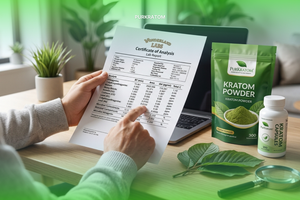
What Is a Certificate of Analysis?
A Certificate of Analysis, commonly called a COA, is a laboratory document that reports analytical results for a particular sample.
When available and properly connected to the product being sold, a COA can help consumers understand what was measured.
However, not every document labeled as a COA provides the same level of useful information.
Consumers should look for details such as:
- The product or sample identity
- Testing date
- Laboratory identification
- Compounds tested
- Reported concentrations
- Relevant testing methods
- Sample identifiers
- Results that correspond to the product being evaluated
Testing transparency should be considered alongside other quality information rather than treated as a single guarantee.
Botanical Kratom vs. Concentrated 7 OH Products
The distinction between traditional botanical kratom and concentrated 7 OH products is increasingly important.
Botanical kratom is derived from the leaves of Mitragyna speciosa and naturally contains a mixture of alkaloids.
Concentrated 7 OH products are designed around substantially higher levels of 7 hydroxymitragynine than would typically be found in ordinary botanical leaf material.
The FDA has specifically warned consumers about products containing enhanced levels of 7 OH and has stated that such products can pose serious risks.
The agency has also taken regulatory action involving companies marketing concentrated 7 OH products.
This distinction should be kept clear when discussing kratom alkaloids.
Natural occurrence does not mean that every concentration or formulation has the same risk profile.
The chemical identity of a compound is only one part of the equation. Concentration, formulation, route of exposure, product quality, and individual circumstances also matter.
Do Kratom Colors Determine Alkaloid Content?
Kratom is commonly marketed using color categories such as red, green, and white.
These labels generally refer to characteristics associated with the harvested plant material, including vein or leaf descriptions and processing conventions.
However, consumers should be cautious about assuming that color labels provide a precise measurement of a particular alkaloid.
A red, green, or white label is not a substitute for laboratory analysis.
If a consumer wants to understand the actual measured alkaloid profile of a specific product, laboratory data is more informative than relying solely on color terminology.
What Should Consumers Look For?
Understanding kratom alkaloids can help consumers ask better questions.
Rather than focusing only on a product name or marketing description, consider evaluating the following.
1. Clear Product Identification
Look for information that clearly identifies the product, format, and relevant ingredients.
2. Transparent Alkaloid Information
If alkaloid testing is available, examine what compounds were actually measured.
3. Laboratory Documentation
Look for credible testing documentation and determine whether it clearly corresponds to the product being sold.
4. Accurate Labeling
Product labels should provide information that allows consumers to understand what they are purchasing.
5. Avoid Unsupported Claims
Be skeptical of statements promising guaranteed effects or presenting kratom as a proven treatment for a medical condition.
Current evidence does not support treating kratom as an established treatment for diseases or disorders.
6. Understand the Difference Between Botanical Kratom and Concentrated Products
Products containing enhanced concentrations of 7 hydroxymitragynine deserve particular caution given current scientific and regulatory concerns.
7. Check Local Requirements
Kratom laws and regulations differ by jurisdiction and can change over time.
Consumers should verify the rules that apply where they live rather than relying on an outdated online statement.
Kratom Alkaloids and Current Research
Kratom research has expanded significantly, but there is still much to learn.
Scientists have identified dozens of alkaloids, yet detailed pharmacological information is concentrated around only a relatively small number of compounds.
A recent review described mitragynine as the principal alkaloid and discussed the growing body of research surrounding 7 hydroxymitragynine and other compounds.
Other research emphasizes that kratom's overall pharmacology cannot necessarily be reduced to the activity of a single alkaloid.
This is an important idea for anyone researching kratom:
Kratom is a complex botanical mixture, and its chemistry cannot be fully explained by mitragynine alone.
At the same time, it would be equally misleading to claim that every minor alkaloid has a proven or predictable contribution to human effects.
The most scientifically responsible position is to acknowledge what is known while clearly identifying what remains uncertain.
What Research Still Needs to Answer
Important areas for future research include:
- How individual alkaloids interact with one another
- How alkaloid profiles differ across products
- How processing affects alkaloid concentrations
- Human pharmacokinetics of individual alkaloids
- Long term effects of repeated exposure
- The relationship between concentration and adverse outcomes
- Differences between botanical kratom and concentrated products
- Potential interactions with medications and other substances
- Reliable methods for product standardization
- The implications of emerging regulatory policies
These questions matter for researchers, regulators, manufacturers, healthcare professionals, and consumers alike.
Frequently Asked Questions (FAQs)
1. What are the main kratom alkaloids?
The most extensively studied kratom alkaloids are mitragynine and 7 hydroxymitragynine. Other identified compounds include speciociliatine, speciogynine, paynantheine, and corynantheidine.
2. Is mitragynine the same as 7 hydroxymitragynine?
No. They are chemically related but distinct compounds. Mitragynine is much more abundant in ordinary botanical kratom, while 7 hydroxymitragynine occurs at much lower levels and has substantially greater activity at the mu opioid receptor.
3. Which kratom alkaloid is most abundant?
Mitragynine is generally the dominant alkaloid in botanical kratom preparations.
4. Does kratom naturally contain 7 hydroxymitragynine?
Yes. 7 hydroxymitragynine occurs naturally in Mitragyna speciosa, but generally at much lower concentrations than mitragynine.
5. Are all kratom alkaloids well studied?
No. Although dozens of alkaloids have been identified, scientific knowledge varies greatly between compounds. Mitragynine and 7 hydroxymitragynine have received considerably more research attention than many minor alkaloids.
6. Does a higher alkaloid concentration mean a better kratom product?
Not necessarily. Alkaloid concentration describes chemical composition, not overall product quality. Quality also involves factors such as accurate labeling, laboratory testing, contaminant controls, and transparency.
7. How can I find out what alkaloids are in a kratom product?
Laboratory analysis is the most useful way to determine the measured alkaloid profile of a specific product. When available, a relevant Certificate of Analysis can provide analytical results for the tested sample.
8. Are concentrated 7 OH products the same as ordinary kratom?
No. Ordinary botanical kratom naturally contains a mixture of alkaloids, including relatively small amounts of 7 hydroxymitragynine. Products specifically formulated with enhanced levels of 7 OH are chemically different in concentration and have attracted specific safety and regulatory concerns.
Understanding Kratom Starts With Understanding Its Alkaloids
Kratom is more chemically complex than a simple product label might suggest.
At the center of that chemistry are mitragynine and 7 hydroxymitragynine, two closely related but distinct alkaloids that have received substantial scientific attention. Mitragynine is the dominant alkaloid in ordinary botanical kratom, while 7 hydroxymitragynine occurs naturally at much lower concentrations but demonstrates considerably stronger activity at the mu opioid receptor.
Beyond these two compounds, kratom contains numerous other alkaloids, including speciociliatine, speciogynine, paynantheine, and corynantheidine. Many of these compounds remain less well understood.
For consumers, the biggest lesson is that alkaloid information should be evaluated as part of a broader product quality picture.
A product's name, color, or marketing description cannot tell you everything about its chemical composition. Laboratory testing, transparent labeling, relevant Certificates of Analysis, and responsible product information can provide a more useful basis for comparison.
Research into kratom continues to develop, and important questions about pharmacology, safety, metabolism, product variability, and long term exposure remain unanswered. That makes credible education and transparent information especially valuable.
Explore PurKratom’s relevant kratom collection and review the available product, testing, and quality information before choosing the product format that best fits your research needs.
Disclaimer: This content is for educational and informational purposes only and is not intended to provide medical advice, diagnose, treat, cure, or prevent any disease or health condition. Kratom research is still developing, and individual responses may vary. Consult a qualified healthcare professional before using kratom, especially if you take medications, have a medical condition, are pregnant or breastfeeding, or have concerns about potential interactions. Laws and regulations regarding kratom vary by location and may change, so verify current local requirements before purchasing or using kratom.
Based on your interest,
we recommend:
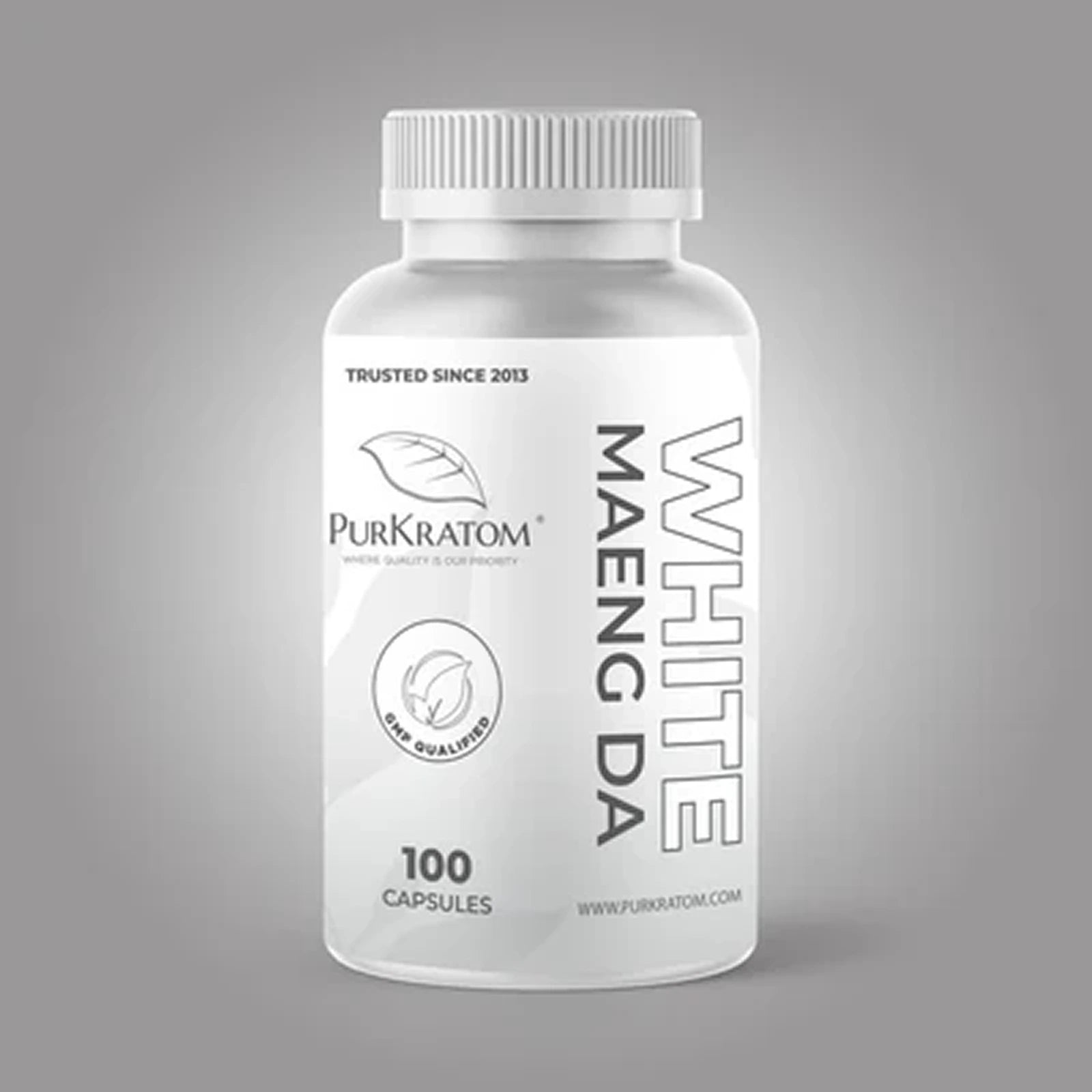
White Maeng Da Kratom Capsules
$26.99
Red Maeng Da Kratom Capsules
$26.99

White Maeng Da Kratom Powder
$31.99

Super Green Maeng Da Kratom Capsules
$26.99

Green Maeng Da Kratom Powder
$31.99