 Login
Login

If you have searched “Is kratom legal?”, you may have encountered conflicting answers.
One website may say kratom is legal. Another may warn that it is prohibited. A third may mention something called the Kratom Consumer Protection Act. Then there is the federal government, which has its own regulatory position. More recently, 7-hydroxymitragynine, or 7-OH, has become an additional source of regulatory attention.
So which answer is correct?
The short answer is that kratom laws in the United States depend on what level of government you are looking at and, in some cases, what type of kratom product is involved.
At the federal level, the Drug Enforcement Administration's current drug fact sheet states that kratom is not controlled under the federal Controlled Substances Act. However, the FDA takes a different regulatory position concerning the marketing of kratom as a drug, dietary supplement, or conventional food.
At the state and local levels, the picture becomes even more complicated. Some jurisdictions prohibit kratom completely, while others impose age limits, labeling requirements, licensing rules, alkaloid limits, or other consumer protections. A January 2026 legislative analysis found that 30 states and the District of Columbia regulated kratom or its components in some manner.
This guide explains the major pieces of the U.S. kratom legal landscape so you can better understand what “legal” actually means.
Is kratom legal in the United States?
Kratom is not currently listed as a controlled substance under the federal Controlled Substances Act, but its legal status is more complicated than simply calling it “legal.” The FDA does not recognize kratom as a lawful dietary supplement, food ingredient, or approved drug, while individual states can ban or regulate kratom differently. State and local laws can also change, so consumers should verify the rules where they live before purchasing, possessing, or traveling with kratom.
What Is Kratom?
Kratom is a botanical product derived from the leaves of Mitragyna speciosa, a tropical tree native to Southeast Asia.
The plant contains numerous naturally occurring compounds, including the alkaloids mitragynine and 7-hydroxymitragynine, commonly abbreviated as 7-OH. Research has examined the pharmacology, chemistry, potential effects, and risks associated with these compounds.
Kratom can appear in several forms, including:
- Powdered leaf
- Capsules
- Tablets
- Teas
- Extracts
- Other concentrated preparations
The legal classification of a particular product can depend on its ingredients, concentration, formulation, labeling, and intended use.
That distinction is becoming especially important as regulators increasingly differentiate traditional kratom leaf products from products containing concentrated or enhanced levels of 7-OH.
Is Kratom Legal Under Federal Law?
Kratom itself is not currently listed as a controlled substance under the federal Controlled Substances Act.
The DEA's 2024 Drug Fact Sheet states that kratom is not controlled under the Controlled Substances Act, although the agency identifies it as a Drug and Chemical of Concern. The same document notes that individual states may impose their own regulations or prohibitions.
This distinction is important.
Federal controlled-substance status is only one part of the legal picture
When people ask whether something is “legal,” they often mean whether federal law prohibits possession or sale.
For kratom, the answer is not as simple as a nationwide controlled-substance ban.
The federal government has not placed kratom itself on a schedule under the Controlled Substances Act. However, other federal laws and agencies can still affect how kratom products are manufactured, marketed, labeled, imported, and sold.
That is why these statements are not necessarily contradictory:
“Kratom is not federally scheduled.”
and
“The FDA does not consider kratom lawfully marketed as a dietary supplement.”
Both can be true because they address different regulatory questions.
What Does the FDA Say About Kratom?
The U.S. Food and Drug Administration takes a significantly different position from simply saying that kratom is federally legal.
The FDA states that kratom is not lawfully marketed in the United States as a drug product, dietary supplement, or food additive in conventional food. The agency says it has concluded that kratom is a new dietary ingredient for which available information does not provide reasonable assurance that it does not present a significant or unreasonable risk of illness or injury.
The FDA also states that there are no FDA-approved prescription or over-the-counter drug products containing kratom or its known alkaloids legally on the U.S. market.
What does that mean for consumers?
It means you should be careful about interpreting the word “legal.”
A product being available for sale does not automatically mean:
- The FDA has approved it
- The product is an FDA-approved medicine
- The product is legally marketed as a dietary supplement
- The product has been evaluated by the FDA for a specific medical purpose
This distinction is particularly important when evaluating websites or advertisements that make strong health or therapeutic claims.
FDA concerns about product quality
The FDA has also reported concerns involving certain kratom products, including contamination and serious adverse events.
For example, the agency has warned consumers about products associated with contaminants such as Salmonella and concerning levels of heavy metals.
That is one reason product transparency and quality-control information matter when evaluating kratom products.
Is Kratom Legal in Every State?
No.
Kratom legality varies by state, and some states prohibit kratom or specific kratom alkaloids altogether.
A January 2026 summary from the Legislative Analysis and Public Policy Association reported that 30 states and Washington, D.C., regulated kratom or its components in some manner. It identified six states where mitragynine and 7-OH were considered controlled substances, resulting in kratom products being banned: Alabama, Arkansas, Indiana, Louisiana, Vermont, and Wisconsin.
The regulatory environment has continued to change during 2026.
For example, Tennessee enacted legislation that changed its treatment of kratom later in 2026, while Rhode Island moved in the opposite direction by implementing a regulated kratom market beginning April 1, 2026.
Which States Ban Kratom?
The states with complete or near-complete prohibitions should be treated as especially important for anyone researching kratom legality.
As of 2026, commonly identified states with statewide prohibitions include:
| State | General Status |
|---|---|
| Alabama | Kratom prohibited |
| Arkansas | Kratom prohibited |
| Indiana | Kratom prohibited |
| Louisiana | Kratom prohibited/restricted |
| Vermont | Kratom prohibited |
| Wisconsin | Kratom prohibited |
| Connecticut | Regulatory action concerning kratom and its alkaloids |
| Tennessee | Major restrictions enacted in 2026 |
The precise legal status can depend on whether a law concerns kratom itself, mitragynine, 7-OH, or another related compound. Current state law should therefore be checked before relying on a general state list.
Federal and state developments concerning 7-OH have added another layer of complexity. A 2026 federal regulatory document identified multiple states with prohibitions concerning 7-OH and others that impose concentration limits or consumer-protection requirements.
Why state lists can become outdated
Kratom legislation continues to evolve.
A state that previously permitted kratom may introduce:
- An age restriction
- Retail licensing
- Labeling requirements
- Testing requirements
- Alkaloid limits
- A ban on concentrated products
- A complete prohibition
Likewise, a jurisdiction that previously prohibited kratom can change its approach.
Rhode Island: A Major Example of Changing Kratom Policy
Rhode Island's approach changed substantially in 2026.
The Rhode Island Kratom Act became effective April 1, 2026. The law allows licensing for the sale and manufacture of kratom products while imposing several requirements.
Among other provisions, Rhode Island requires:
- Licensing for businesses involved in selling, manufacturing, distributing, or importing kratom
- A minimum purchasing age of 21
- Age verification
- Certain packaging and labeling requirements
- Restrictions on specific alkaloid concentrations
- Restrictions on synthetic alkaloids
The Rhode Island Department of Health states that kratom products cannot be sold to anyone younger than 21 and must remain behind sales counters accessible only to employees.
This illustrates why “legal” and “unregulated” should never be treated as synonyms.
A jurisdiction can permit kratom while imposing detailed requirements governing how it can be sold.
What Is the Kratom Consumer Protection Act?
The Kratom Consumer Protection Act, commonly called the KCPA, is a model framework that has influenced state-level kratom legislation.
The general purpose of these laws is to establish consumer protections around areas such as:
- Minimum purchasing age
- Product labeling
- Manufacturing standards
- Ingredient disclosure
- Product quality
- Alkaloid limits
- Retail sales
- Restrictions on adulterated or unsafe products
However, there is an important point to understand:
There is not one single federal KCPA that applies uniformly across the United States.
States create their own laws, and requirements can differ substantially.
A 2026 legislative analysis identified numerous states with consumer-protection regulations governing kratom or its components, with requirements ranging from age restrictions to more detailed manufacturing and sales controls.
Why does the KCPA matter?
For consumers, a regulatory framework can provide clearer expectations around what businesses are required to disclose and how products can be sold.
But consumers should still review the actual requirements applicable in their state.
Do not assume that because one state requires laboratory testing or a particular label, every state requires the same thing.
Why Are 7-OH and Kratom Extracts Receiving More Attention?
One of the most significant recent developments in kratom regulation involves 7-hydroxymitragynine, or 7-OH.
7-OH occurs naturally in kratom in trace amounts, but regulators have increasingly distinguished traditional kratom leaf products from products containing concentrated or enhanced amounts of 7-OH.
The FDA has specifically warned consumers about products containing concentrated 7-OH, including products sold as tablets, gummies, drink mixes, and shots.
In July 2025, the FDA announced that it was recommending a scheduling action concerning certain 7-OH products under the Controlled Substances Act, specifically distinguishing those products from natural kratom leaf.
By July 2026, the FDA reported that the DEA had begun a temporary scheduling process concerning 7-OH above a proposed threshold, along with certain synthetic 7-OH derivatives that do not naturally occur in the kratom plant.
Why does this distinction matter?
Not every product marketed with the word “kratom” necessarily represents the same type of product.
There can be substantial differences between:
Traditional kratom leaf products
and
Concentrated or enhanced products containing 7-OH or other compounds.
Consumers should therefore read the complete product label and understand what ingredients are actually present rather than relying solely on the word “kratom.”
How Can Consumers Check Whether Kratom Is Legal?
Because laws change, the safest approach is to verify the rules that apply to your specific location and product.
Step 1: Check your state law
Start with your state's official government website or legislative database.
Look for laws concerning:
- Kratom
- Mitragyna speciosa
- Mitragynine
- 7-hydroxymitragynine
- 7-OH
- Kratom extracts
- Controlled substances
Step 2: Check local rules
State law may not be the entire story.
Some cities and counties have adopted additional restrictions. A person traveling through a state may therefore need to consider local requirements as well.
Step 3: Identify the exact product
Determine whether the product contains:
- Whole kratom leaf
- Kratom powder
- Mitragynine
- Kratom extract
- Concentrated 7-OH
- Synthetic alkaloids
- Other added ingredients
Step 4: Check age requirements
Even in states where kratom is permitted, the minimum purchasing age may be 18 or 21.
Step 5: Review current requirements
Look for requirements involving:
- Labeling
- Packaging
- Testing
- Licensing
- Alkaloid concentration
- Retail access
- Advertising
Step 6: Verify before traveling
If you plan to take kratom across state lines, check the laws of your destination and any jurisdictions you will pass through.
What Should You Look for When Purchasing Kratom?
Legality is only one part of responsible purchasing.
Because kratom products can differ in composition and quality, consumers should pay attention to product transparency.
1. Clear product labeling
A reputable product should provide clear information about what it contains.
Look for information about:
- Product type
- Ingredients
- Serving information
- Manufacturer or seller
- Lot or batch identification where applicable
- Appropriate warnings
2. Laboratory testing information
Independent laboratory testing can provide useful information about a product's composition and potential contaminants.
When a company provides laboratory results, consumers should be able to understand which product or batch those results correspond to.
3. Certificate of Analysis information
A Certificate of Analysis, commonly called a COA, may provide laboratory information about a particular batch.
However, consumers should not assume that every document labeled “COA” represents the same level of testing.
Look at:
- Laboratory identity
- Testing date
- Product or batch identification
- Tests performed
- Reported results
4. Avoid unsupported medical claims
Be cautious when a seller claims that kratom:
- Cures a disease
- Treats a medical condition
- Guarantees pain relief
- Prevents illness
- Replaces prescription medication
The FDA has specifically taken action against companies marketing kratom with unapproved medical claims.
Responsible consumer education should distinguish between traditional use, individual reports, scientific research, and established medical evidence.
Why Product Transparency Matters in a Changing Regulatory Environment
Kratom regulation is not static.
As policymakers focus more closely on product composition, particularly concentrated 7-OH and synthetic compounds, transparent product information becomes increasingly useful.
Consumers can make more informed purchasing decisions when they can identify:
- What is actually in the product
- What form of kratom is being sold
- Whether testing information is available
- What warnings appear on the label
- Whether the seller identifies the manufacturer
- What state-specific restrictions apply
For brands operating in this space, clear documentation and responsible communication are equally important.
For consumers, transparency does not guarantee that a product is safe or lawful. Instead, it gives the consumer information needed to make a more informed assessment.
Kratom Legality vs. Kratom Safety
It is also important not to confuse legality with safety.
A product can be legal in a particular jurisdiction and still carry potential risks.
The FDA warns about adverse events associated with kratom, including liver toxicity, seizures, and substance use disorder. The agency also notes that some reported deaths involved combinations of kratom and other drugs, making kratom's specific contribution difficult to determine in those cases.
Scientific literature also continues to examine kratom's pharmacology, potential effects, toxicology, and risks. Researchers have noted that product composition can vary and that additional research is needed to better inform regulation and public-health policy.
The key point is simple:
A legal status is a legal classification, not a safety guarantee.
Consumers should consider both questions separately:
- Is this product permitted where I live?
- What do I know about this product and its potential risks?
What Does the Future of Kratom Regulation Look Like?
Kratom regulation is likely to remain an evolving issue.
Three trends are particularly important.
Greater attention to 7-OH
Federal and state regulators are increasingly distinguishing traditional kratom leaf from concentrated 7-OH and synthetic kratom-related compounds.
More state-level regulation
Rather than relying exclusively on prohibition, some states have adopted consumer-protection frameworks involving age restrictions, labeling, testing, licensing, and concentration limits.
Continued scientific research
Research into kratom's chemistry, pharmacology, health effects, and risks continues to develop. A 2026 scoping review highlighted ongoing evidence gaps and policy questions surrounding kratom use and regulation in the United States.
For consumers, this means information from several years ago may not accurately describe today's legal environment.
Frequently Asked Questions (FAQs)
1. Is kratom legal in the United States?
Kratom is not currently scheduled under the federal Controlled Substances Act, but it is not uniformly legal across the country. Several states prohibit or heavily restrict kratom, while others regulate it through age, labeling, testing, licensing, or alkaloid requirements.
2. Is kratom federally illegal?
Kratom itself is not currently listed as a controlled substance under the federal Controlled Substances Act. However, the FDA states that kratom is not lawfully marketed in the U.S. as a drug, dietary supplement, or conventional food additive.
3. What states have banned kratom?
State laws change, but states identified in 2026 sources as having statewide prohibitions or major prohibitions include Alabama, Arkansas, Indiana, Louisiana, Vermont, and Wisconsin. Additional states have taken action concerning kratom or particular alkaloids, including 7-OH. Always verify current law before purchasing or possessing kratom.
4. Is kratom FDA approved?
No. The FDA states that there are no FDA-approved prescription or over-the-counter drug products containing kratom or its known alkaloids legally marketed in the United States.
5. What is the Kratom Consumer Protection Act?
The KCPA is a model state-level regulatory framework designed to establish requirements for kratom products, including areas such as labeling, age restrictions, manufacturing, and product quality. Individual states determine whether and how they adopt these protections.
6. Is 7-OH the same as kratom?
No. 7-OH is one of kratom's naturally occurring alkaloids, but concentrated 7-OH products are distinct from traditional kratom leaf products. The FDA has specifically warned about products containing added or enhanced levels of 7-OH.
7. Can kratom laws change?
Yes. State legislatures and federal agencies continue to consider new restrictions and regulatory frameworks. Rhode Island, for example, implemented a new regulated kratom framework in April 2026.
8. Can I travel with kratom?
That depends on the laws of the locations involved. A product permitted in your home state may be prohibited in another state. Check current laws in your destination and any jurisdictions through which you will travel.
So, is kratom legal?
The most accurate answer is: it depends on the jurisdiction, the product, and the specific law being considered.
At the federal level, kratom is not currently scheduled under the Controlled Substances Act. At the same time, the FDA does not consider kratom lawfully marketed as a drug, dietary supplement, or conventional food additive.
At the state level, regulations vary widely. Some states prohibit kratom, while others regulate it through age restrictions, licensing, labeling requirements, testing standards, and limits on specific alkaloids.
The emergence of new rules concerning 7-hydroxymitragynine adds another important distinction. Consumers should not assume that every product marketed as “kratom” is regulated in exactly the same way.
The best approach is to stay informed, check the current laws applicable to your location, understand what is actually contained in a product, and avoid relying on outdated legality lists or unsupported marketing claims.
For consumers who are permitted to purchase kratom where they live, product transparency is another important consideration. Reviewing available product information, testing documentation, labeling, and other quality information can help you make a more informed decision.
If kratom is permitted in your jurisdiction and you are researching products, the next logical step is to understand product formats, labeling, alkaloid information, and available testing documentation before comparing products.
Explore PurKratom's educational resources and review available product information before making a purchasing decision.
Disclaimer: This content is for educational and informational purposes only and is not intended to provide medical advice, diagnose, treat, cure, or prevent any disease or health condition. Kratom research is still developing, and individual responses may vary. Consult a qualified healthcare professional before using kratom, especially if you take medications, have a medical condition, are pregnant or breastfeeding, or have concerns about potential interactions. Laws and regulations regarding kratom vary by location and may change, so verify current local requirements before purchasing or using kratom.
Based on your interest,
we recommend:
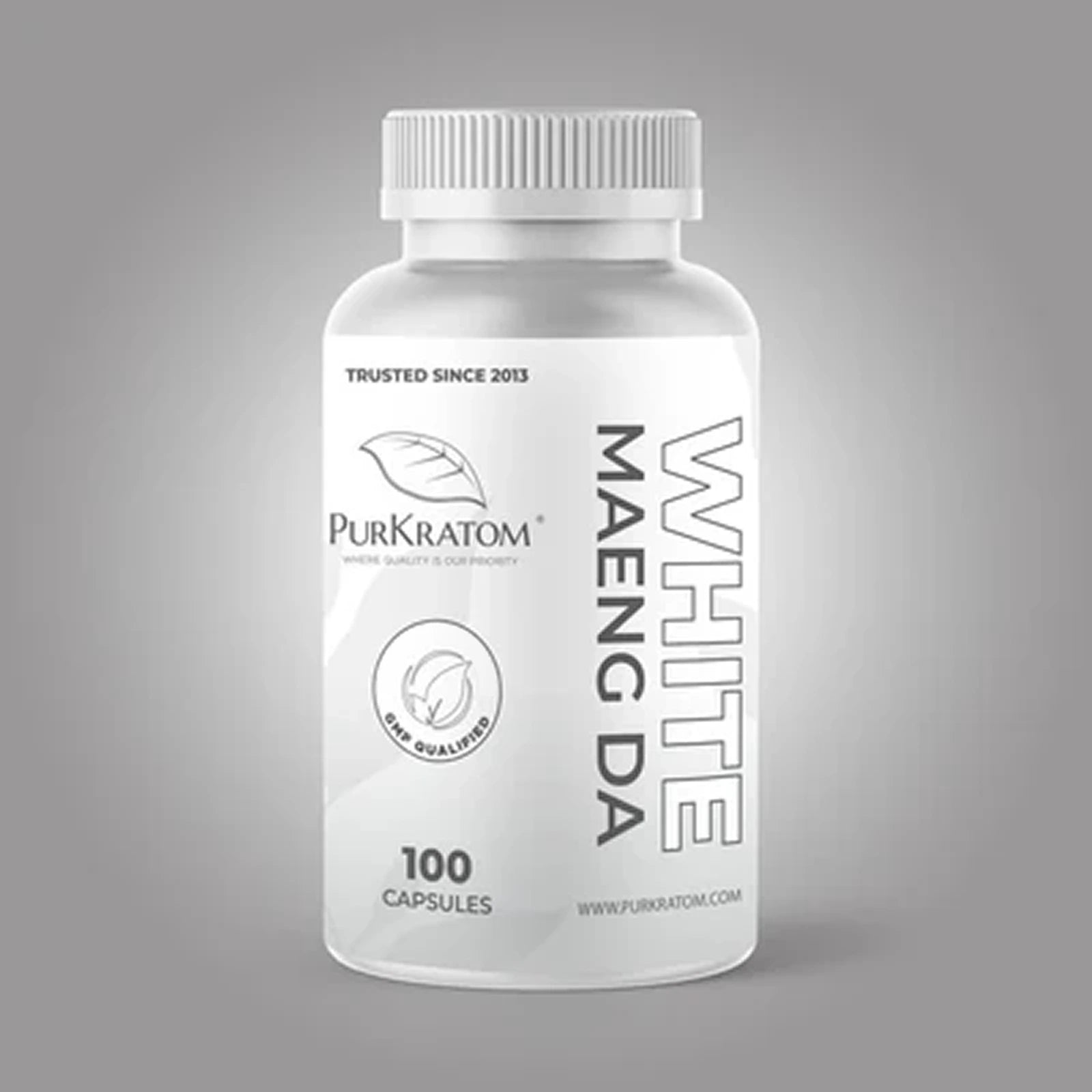
White Maeng Da Kratom Capsules
$26.99
Red Maeng Da Kratom Capsules
$26.99

White Maeng Da Kratom Powder
$31.99
Super Green Maeng Da Kratom Capsules
$26.99

Green Maeng Da Kratom Powder
$31.99