 Login
Login

Buying kratom online can involve more than choosing a product name and adding it to a cart. Because products can differ in format, labeling, concentration, testing documentation, and marketing claims, it is worth slowing down and evaluating the information available before making a purchase.
This guide explains what to check before you buy kratom online so you can make a more informed consumer decision.
It focuses on practical questions: What does the label actually tell you? Can you find product-specific testing information? Does the seller explain what it sells clearly? Are you looking at ordinary kratom leaf products or a concentrated product containing enhanced levels of a particular alkaloid? What are the seller's current shipping and return policies? And are there restrictions that apply where you live?
Before buying kratom online, evaluate the seller, label, product format, available product-specific laboratory documentation, ingredient information, batch details, policies, and applicable restrictions. Treat broad claims about safety, effectiveness, or medical benefits cautiously, and verify important information rather than assuming that a product is acceptable simply because it is sold online.
Why You Should Check a Kratom Seller Before Buying
Online shopping makes it easy to compare kratom products, but convenience does not eliminate the need for due diligence.
A product page may show a product name, a photograph, a price, and a list of marketing statements. That information alone may not answer the questions that matter most to a careful buyer.
For example:
- What exactly is in the product?
- What form does it take?
- Is testing information available?
- Does the testing correspond to the product or batch?
- Does the seller explain its products clearly?
- Are ingredients and product characteristics disclosed?
- Does the seller make medical or guaranteed-effect claims?
- What are the current shipping restrictions?
- Can you review the seller's policies before purchasing?
The goal is not to find a seller that makes the biggest promises. It is to find enough reliable information to understand what you are considering.
NCCIH notes that research on kratom is still in its early stages and that much remains to be learned about its short- and long-term effects, safety, and potential therapeutic uses.
That uncertainty is one reason responsible purchasing starts with information.
Check Who Is Selling the Product
Before examining an individual product, examine the seller.
A transparent online retailer should give customers enough information to understand who is behind the website and how to contact the business.
Look for:
- A clearly identified company or brand
- Accessible customer-support information
- Product information that is specific rather than vague
- Clearly stated terms and conditions
- A visible shipping policy
- A return or refund policy, where applicable
- Educational or informational resources
- Testing information, when offered
- Clear information about product formats and ingredients
You do not need to assume that a website is trustworthy simply because it looks professional. Website design can be helpful, but it is not evidence of product quality.
Likewise, a low price does not automatically mean poor quality, and a high price does not automatically mean better quality.
The better question is: What verifiable information does the seller provide to help you evaluate the purchase?
For PurKratom shoppers, the available about PurKratom information and PurKratom FAQ can serve as starting points for learning more about the brand and its stated information.
Read the Entire Product Label
One of the easiest mistakes when shopping online is to focus on the product title while overlooking the rest of the product information.
Instead, read the available product description and label information carefully.
Check for information such as:
- Product name
- Product format
- Ingredient information
- Net quantity
- Product-specific identifying information
- Alkaloid information, when provided
- Manufacturer, seller, or distributor information, where applicable
- Warnings and restrictions
- Relevant product instructions and label statements
The exact information available can vary by product.
A product described simply as “kratom” does not necessarily tell you whether you are looking at powder, capsules, an extract, a gummy, a shot, or another format.
That distinction matters because product format can affect how a consumer understands what they are purchasing.
What if the label is vague?
A vague label should prompt additional questions rather than assumptions.
If you cannot determine what the product contains or what form it takes from the available information, consider contacting the seller before purchasing.
A responsible purchasing process should leave you with a reasonably clear understanding of what product you are evaluating.
Look for Product-Specific Laboratory Testing
Laboratory testing is one of the most useful forms of documentation a consumer can review when it is available and appropriately matched to the product.
But there is an important distinction:
A website saying “lab tested” is not the same thing as giving you access to meaningful product-specific laboratory documentation.
Look for information that allows you to connect the test result to the product you are considering.
Questions to ask:
- Is a laboratory report available?
- Does the report identify the product or batch?
- Is the report recent enough to be relevant?
- Can you identify the laboratory or testing source?
- What characteristics were actually tested?
- Does the report provide numerical results rather than just a “passed” statement?
- Does the documentation correspond to the product you intend to buy?
The PurKratom brief specifically identifies its lab-results and Certificate of Analysis search page as the appropriate destination for available laboratory documentation.
However, the existence of a lab-results page should not be interpreted as proof that every product or batch meets every possible testing criterion. Product-specific documentation should be reviewed before making a specific claim.
Check for Heavy Metals and Microbiological Testing
Contamination is another reason laboratory documentation can matter.
NCCIH states that harmful contaminants, including heavy metals and disease-causing bacteria, have been found in some kratom products.
The FDA has also reported concerns involving certain kratom products contaminated with Salmonella or containing concerning levels of heavy metals.
That does not mean every kratom product has those contaminants. It does mean that consumers should understand what testing documentation actually covers.
If testing documentation is available, look for categories such as:
Heavy metals
Testing may provide information about specified metals and their measured levels.
Microbiological testing
Testing may address particular microorganisms or microbial indicators.
Alkaloid testing
Testing may provide analytical information about specified alkaloids.
The important point is to examine the actual test panel rather than assuming that “tested” covers everything.
Understand the Product Format
Before purchasing kratom online, determine what form you are actually considering.
Common formats can include:
- Kratom powder
- Kratom capsules
- Kratom extracts
- Gummies
- Shots
- Variety packs
The format can affect how product information is presented and what questions you need to ask.
For example, someone comparing powder and capsules may primarily want to understand differences in physical format and labeling. Someone evaluating an extract may need to pay closer attention to concentration-related information and product-specific documentation.
PurKratom provides a comparison resource covering kratom powder, capsules, and extracts for readers who want to investigate those format differences further.
Product format comparison
| Format | What to check |
|---|---|
| Powder | Product identity, ingredient information, quantity, testing documentation |
| Capsules | Ingredients, capsule contents, quantity, labeling, testing information |
| Extracts | Concentration-related information, ingredients, product identity, testing documentation |
| Gummies | Ingredients, product identity, quantity, testing information, labeling |
| Shots | Ingredients, product identity, quantity, concentration-related information, testing documentation |
Pay Attention to 7-OH and Concentrated Products
One of the most important developments for consumers evaluating kratom-related products is the FDA's recent attention to products containing concentrated or enhanced levels of 7-hydroxymitragynine (7-OH).
7-OH occurs naturally in kratom in trace amounts, but the FDA's 2025 warning specifically addressed products containing added or enhanced levels of 7-OH. The agency described such products as novel potent opioid products and advised consumers to avoid them.
The FDA has also emphasized a distinction between concentrated 7-OH products and natural kratom leaf products in its regulatory communications.
What should an online buyer do?
Read the product description carefully.
Look for language identifying:
- 7-hydroxymitragynine
- 7-OH
- enhanced alkaloids
- concentrated alkaloid products
- extracts
- other concentration-related claims
Do not assume that a product is equivalent to ordinary kratom leaf simply because the product is marketed using the word “kratom.”
The exact composition and labeling should be reviewed.
This is especially important when a product is marketed in a format such as a gummy, shot, tablet, or drink mix and makes concentration-related claims.
Check Current Legal and Shipping Restrictions
Before ordering kratom online, check whether purchasing, possessing, receiving, or shipping the product is permitted where you live.
This step is essential because legal status can differ by jurisdiction.
The DEA states that kratom is not controlled under the federal Controlled Substances Act, while also noting that states may have their own regulations or prohibitions.
The FDA likewise notes that states may have their own regulations or prohibitions concerning kratom and advises consumers to consult state health or law-enforcement agencies regarding applicable state laws.
For PurKratom, use the current Shipping Policy rather than relying on historical shipping information.
The supplied PurKratom brief specifically requires current verification of shipping eligibility and prohibits assuming that a product can be shipped to a location based on historical information.
A Five-Minute Kratom Shopping Audit
If you do not have time to perform a detailed review, start with five questions:
1. What exactly am I buying?
Identify the format, ingredients, quantity, and product description.
2. Can I see meaningful testing information?
Look for documentation that actually corresponds to the product or batch.
3. What does the seller claim?
Separate factual product information from medical promises, guarantees, and unsupported claims.
4. Is there anything unusual about the formulation?
Pay particular attention to extract, concentration, enhanced alkaloid, and 7-OH language.
5. Can I legally receive it where I live?
Check current applicable restrictions and the seller's current shipping policy.
If those five questions have clear answers, you have a much stronger information base for evaluating the purchase.
What Does “Transparent” Mean When Buying Kratom Online?
Transparency does not mean that a seller can eliminate every uncertainty associated with kratom.
Instead, it means the available information allows consumers to investigate important questions.
A transparent purchasing experience may include:
- Clear product descriptions
- Understandable labeling
- Accessible testing documentation
- Product-specific information
- Clearly stated policies
- Current shipping information
- Educational resources
- Contact information
- Clear distinctions between product information and medical claims
Transparency is particularly useful in a category where consumers may encounter widely varying marketing language.
The FDA has emphasized that significant scientific questions remain regarding kratom, while NCCIH similarly describes the research base as still developing.
That means a responsible seller should not need to manufacture certainty where the evidence does not provide it.
After completing the educational and documentation steps above, readers who are eligible to purchase can review the relevant PurKratom kratom powder collection or PurKratom kratom capsules collection, depending on the format they are researching.
Frequently Asked Questions (FAQs)
1. What should I check before buying kratom online?
Check the seller, product label, ingredients, product format, available laboratory testing, COA information, batch identification, marketing claims, current shipping policy, return terms, and applicable state or local restrictions.
2. What is a kratom COA?
A Certificate of Analysis is a laboratory document describing analytical results for a tested sample. Depending on the testing panel, it may provide information about alkaloids, microbiological characteristics, heavy metals, or other specified characteristics. A COA should be interpreted according to the tests it actually contains.
3. Does a COA prove that kratom is safe?
No. A COA provides information about the characteristics tested in a particular sample. It should not be treated as proof that a product is completely safe or risk-free.
4. How can I tell whether a kratom seller is transparent?
Look for clear product information, accessible policies, identifiable company information, customer-support options, and meaningful testing documentation. Be cautious when important information is vague or when a seller relies heavily on unsupported guarantees.
5. Should I look for kratom lab testing?
If laboratory testing information is available, reviewing it can help you understand what characteristics of a product or batch were analyzed. Look beyond a generic “lab tested” statement and determine whether actual documentation is available.
6. What should I look for on a kratom label?
Review the product identity, format, ingredients, quantity, relevant warnings, and other product-specific information. Also pay attention to terminology involving extracts, concentration, enhanced alkaloids, or 7-OH.
7. What is 7-OH?
7-OH is short for 7-hydroxymitragynine. It occurs naturally in trace amounts in kratom, but the FDA has specifically warned consumers about products containing added or enhanced levels of 7-OH and has distinguished those products from natural kratom leaf products.
8. Are online kratom reviews reliable?
Reviews can provide information about individual purchasing experiences, but they are not scientific evidence and do not establish that a product is safe or effective for everyone.
Why Product Transparency Matters More Than Marketing Hype
When shopping online, it is easy to focus on the claims that stand out most.
A better approach is to focus on the information you can actually evaluate.
A product page that provides clear identification, relevant testing documentation, ingredient information, policies, and applicable warnings gives you more to investigate than a page built primarily around broad promises.
This approach also helps you recognize the limits of available information.
Kratom research continues to develop. NCCIH states that much remains unknown about kratom's effects and safety, while the FDA continues to warn about serious potential risks and unapproved medical claims.
The CDC's 2026 analysis of U.S. poison-center data also found a substantial increase in reported kratom exposures from 2015 through 2025 and noted that multiple-substance exposure reports were associated with more hospitalizations and serious outcomes than single-substance reports.
Knowing what to check before you buy kratom online starts with looking beyond the product name and price.
Review the seller. Read the label. Identify the product format. Look for product-specific laboratory information. Understand what a COA actually documents. Pay attention to heavy-metal and microbiological testing when available. Be especially careful with products making concentration or 7-OH claims.
Just as importantly, separate product information from medical claims.
Disclaimer: This content is for educational and informational purposes only and is not intended to provide medical advice, diagnose, treat, cure, or prevent any disease or health condition. Kratom research is still developing, and individual responses may vary. Consult a qualified healthcare professional before using kratom, especially if you take medications, have a medical condition, are pregnant or breastfeeding, or have concerns about potential interactions. Laws and regulations regarding kratom vary by location and may change, so verify current local requirements before purchasing or using kratom.
Based on your interest,
we recommend:
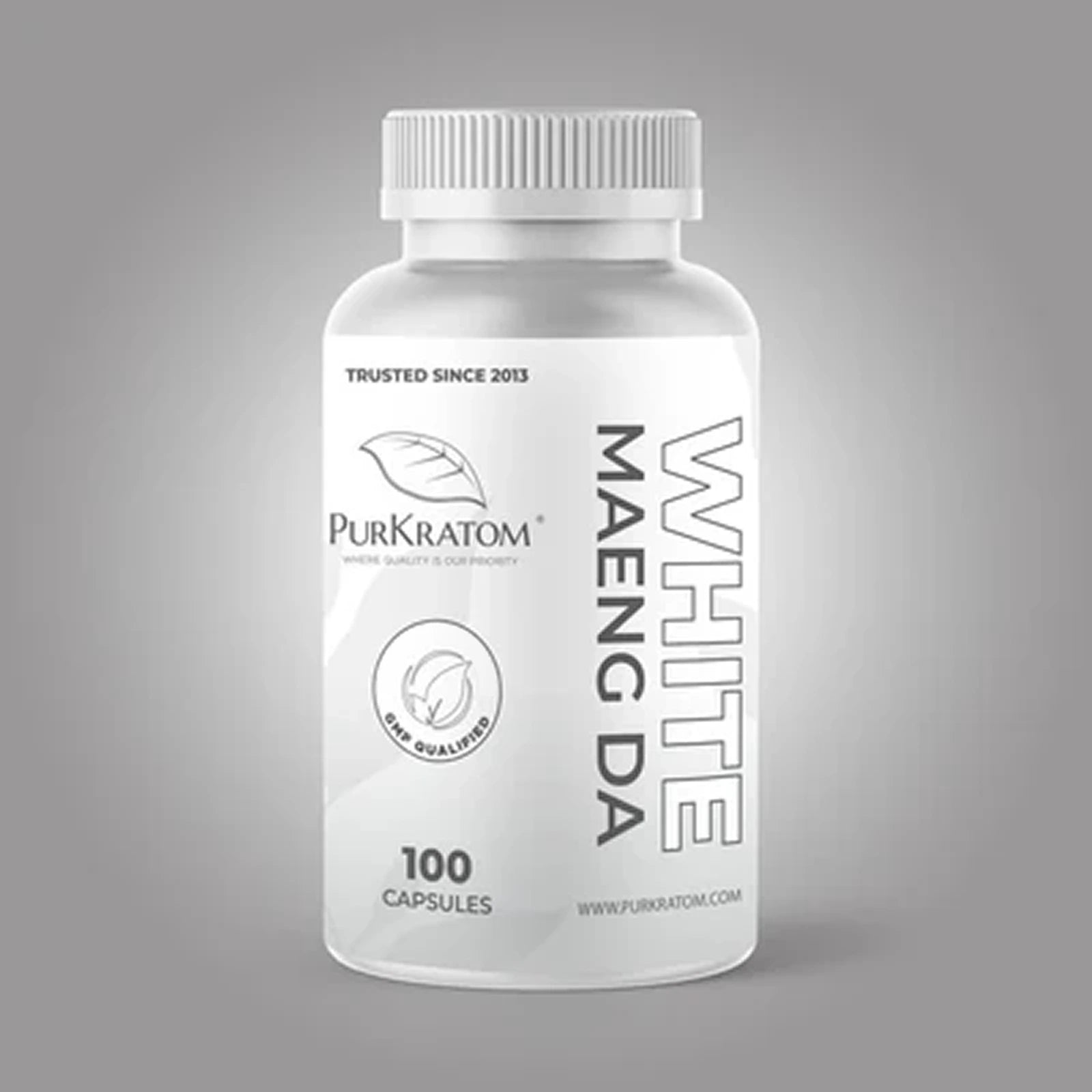
White Maeng Da Kratom Capsules
$26.99
Red Maeng Da Kratom Capsules
$26.99

White Maeng Da Kratom Powder
$31.99
Super Green Maeng Da Kratom Capsules
$26.99

Green Maeng Da Kratom Powder
$31.99