 Login
Login

Kratom safety research is still developing. Studies and public health reports have identified potential risks including adverse effects, dependence and withdrawal, drug interactions, liver injury, and contamination in some products. Evidence also remains limited regarding long term effects and potential medical uses. Responsible consumers should evaluate labeling, testing information, product specific documentation, and applicable regulations rather than relying on marketing claims alone.
Kratom, scientifically known as Mitragyna speciosa, has moved from a traditional Southeast Asian botanical into a product category that receives significant scientific, regulatory, and consumer attention.
That attention creates a practical problem for shoppers.
Search results often mix scientific studies, government warnings, personal experiences, commercial claims, and product marketing. Some sources describe possible benefits. Others focus almost entirely on potential risks. The result can make it difficult to understand what researchers actually know, what remains uncertain, and what a responsible consumer should look for when evaluating a kratom product.
This guide takes an evidence focused approach.
It does not attempt to tell every reader whether kratom is appropriate for them. Instead, it explains the current state of research, what is known about important kratom alkaloids, documented safety concerns, why product testing matters, how to interpret a Certificate of Analysis, and how consumers can make more informed purchasing decisions.
PurKratom's role in this discussion is consumer education. Product information, laboratory documentation, labeling, and transparent explanations can help consumers evaluate what they are purchasing. At the same time, no laboratory report or product description can determine whether kratom is personally appropriate for a particular individual.
If you are already researching products, a useful next step is to review PurKratom's guide on how to read a kratom laboratory report or Certificate of Analysis.
What Is Kratom?
Kratom is the common name for Mitragyna speciosa, a tropical tree in the coffee family that grows naturally in Southeast Asia.
Historically, people in parts of Southeast Asia have used kratom leaves in traditional practices. The leaves have been chewed or prepared as beverages, and traditional use has included purposes such as combating fatigue and supporting work activities.
Modern commercial kratom is available in multiple forms, including powder, capsules, extracts, teas, shots, gummies, and other formulations.
However, the word "kratom" does not describe a single standardized chemical product.
Different products can vary according to:
- Plant material
- Processing methods
- Product format
- Alkaloid composition
- Concentration
- Batch
- Source
- Manufacturing practices
- Testing methods
This distinction is important when evaluating safety.
A consumer cannot determine the complete chemical composition or laboratory quality of a product simply by looking at its color, texture, name, or marketing description.
What Are the Main Kratom Alkaloids?
Kratom contains numerous naturally occurring alkaloids. Two of the most widely discussed are mitragynine and 7 hydroxymitragynine.
Research has examined how these compounds interact with several receptor systems, including opioid receptors. The National Center for Complementary and Integrative Health notes that these compounds are associated with both stimulant like and opioid or sedative like effects reported by people who use kratom.
That pharmacology is one reason researchers continue to study kratom.
It is also one reason responsible consumer education should avoid describing kratom as simply harmless because it is botanical.
What Does Kratom Research Actually Tell Us?
Research provides evidence that kratom and its alkaloids have biologically active effects, but important questions about long term safety, interactions, dependence, and potential medical applications remain unresolved.
The scientific literature includes laboratory studies, animal research, observational research, case reports, pharmacokinetic studies, systematic reviews, and a smaller amount of human clinical research.
These study types do not provide the same level of evidence.
Preclinical Research
Laboratory and animal studies can help researchers understand mechanisms, receptor activity, metabolism, and possible effects.
They are valuable for developing research questions.
However, results from an animal study cannot automatically be translated into a conclusion about how kratom affects humans.
Observational Research
Observational studies can provide information about patterns among people who use kratom.
They can help researchers identify potential associations and safety signals.
But they generally cannot establish that kratom itself caused an observed outcome because other factors may be involved.
Case Reports
Case reports can be important for identifying uncommon or serious adverse events.
However, they have limitations. A reported case does not necessarily establish how frequently an event occurs or prove that kratom was the only contributing factor.
A recent systematic review of kratom associated liver injury identified 32 cases across 31 included studies. The review also noted frequent co occurring exposures and other complicating factors.
Human Clinical Research
Controlled human studies are particularly important when researchers want to determine whether a substance is effective or safe for a specific medical purpose.
For kratom, this evidence base remains limited.
NCCIH states that research is still in its early stages and that much remains to be learned about kratom's short term and long term effects, safety, and potential uses.
This distinction matters.
Research interest does not equal proof of a medical benefit.
Likewise, reports of risks do not mean every consumer will experience the same outcome.
The appropriate conclusion is that the evidence needs to be interpreted carefully.
Understanding Mitragynine and 7 Hydroxymitragynine
Mitragynine is commonly described as the major alkaloid in kratom.
7 hydroxymitragynine, often abbreviated as 7 OH, is another naturally occurring kratom alkaloid. It is generally present in much smaller quantities in the plant than mitragynine.
Research has examined the pharmacology of both compounds.
Why Does 7 OH Receive So Much Attention?
The distinction between naturally occurring 7 OH in kratom leaf and products intentionally formulated with enhanced or concentrated 7 OH is important.
In 2025, the FDA warned consumers about products containing enhanced levels of 7 hydroxymitragynine, including products sold as tablets, gummies, drink mixes, and shots. The agency stated that these products should be avoided and distinguished them from the trace amounts naturally present in botanical kratom.
The FDA subsequently reported in July 2026 that the DEA had begun a temporary scheduling process concerning 7 OH above a proposed threshold and certain synthetic 7 OH derivatives. The process included a federal request for additional information and public comment.
For consumers, the practical lesson is simple:
Do not assume that every product marketed using the word "kratom" has the same composition.
Read the ingredient list, product description, laboratory information, and applicable regulatory information carefully.
What Are the Documented Safety Concerns?
Kratom safety is not one simple question.
It involves several different areas of concern, including adverse effects, dependence, interactions, contamination, product formulation, and uncertainty about long term use.
NCCIH lists reported side effects ranging from nausea, constipation, dizziness, and drowsiness to less common but serious events such as seizures, high blood pressure, and liver problems.
Short Term Effects
Reported experiences can vary considerably.
Some people report stimulant like effects such as increased alertness or energy. Others report relaxation or opioid like effects.
Variation may depend on the individual, product composition, amount consumed, frequency of use, and other factors.
Because of this variability, responsible education should avoid promising a predictable experience.
Liver Concerns
Liver injury has been reported in association with kratom use.
The evidence includes case reports and systematic reviews rather than definitive evidence that establishes a uniform risk for all consumers.
The recent systematic review of liver injury cases is especially useful because it illustrates why context matters. Many cases involved additional exposures or underlying factors, meaning researchers must consider more than a simple kratom versus no kratom comparison.
Seizures and Other Serious Adverse Events
Serious adverse events have been reported in connection with kratom.
However, reports can involve multiple substances, varying product compositions, or other health factors.
NCCIH specifically notes that deaths involving kratom alone appear to be extremely rare, while combinations with other drugs have been associated with severe adverse effects and deaths. It also emphasizes that more research is needed regarding drug interactions.
That distinction is important because "kratom was detected" and "kratom alone caused the event" are not interchangeable statements.
Kratom, Dependence, and Withdrawal
One of the most important parts of responsible kratom education is acknowledging that regular use can lead to dependence and withdrawal.
NCCIH states that kratom itself may have addictive potential and that regular users may experience withdrawal symptoms after stopping.
A systematic review examining kratom withdrawal similarly reported evidence of dependence, tolerance, and withdrawal among chronic users.
This does not mean that every person who uses kratom will develop dependence.
Risk can vary according to factors such as frequency of use, duration of use, individual characteristics, product composition, and other substances.
Why This Matters for Consumer Education
Responsible education should not present kratom as risk free simply because it is plant based.
"Natural" describes an origin. It does not automatically describe a substance's pharmacology or risk profile.
Consumers should also avoid assuming that one person's experience predicts another person's experience.
If someone has concerns about dependence, withdrawal, medication interactions, or an adverse reaction, a qualified healthcare professional can provide individualized guidance.
Why Drug Interactions Matter
Drug interactions are another important area where evidence remains incomplete.
Kratom compounds can interact with biological systems involved in drug metabolism and receptor activity. Researchers continue to investigate how these interactions may affect other medications and substances.
A recent review of kratom drug interactions emphasized the need for greater understanding of clinically relevant interactions and noted that kratom's pharmacological properties can affect pharmacokinetic and pharmacodynamic processes.
The practical takeaway is straightforward:
A person should not assume that kratom is automatically compatible with a prescription medication, over the counter medicine, supplement, alcohol, or another psychoactive substance.
This is particularly important for people taking multiple medications.
A product page cannot determine whether a particular combination is appropriate for an individual.
For personalized medication advice, consumers should consult a qualified healthcare professional or pharmacist.
Why Product Contamination Is a Consumer Issue
Kratom safety involves more than the plant's naturally occurring chemistry.
The quality of the finished product matters too.
The FDA has documented contamination concerns involving some kratom products.
In one laboratory analysis, the FDA tested 30 kratom products for heavy metals and reported significant levels of lead and nickel in some samples.
The FDA and CDC also investigated a 2018 multistate Salmonella outbreak associated with products reported to contain kratom.
These events do not establish that every kratom product is contaminated.
They do demonstrate why consumers should pay attention to testing and manufacturing transparency.
What Can Consumers Look For?
Depending on the product and supplier, useful information may include:
- Product identification
- Batch or lot number
- Ingredient information
- Laboratory identification
- Testing date
- Microbial testing
- Heavy metal testing
- Alkaloid testing
- Sample identification
- Laboratory methods
- Accessible Certificates of Analysis
Laboratory testing cannot answer every safety question.
But it can provide information that consumers cannot obtain through appearance or marketing language alone.
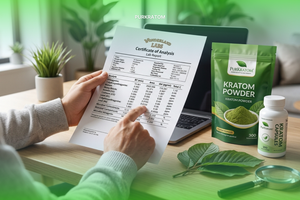
If you are comparing products, review PurKratom's guide to reading a kratom Certificate of Analysis before evaluating laboratory claims. The guide explains batch identification, laboratory information, alkaloid results, microbiology testing, and heavy metal results.
How Laboratory Testing Supports Responsible Consumer Education
A statement such as "lab tested" is less useful than specific testing documentation.
Responsible consumers should ask:
- What was tested?
- Which laboratory performed the analysis?
- What batch was tested?
- Does the report match the product being considered?
- What contaminants were evaluated?
- Were alkaloids measured?
- When was the sample tested?
- Can the testing documentation be reviewed?
A laboratory report is evidence about the sample that was analyzed.
It is not automatically evidence that every product from a company has identical characteristics.
This distinction is particularly important because botanical products can vary between batches.
PurKratom currently provides a searchable laboratory results resource that allows consumers to review available testing information associated with its products.
Before choosing a product, review PurKratom's available laboratory and Certificate of Analysis information and compare the documentation with the product or batch you are evaluating.
Powder, Capsules, Extracts, and Other Product Formats
Product format can influence how consumers compare products, but format alone does not establish safety or quality.
Kratom Powder
Powder is a loose botanical format.
Consumers evaluating powder may want to review:
- Product identification
- Net quantity
- Ingredients
- Batch information
- Testing documentation
- Laboratory results
- Applicable product information
Kratom Capsules
Capsules generally contain kratom material enclosed within a capsule shell.
They can be convenient for consumers who prefer an enclosed, portable format.
PurKratom maintains a dedicated kratom capsule collection containing multiple product categories.
Extracts
Extracts are processed differently from ordinary powdered botanical material and can have different concentrations and compositions.
Consumers should not assume that an extract and ordinary powder are interchangeable.
Capsules Versus Extracts
These terms describe different aspects of a product.
"Capsule" generally describes the delivery format.
"Extract" describes how the kratom material was processed.
A capsule may contain powdered kratom or an extract.
PurKratom's capsules versus extract comparison guide explains this distinction in greater detail. If you are deciding between product formats, use PurKratom's kratom powder versus capsules comparison guide to compare format, labeling, testing information, and practical considerations without treating one format as universally safer.
Red, Green, and White Kratom: What Consumers Should Know
Red, green, and white are common commercial categories used to describe kratom products.
Consumers should be careful about treating these labels as precise scientific classifications.
Kratom contains numerous alkaloids, and its chemical composition can vary.
That means a color label alone cannot tell you:
- Exact alkaloid concentration
- Laboratory purity
- Contaminant status
- Batch characteristics
- Individual response
- Suitability for a particular person
PurKratom's red, green, and white kratom comparison guide provides additional information about comparing these commercial categories and reviewing laboratory documentation.
The important consumer principle is:
Use product names and color categories as descriptive information, not as substitutes for product specific testing and labeling.
What Responsible Kratom Consumer Education Looks Like
Responsible consumer education should do more than list benefits or risks.
It should help people understand how to evaluate information.
A responsible approach includes five principles.
1. Separate Evidence From Marketing
Marketing language may describe a product as premium, powerful, natural, clean, or high quality.
Those terms do not automatically constitute scientific evidence.
Look for specific documentation instead.
2. Acknowledge Uncertainty
Scientific understanding changes as new research becomes available.
Kratom research remains an evolving field, and several systematic reviews have emphasized the need for additional controlled human research.
3. Consider the Product, Not Just the Plant
Consumers are not purchasing an abstract scientific concept.
They are evaluating a particular product made by a particular supplier.
That makes batch information, ingredients, laboratory testing, and product transparency relevant.
4. Avoid Universal Claims
No product should be assumed to produce the same outcome for every person.
Individual response can vary.
5. Verify Current Regulations
Kratom laws and regulatory policies can differ by jurisdiction and can change over time.
Consumers should verify the rules that apply where they live before purchasing, possessing, transporting, or using kratom.
How to Evaluate a Kratom Product Before Buying
A simple evaluation framework can help consumers make a more informed decision.
Step 1: Identify the Product
Know exactly what you are evaluating.
Is it:
- Powder?
- Capsules?
- Extract?
- Shot?
- Gummies?
- Another formulation?
Step 2: Read the Label
Look for:
- Full product name
- Ingredients
- Net contents
- Serving information
- Batch or lot information
- Manufacturer or supplier details
Step 3: Look for Testing Documentation
Do not stop at the words "lab tested."
Look for actual information about what was tested and whether documentation is accessible.
Step 4: Match the COA
If a COA is provided, compare the product name, lot information, sample identification, laboratory, and testing date.
Step 5: Review the Testing Scope
Determine whether testing addressed the categories that matter to your purchasing decision.
Step 6: Consider Product Format
Understand whether you are evaluating ordinary powdered leaf, capsules containing powder, an extract, or another formulation.
Step 7: Check Current Local Rules
Do not assume that availability online means the product is lawful everywhere.
Step 8: Consider Personal Circumstances
Product documentation cannot determine whether kratom is appropriate for an individual.
People taking medications, managing health conditions, pregnant or breastfeeding individuals, or anyone concerned about interactions should seek advice from an appropriately qualified healthcare professional.
Step 9: Avoid Unsupported Claims
If a product description promises guaranteed outcomes, disease treatment, or other claims that appear stronger than the available evidence, approach those claims critically.
Kratom Regulation and Why Local Rules Matter
Kratom regulation is complex because different authorities can approach the substance differently.
In the United States, NCCIH states that kratom and its compounds are not currently listed as controlled substances under the federal Controlled Substances Act, while also noting that the FDA has not approved kratom as safe and effective for any medical purpose.
The FDA has also taken enforcement and public health actions involving kratom products and products containing enhanced levels of 7 OH.
Regulatory developments can change.
For example, the FDA reported in July 2026 that DEA had initiated a temporary scheduling process involving 7 OH above a proposed threshold and certain synthetic derivatives.
Consumers therefore should not rely on an old article, social media post, or product page as the final authority on current legal status.
Check the current rules for your specific jurisdiction before purchasing or using kratom.
What the Evidence Does and Does Not Establish
One useful way to understand kratom research is to separate established observations from unanswered questions.
| Topic | What current evidence supports | What remains uncertain |
|---|---|---|
| Botanical identity | Kratom is Mitragyna speciosa | Variation between individual products and batches |
| Alkaloids | Mitragynine and 7 OH are important compounds studied in kratom | How composition translates into individual experiences |
| Pharmacology | Kratom alkaloids interact with several receptor systems | Full human pharmacological profile |
| Short term effects | A range of effects and adverse effects have been reported | How frequently specific outcomes occur |
| Dependence | Dependence and withdrawal have been documented | Individual risk and long term patterns |
| Drug interactions | Interaction concerns are scientifically relevant | The full clinical significance of many combinations |
| Liver injury | Cases have been reported and systematically reviewed | Precise incidence and causality across populations |
| Contamination | Heavy metals and microbial contamination have been documented in some products | Contamination status of any individual product without appropriate testing |
| Medical applications | Researchers continue to investigate potential applications | Sufficient evidence for approved medical use |
| Product testing | Laboratory testing can provide analytical information | A COA cannot establish complete personal safety |
| Regulation | Rules vary and continue to evolve | Future regulatory changes |
Frequently Asked Questions (FAQs)
1. Is kratom addictive?
Kratom has dependence and withdrawal potential. NCCIH states that regular users may experience withdrawal symptoms after stopping, and systematic research has documented dependence, tolerance, and withdrawal among chronic users.
2. What is mitragynine?
Mitragynine is a naturally occurring alkaloid in kratom and is one of the principal compounds studied by researchers. Research has examined its pharmacology, metabolism, receptor activity, and potential effects.
3. What is 7 hydroxymitragynine?
7 hydroxymitragynine, commonly called 7 OH, is a naturally occurring kratom alkaloid that is generally present in much smaller amounts in the plant than mitragynine. The FDA has separately raised concerns about products containing enhanced or concentrated 7 OH.
4. Can kratom interact with medications?
Potential drug interactions are an important research and safety concern. Because the evidence is still developing and individual medications differ, people taking prescription or other medications should discuss potential interactions with a qualified healthcare professional.
5. Are red, green, and white kratom scientifically standardized categories?
They are common commercial categories, but consumers should not treat color labels as complete descriptions of chemical composition or laboratory quality. Product specific testing and labeling provide additional information.
6. What should I look for when buying kratom?
Look for clear product identification, ingredient information, batch or lot information, transparent labeling, accessible laboratory documentation where available, and information about what testing actually covered. A product name or "lab tested" statement alone provides limited information.
7. Is kratom legal?
Legal status depends on the jurisdiction and can change. In the United States, federal and state level rules do not necessarily operate identically, and regulatory developments involving kratom and 7 OH continue. Consumers should verify current rules where they live.
8. Does "natural" mean kratom is risk free?
No. Natural substances can have biologically active compounds and potential risks. Kratom contains pharmacologically active alkaloids, and research has documented adverse effects and dependence concerns.
The evidence surrounding kratom is neither as simple as "kratom is completely safe" nor as simple as "every kratom product has the same risks."
Kratom is a biologically active botanical with compounds that researchers continue to study. Scientific and public health sources have documented potential concerns involving adverse effects, dependence, withdrawal, interactions, liver injury, and contamination. At the same time, researchers continue to investigate kratom's pharmacology and possible applications, while acknowledging important gaps in human evidence.
For consumers, responsible decision making starts with information.
Understand what product you are evaluating. Read the label. Distinguish ordinary botanical kratom from concentrated formulations. Look for product specific testing documentation. Learn how to interpret a COA. Verify current regulations. And avoid treating marketing claims, personal anecdotes, or a single laboratory result as a complete answer to a complicated health and safety question.
If you are ready to evaluate specific products after reviewing the evidence, explore PurKratom's kratom product collection and review the available product information, format details, and testing documentation before making a purchasing decision.
Based on your interest,
we recommend:
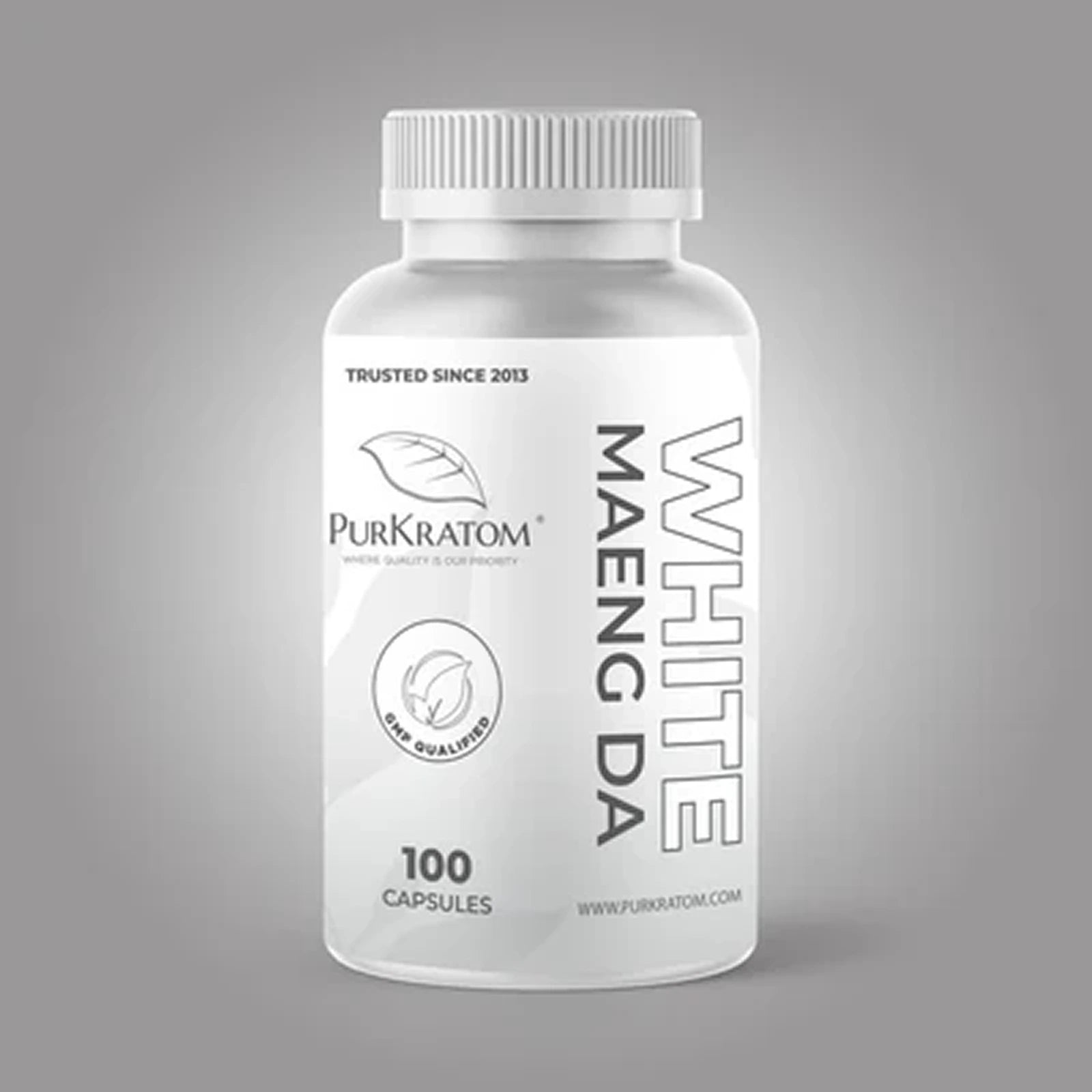
White Maeng Da Kratom Capsules
$26.99
Red Maeng Da Kratom Capsules
$26.99

White Maeng Da Kratom Powder
$31.99
Super Green Maeng Da Kratom Capsules
$26.99

Green Maeng Da Kratom Powder
$31.99