 Login


When a kratom product carries a “lab-tested” label, an important question follows: Was the exact batch being sold tested, or does the label refer to a different sample, an earlier production run, or a general testing program?
The distinction matters because a product label and a laboratory report serve different purposes. A label may communicate that testing has taken place, but the wording alone does not establish which material was tested, when the sample was collected, or whether the results correspond to the product in your possession.
For adults researching kratom, including products made from Mitragyna speciosa, understanding this distinction is an important part of evaluating product transparency.
The most useful document to examine is often a Certificate of Analysis (COA), or another laboratory report that identifies the sample and presents its analytical results. The next step is to determine whether the document can be connected to the product's specific batch or lot.
PurKratom provides a laboratory-results search page where available testing documentation can be reviewed. However, the existence of that resource does not establish that every product or batch has a matching report. Each document must be checked individually.
Does a “Lab-Tested” Label Identify the Batch Tested?
“Lab-tested” is a broad statement about testing. Without additional information, it does not tell you whether the laboratory examined the exact batch associated with the product you are considering.
The label might be accompanied by a product-specific report, a report for an identified lot, or more general testing information. Those situations provide different levels of traceability.
Consider these three examples:
|
Label or documentation |
What you can establish |
|---|---|
|
A package says “lab-tested,” with no report or identifier |
The label makes a testing claim, but the batch and scope are not established by the wording alone. |
|
A report identifies a product name but has no matching batch information |
The product name may be consistent, but the connection to your specific batch remains unclear. |
|
A report identifies the relevant product and a batch or lot number that matches the packaging |
This provides a stronger documented connection between the tested sample and the identified product batch. |
The third example is more informative because the report can be compared against a concrete identifier on the packaging. Even then, the report must be reviewed for its date, sample description, test scope, and other relevant details.
A matching identifier supports traceability. It does not prove that every unit was individually tested, that the sample perfectly represents every unit, or that the product is free from all possible hazards.
Why the wording matters
A consumer may see a laboratory symbol, a short statement on a product page, or a link to a downloadable report and reasonably want to know what the evidence actually covers.
The key question is not simply whether a laboratory performed a test. It is:
Can the seller demonstrate that the report relates to the product batch being represented, and can you determine what the laboratory actually tested?
That is the difference between a general testing claim and verifiable batch-level documentation.
What to do first
Before evaluating the results themselves, identify the product and its batch or lot number. Then look for a corresponding report or ask the seller how the available report connects to that identifier.
If the connection cannot be established, treat the batch-specific testing status as unverified rather than assuming the label answers the question.
Review the PurKratom laboratory-results search page to see what testing documentation is available. Confirm the report's applicability to the specific product and batch rather than assuming that a search result automatically applies to every item in a collection.
What Are Batches, Lots, and Certificates of Analysis?
Understanding three terms makes laboratory documentation easier to evaluate: batch, lot, and Certificate of Analysis.
What is a product batch?
A batch generally refers to a defined quantity of material produced or processed under a particular set of conditions.
For example, a manufacturer may process kratom leaf material during one production run and assign that run a unique identifier. That identifier can help connect the material to manufacturing records, laboratory results, packaging information, and distribution records.
The precise definition depends on the manufacturer's recordkeeping system.
A batch identifier is useful because it gives the seller and buyer a way to distinguish one production group from another.
What is a lot number?
A lot number is an identifier assigned to a particular group of products or materials for tracking purposes.
In some systems, a batch number and lot number may refer to the same production group. In others, the identifiers may represent different stages or groupings, such as bulk material, packaged goods, or a shipment.
Do not assume that the words are interchangeable in every manufacturer's system.
For consumers, the practical question is whether the identifier printed on the package can be traced to the relevant testing record.
For example, a product might display a code such as LOT-ABC123. That code is illustrative only, not an actual PurKratom lot number. A corresponding report would need to identify that lot or provide a documented explanation of how the report relates to it.
What is a Certificate of Analysis (COA)?
A Certificate of Analysis is a document reporting analytical findings for an identified sample or material.
Depending on the laboratory and the purpose of the analysis, a COA may include:
-
Product or material description.
-
Sample identification number.
-
Laboratory report number.
-
Date the sample was received.
-
Date or dates of testing.
-
Analytical methods.
-
Tests performed.
-
Results and measurement units.
-
Applicable specifications or acceptance criteria, when provided.
-
Laboratory identification and report authorization details.
Not every COA contains every item on this list. However, the document should provide enough information to understand what was tested and interpret the results within their stated scope.
A COA is not automatically a certificate covering every product sold by a brand. Its applicability depends on the sample, identifiers, testing scope, and documented relationship to the product.
What is the difference between a product label and a COA?
|
Feature |
Product label |
Certificate of Analysis |
|---|---|---|
|
Main purpose |
Identifies the packaged product and communicates required or relevant information |
Reports analytical findings for a sample |
|
Batch identification |
May show a batch or lot number |
May show a sample ID, lot number, or related reference |
|
Test results |
Usually provides limited space for details |
Can present methods, measurements, units, and findings |
|
Testing scope |
May state that testing occurred |
Can identify the specific analyses performed |
|
Relationship to a particular batch |
Depends on the label and supporting records |
Depends on the sample identification and traceability evidence |
A label and a COA work best together. The label identifies the item you have; the report provides details about the material the laboratory examined.
Neither should be interpreted beyond what the documentation supports.
Why the distinction matters for kratom
Kratom products may differ in format, processing, composition, and concentration. Powder, capsules, and extracts should not automatically be assumed to have identical analytical characteristics.
For that reason, a report for one material or product format should not automatically be treated as evidence for every other format.
If you are comparing products, PurKratom's educational resource on kratom powder, capsules, and extracts can help you understand the differences between product formats. For a testing decision, however, the specific report and its applicability remain the central evidence.
How to Tell Whether a COA Matches Your Product
The most practical way to evaluate a COA is to compare it with the product packaging and any accompanying product information.
A product name alone may not be enough. You want a clear connection between the physical product, the identified batch or lot, and the sample described in the laboratory report.
Step 1: Find the batch or lot number
Check the packaging for a batch, lot, or control number. Depending on the product, it may appear on a printed label, an ink stamp, or another packaging area.
Record the identifier exactly as shown.
Do not remove letters, leading zeros, or suffixes. Small differences can matter when distinguishing production groups.
If the package has no visible identifier, ask the seller whether another code, order record, or traceability mechanism connects the item to its production history.
A missing printed lot number does not, on its own, prove that a seller has no traceability system. But the seller should be able to explain what information can establish the connection.
Step 2: Locate the laboratory report
Look for a downloadable COA, laboratory-results database, or product-specific testing page.
If a seller provides a search tool, use the product name or batch identifier where possible. Read the report itself rather than relying only on a summary, badge, or statement on the product page.
For PurKratom, begin with the searchable laboratory-results resource.
The existence of a results page is a useful starting point, but each returned document must still be evaluated for relevance to the item in question.
Step 3: Compare the product name and sample description
Look at the product or material identified in the report.
Ask:
-
Does the report name the same product?
-
Does it describe the same type of material?
-
Is the sample raw material, an intermediate material, a finished product, or a different format?
-
Does the seller explain any differences between the sample name and the retail product name?
For instance, a report for bulk kratom powder does not automatically establish the analytical status of capsules subsequently manufactured from that powder. The connection would need to be supported by appropriate documentation, and additional processing may affect which testing is relevant.
Step 4: Match the batch or lot identifier
This is one of the most important checks.
Compare the identifier on the product with the identifier on the report. If they match exactly, the documentation provides a more direct link between the product batch and the reported sample.
If they differ, do not automatically assume that the report is irrelevant. There may be a documented relationship between a raw-material lot and a finished-product lot, for example.
However, that relationship should be explained and documented rather than inferred from similar product names.
A report that contains no batch information may still offer some useful information about the tested sample, but it does not establish a specific batch match unless other traceability records provide that connection.
Step 5: Check the dates
Look for the sample collection date, sample receipt date, testing date, and report issue date where available.
These dates describe different events.
-
Collection date: When the sample was taken, if documented.
-
Receipt date: When the laboratory received the sample.
-
Testing date: When the analysis was performed.
-
Report date: When the laboratory issued its findings.
A recent report is not automatically a report for your current batch. Likewise, an older report is not automatically irrelevant if it clearly identifies the applicable batch and remains appropriate for the question being asked.
The important point is to establish when the sample was obtained, what it represents, and how it relates to the product currently being sold.
Step 6: Read the test scope
Check which analyses were performed.
A report might focus on alkaloid content, microbiological indicators, elemental contaminants, or another defined set of measurements.
Do not assume that a test for one category establishes the results for another category.
A report showing measured mitragynine content, for example, does not by itself demonstrate that the sample was evaluated for heavy metals or microorganisms.
Step 7: Check the report's limitations
Review any notes about sample condition, analytical methods, reporting limits, or other limitations.
A laboratory generally analyzes the sample submitted to it. Unless the sampling and traceability process is documented, the reader may not know how representative that sample is of the larger production batch.
If the report lacks enough information to connect it to your product, ask the seller for clarification.
What Should a Kratom Laboratory Report Include?
A useful report should make it possible to understand the tested sample, the analyses performed, and the meaning of the results.
The following fields can help you evaluate a report's usefulness. They are practical review criteria, not a claim that every field is legally required in every kratom report.
1. Sample identity
The report should identify the material that was tested.
Look for a product description, sample ID, laboratory reference number, or another identifier that distinguishes the sample from other submissions.
Without a clear sample identity, it can be difficult to establish which material the results describe.
2. Batch or lot traceability
A matching batch or lot number is especially useful when you want to establish whether testing relates to a particular retail product.
If the laboratory report does not show the retail lot number, ask whether a documented cross-reference connects the laboratory sample to the production or packaging records.
The seller should explain the connection in a way that can be checked.
3. Testing dates
Dates help establish the testing timeline.
They are especially useful when a brand publishes multiple reports for the same product name. Without dates or distinct sample identifiers, it may be difficult to determine which report is relevant to which production group.
4. Analytical methods
A laboratory report may name the method used for each test.
Methods matter because different analytical procedures can have different capabilities, limitations, and reporting ranges. The suitability of a method depends on the substance being measured and the purpose of the analysis.
If you cannot determine what a method measures, ask the seller or laboratory for an explanation.
5. Results and units
Results should be interpreted alongside their measurement units and the method used to obtain them.
For example, a reported concentration may be expressed using a mass-based unit. That number cannot be interpreted correctly without understanding the unit, the sample, and the substance measured.
Avoid comparing two numbers until you confirm that they refer to comparable measurements and analytical methods.
6. Specifications and acceptance criteria
Some reports include limits or specifications used to interpret the findings.
If such criteria appear, check what they represent and where they come from. Do not assume that a laboratory's reporting threshold, a seller's internal specification, and a government limit are interchangeable.
A result below a stated reporting limit does not necessarily mean that the substance is completely absent. It means the result must be understood within the capabilities and definitions of the method.
7. Laboratory identification
Check the laboratory's name and the report's identifying details.
When appropriate, additional information about laboratory accreditation, the scope of accreditation, and the specific method may help you assess the documentation.
A laboratory's accreditation status should be verified rather than inferred from a logo or general statement. Accreditation for one field or method does not automatically establish accreditation for every analysis performed.
8. Report status and authorization
Check whether the document appears complete and whether any amended or superseding version is identified.
If the report contains an unexplained correction, conflicting sample number, or unclear final status, ask the seller or laboratory to clarify it before relying on the document.
A useful COA connects identifiable material with understandable analytical findings. The more ambiguous that connection is, the harder it becomes to determine what the report actually establishes.
Does Testing One Batch Apply to Every Batch?
No. A report for one batch should not automatically be treated as evidence that every other batch was tested or produced the same results.
Different production batches may have different raw materials, handling histories, processing conditions, or other characteristics that affect their analytical results.
This does not mean that every batch must necessarily have a separate public COA under every applicable system. Testing and verification programs can differ, and some regulatory frameworks permit defined sampling approaches.
The important distinction is between a batch that was directly tested, a batch supported by another documented verification process, and a batch for which no relevant evidence has been provided.
Why batch-to-batch differences matter
Kratom is a botanical material. Its composition and potential contaminants can vary with the material's origin, handling, processing, and storage conditions.
Laboratory testing can help characterize the submitted sample, but a result from one sample cannot automatically be generalized to all future production.
For example, a report for a product manufactured in one production run may not establish the analytical characteristics of a later run, even if both products share the same name and packaging design.
The product name tells you what is being sold. The batch identifier helps distinguish which production group the documentation concerns.
Does every unit in a batch need to be tested?
Not necessarily. Testing programs may use samples intended to represent a larger quantity of material.
The relevance of the result depends in part on how the sample was selected, whether it represents the batch, and what the test was designed to measure.
The U.S. Food and Drug Administration's guidance on current good manufacturing practices for dietary supplements discusses specifications, representative sampling, laboratory procedures, and batch records within that regulatory framework. These requirements should not be assumed to apply to kratom as a dietary supplement simply because a seller uses supplement-style terminology.
The practical lesson is that testing a sample and testing every individual package are different things.
A seller should be able to explain whether a report applies to a specific batch, a raw-material lot, a finished product, or another defined sample.
Why an old COA may not answer a current question
An older COA can be valid evidence of what was measured in its identified sample. But it does not automatically establish the results for material produced later.
If a brand has changed suppliers, production conditions, product formulations, or packaging processes, the relevance of an earlier report may need additional evaluation.
Do not judge relevance by date alone. Judge it by the combination of sample identity, traceability, testing scope, and the relationship between the tested material and the current product.
What Laboratory Testing Can and Cannot Establish
Laboratory testing is useful because it can provide objective analytical information about a defined sample. Its value depends on the test performed and how well the results connect to the product being evaluated.
However, a report has limits. It cannot establish facts that were outside its testing scope or beyond the evidence available to the laboratory.
Alkaloid testing
Kratom contains naturally occurring alkaloids, including mitragynine and 7-hydroxymitragynine.
An alkaloid analysis may report measured amounts of specified compounds in a sample. Such results can help describe the sample's chemical composition within the limits of the analytical method.
They do not, by themselves, establish that the product is appropriate for a particular person, demonstrate a medical benefit, or guarantee a particular effect.
If a report includes alkaloid measurements, confirm which compounds were analyzed, what units were used, and whether the sample matches the product under review.
Microbiological testing
Microbiological analyses can be designed to detect or measure specified microorganisms or indicators.
The results depend on the organisms included in the test, the sample, the method, and the reporting criteria.
A report covering one microorganism does not automatically demonstrate that the sample was tested for all possible pathogens.
This distinction is relevant to kratom because the FDA has documented concerns involving contamination of kratom products, including Salmonella. Its public-health information also describes other concerns associated with kratom products.
A consumer should therefore examine the actual testing scope rather than treating the phrase “microbiologically tested” as a complete description of every analysis performed.
Heavy-metal testing
Heavy-metal or elemental analysis may measure specified elements, such as lead, nickel, arsenic, or cadmium, depending on the test panel.
The U.S. FDA has published laboratory findings concerning heavy metals in kratom products, including its analysis of lead and nickel. These findings illustrate why the actual substances tested and reported measurements matter.
A report that tests only selected elements does not establish that every possible contaminant has been evaluated. Interpretation also depends on the measurement units, the tested sample, and the criteria used to assess the results.
What does a passing result mean?
A result described as “passing” needs context.
Ask:
-
Which test was performed?
-
What specification or criterion was applied?
-
Who established that criterion?
-
Does the report identify the batch in question?
-
Does the criterion address the concern you are trying to evaluate?
A reported result that meets a stated criterion can support a limited conclusion about that test. It should not be expanded into a general statement that the entire product is safe.
Likewise, a result reported as below a detection or quantitation threshold should be interpreted according to the method's definitions. It should not automatically be described as proof of absolute absence.
Does third-party testing guarantee safety?
No.
Third-party testing means an external organization performed an analysis when that description is accurate. It does not, by itself, establish that every batch was tested, that the sample was representative, or that every relevant hazard was assessed.
The identity and qualifications of the laboratory, the test methods, the sampling process, and the report's traceability all matter.
The FDA advises consumers about serious risks associated with kratom, and laboratory documentation does not remove those broader concerns.
For these reasons, laboratory reports should be treated as evidence about specified measurements in an identified sample, not as a universal endorsement of the product.
A quick comparison of common testing categories
|
Testing category |
What it may tell you |
What it does not automatically establish |
|---|---|---|
|
Alkaloid analysis |
Measured levels of specified alkaloids in the sample |
Results for other contaminants or medical outcomes |
|
Microbiological analysis |
Findings for the microorganisms or indicators included in the method |
Absence of every pathogen |
|
Heavy-metal analysis |
Measurements for the specified elements |
Absence of every contaminant or proof of overall safety |
|
Product identity analysis |
Evidence relevant to the identity of the tested material |
Every other quality characteristic |
|
General laboratory report |
Results within its documented scope |
That the retail batch matches the sample unless traceability is established |
The best way to interpret a report is to begin with its stated purpose and end with a conclusion no broader than the evidence supports.
What If a Lab-Tested Product Has No Matching COA?
If you cannot find a COA that clearly matches your product's batch, the right response is to seek clarification rather than fill the gaps with assumptions.
The absence of a publicly accessible, matching report does not automatically prove that no testing occurred. The seller may have other records, may use a different identifier, or may not publish every document publicly.
However, a general testing statement does not resolve the specific question of which batch was tested.
Ask the seller five specific questions
A clear request is often more useful than asking simply, “Is this lab-tested?”
Consider asking:
-
Which batch or lot was tested? Request the identifier that corresponds to the product you are reviewing.
-
Can I review the applicable report? Ask for the COA or another relevant laboratory document.
-
What sample does the report describe? Clarify whether it covers raw material, an intermediate product, or the finished retail product.
-
Which analyses were performed? Ask for the test categories and relevant results.
-
How does the report connect to my product? If the identifiers differ, request the documented relationship between them.
These questions focus on verifiable evidence rather than promotional language.
What if the seller provides only a generic testing statement?
A general statement may communicate the seller's position, but it does not answer every question about sample identity or batch traceability.
Ask whether a product-specific report or supporting traceability record is available.
If the seller cannot provide a clear connection, the appropriate conclusion is that batch-specific testing has not been established from the information provided.
That conclusion is more accurate than assuming either that testing definitely occurred for your batch or that no testing took place.
What if the report has no lot number?
Look for another identifier that can be linked to the product.
For example, the laboratory may have a sample ID that the seller can connect to production records. Whether that is sufficient depends on the quality and clarity of the supporting documentation.
A sample ID is not automatically equivalent to a retail lot number. The seller should explain how the identifiers relate to each other.
What if the seller will not provide more information?
You can evaluate the documentation according to what is available.
If the batch cannot be identified, the report's connection to the product cannot be confirmed, or the testing scope is unclear, do not treat the missing details as proof of a stronger claim.
You may decide to seek a seller that provides clearer, more directly applicable documentation. That decision can be based on transparency without requiring unsupported conclusions about another company's products.
How to Evaluate a Seller's Testing Transparency
A seller's approach to laboratory documentation can tell you how much information is available for independent review.
The goal is not to judge a company based on one marketing phrase. It is to evaluate whether its claims can be checked against specific documents.
Look for accessible reports
A seller may publish reports on a dedicated page, link them from product pages, or provide them upon request.
Accessibility is useful because it allows customers to examine the evidence rather than relying exclusively on a seller's summary.
For example, a searchable database can help users locate documents, provided that the search results contain enough identifying information to determine which product or batch each report concerns.
Look for product-specific traceability
The documentation should make it possible to connect a report to the relevant product.
A matching lot number is one way to do this. A documented cross-reference between the laboratory sample and production records may also help.
What matters is that the relationship is explicit and can be verified.
Look for clearly defined test panels
A seller should distinguish between the tests performed and those not included in the report.
A statement that a product was tested is more useful when supported by information about the analysis, its scope, and the reported results.
If the seller refers to a particular standard or specification, determine what it covers rather than assuming it addresses every quality concern.
Look for understandable dates and identifiers
A transparent report should allow readers to distinguish samples and understand the testing timeline.
Where a seller publishes several reports for the same product name, unique sample references and dates can help prevent confusion.
Look for appropriate explanations of limitations
No single report answers every possible question about a product.
A responsible explanation distinguishes measured findings from broader conclusions, explains any relevant limitations, and avoids presenting laboratory results as proof of universal safety.
Do not confuse transparency with certification
A laboratory report, a certification, a quality program, and a general testing claim are different types of evidence.
For example, participation in the American Kratom Association's GMP Standards Program should not be interpreted as FDA approval or as proof that an individual product batch was tested.
Any claim about a company's certification or qualification should be supported by current documentation identifying the certificate holder, issuing body, validity dates, and activities covered.
A practical standard: Prefer documentation that identifies the tested material, connects it to the relevant product, describes the analytical scope, and allows you to understand the findings without relying on assumptions.
This is a documentation standard, not a guarantee of product safety or a claim that one vendor is superior to another.
Review available laboratory documentation
Explore the PurKratom laboratory-results search page to look for available testing information and reports.
Open PurKratom Lab ResultsConfirm the report's product identity, sample details, dates, test scope, and batch applicability. This link does not establish that every product or batch has a matching report.
The purpose of reviewing laboratory documentation is to determine what information is available and whether it answers your specific question.
Start with the exact product
Identify the product you are researching and record any batch or lot number shown on its packaging.
Search the available documentation using the most relevant identifier, if the search interface supports it.
Do not assume that a report for a similar product name applies to the product you have.
Read the report rather than relying on a summary
Once you locate a report, examine the sample description, testing dates, methods, results, and any stated limitations.
If the report identifies only a raw material, determine whether additional records connect it to the finished product. If the report lacks a batch number, look for a documented alternative identifier.
A report should be interpreted according to what it actually documents.
Clarify gaps before drawing conclusions
The following PurKratom-specific details require current documentary verification before publication or before making a claim about an individual product:
-
Whether a particular product has a current, publicly accessible COA.
-
Whether a report corresponds to a specific retail batch or lot.
-
Which laboratory performed each analysis.
-
Which tests were performed and which results were reported.
-
Whether the documentation covers raw material or finished product.
-
Whether any testing or certification statements apply to the exact product being discussed.
These details should not be inferred from the existence of a testing page.
A note about product categories
Kratom powder, capsules, and extracts are different product formats. The format alone does not establish which tests were performed or whether a specific batch has a matching COA.
If you want to explore available product information after completing your research, use the relevant PurKratom powder collection or PurKratom capsules collection as appropriate.
These are optional next steps, not substitutes for laboratory documentation. Verify current availability, product details, and applicable restrictions independently.
Frequently Asked Questions (FAQs)
1. Does a “lab-tested” label mean every kratom batch was tested?
No. The phrase alone does not establish whether every batch was tested. Look for a report identifying the relevant sample and batch, or ask the seller for documentation explaining how the report relates to the product you are considering.
2. How do I know whether a kratom COA matches my product?
Compare the product name, batch or lot number, sample ID, testing dates, and material description. If the report uses a different identifier, ask the seller for a documented connection between that sample and your product batch.
3. Is a COA without a batch number useless?
Not necessarily. A report may identify the sample using another reference number. However, without a matching batch number or supporting traceability records, it may be difficult to establish that the report applies to your specific product.
4. Does a third-party laboratory report prove that kratom is safe?
No. A laboratory report documents findings for a particular sample and specified analyses. It does not establish universal product safety, rule out every possible contaminant, or demonstrate that a product is appropriate for every individual.
5. Can an older COA apply to a newer batch?
It may provide information about the sample identified in that report, but it does not automatically establish the characteristics of a newer batch. Ask whether the current product is traceable to the tested material and whether the report is relevant to the current production group.
6. What should I look for in a kratom laboratory report?
Look for the sample description, product or batch identification, relevant dates, analytical methods, test categories, results, measurement units, and laboratory identification. Specifications or acceptance criteria can also help explain how results were evaluated.
7. Does a passing laboratory result mean a product contains no contaminants?
No. A result applies to the substances and measurements covered by the test. It does not prove that every possible contaminant is absent. Interpret the finding within the method's scope, reporting limits, and the identity of the sample tested.
8. What if the laboratory report identifies a different product format?
Ask the seller to explain the relationship between the tested material and the finished product. A report for bulk powder, for example, does not automatically establish the testing status of capsules or extracts made from that material.
Match the Report to the Batch
A “lab-tested” label can be a starting point for evaluating product documentation, but it does not answer every question about laboratory testing.
The essential issue is traceability: can you connect the report to the product batch being represented, identify what was tested, and understand what the results actually establish?
Start by checking the product's batch or lot number. Locate the relevant laboratory report, compare the identifiers, review the testing dates, and examine the analytical scope. If the identifiers do not match, request an explanation supported by documentation.
Remember three distinctions:
-
A testing claim is not the same as a batch-specific report.
-
A report for one sample does not automatically establish the results for every batch.
-
Laboratory findings do not guarantee that a product is free from all hazards.
These principles apply whether you are researching kratom powder, capsules, extracts, or another product format.
If you are evaluating PurKratom or comparing available kratom products, make product-specific documentation part of your research.
Start with the PurKratom lab results search, check whether the available report corresponds to the product and batch you are researching, and review the findings within their stated scope.
If a batch connection or testing detail is missing, seek clarification rather than assuming that the label answers the question. Clear documentation supports more informed decisions, while no laboratory report should be treated as a blanket guarantee of safety.
Disclaimer: This content is for educational and informational purposes only and is not intended to provide medical advice, diagnose, treat, cure, or prevent any disease or health condition. Kratom research is still developing, and individual responses may vary. Consult a qualified healthcare professional before using kratom, especially if you take medications, have a medical condition, are pregnant or breastfeeding, or have concerns about potential interactions. Laws and regulations regarding kratom vary by location and may change, so verify current local requirements before purchasing or using kratom.
Based on your interest,
we recommend:
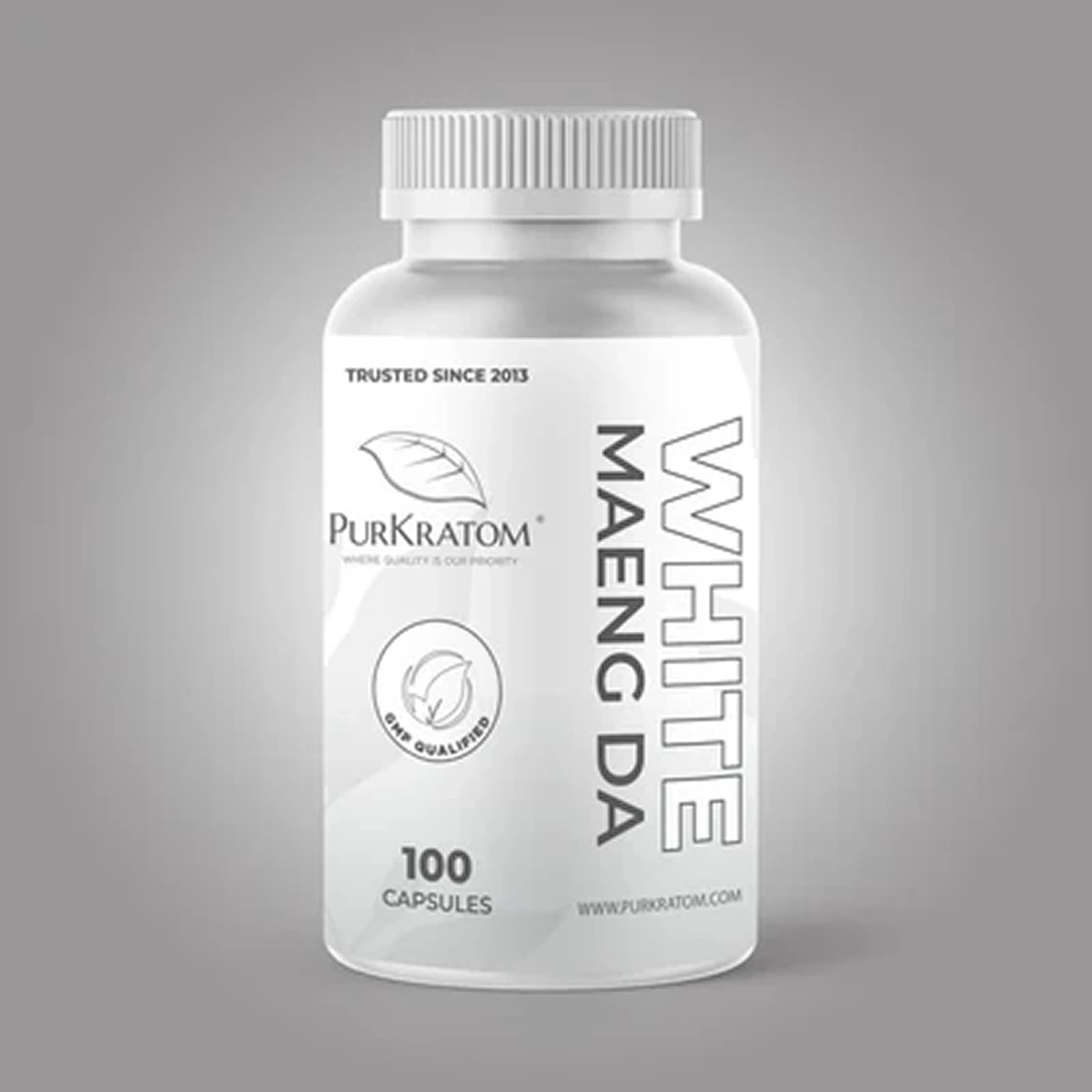
White Maeng Da Kratom Capsules
$26.99
Red Maeng Da Kratom Capsules
$26.99

White Maeng Da Kratom Powder
$31.99
Super Green Maeng Da Kratom Capsules
$26.99

Green Maeng Da Kratom Powder
$31.99