 Login


Buying kratom powder involves more than choosing a product name or comparing package sizes. Product labels, ingredient information, net weight, batch identifiers, and available laboratory reports can help you understand what a listing actually tells you and what remains unverified.
This kratom powder buying guide is designed for adults aged 21 and older who want to understand product information before considering a purchase. It explains how to read labels, compare package sizes, distinguish powder from extracts, evaluate Certificates of Analysis (COAs), and recognize the difference between documented facts and marketing claims.
The most important rule is simple: evaluate the information behind a product description, not just the description itself. A larger package does not establish better value, a strain name does not guarantee a particular composition, and laboratory testing does not prove that a product is risk-free.
Kratom products also present documented health risks, and their legal status varies by jurisdiction. The U.S. Food and Drug Administration (FDA) warns about potential serious adverse events associated with kratom and states that kratom is not lawfully marketed in the United States as a drug product, dietary supplement, or conventional food ingredient. Review current regulatory information and applicable local laws before making a purchasing decision.
What Is Kratom Powder?
Kratom is the common name for Mitragyna speciosa, a tropical tree native to Southeast Asia. Kratom powder commonly refers to dried kratom leaf material that has been ground into a powder. However, products marketed under similar names may differ in their ingredients, processing, concentration, and formulation.
Understanding the product format is an important first step when comparing listings.
What does kratom powder contain?
Kratom leaves contain naturally occurring compounds called alkaloids. Two frequently discussed alkaloids are mitragynine and 7-hydroxymitragynine, often abbreviated as 7-OH.
Their presence alone does not establish the full chemical composition of a particular package. The quantities and proportions reported for one sample should not automatically be applied to every product, batch, or formulation.
The FDA identifies mitragynine as the principal alkaloid commonly discussed in kratom research and notes that naturally occurring 7-OH is a minor constituent of the total alkaloid content in kratom leaves. Concentrated 7-OH products raise separate regulatory and public-health concerns and should not be confused with ordinary leaf powder.
How to Read a Kratom Powder Label
A product label is one of the first sources of information available to a consumer. It can help identify a product and its stated contents, but a label should not be treated as independent proof that every claim is accurate.
Review the complete product listing and, where available, the actual package label.
1. Product name and botanical identity
Check the product's full name and whether the botanical identity is stated.
The scientific name Mitragyna speciosa can help clarify which plant the listing refers to. A commercial name such as Red Bali or Green Maeng Da is not, by itself, a laboratory measurement or a complete description of the ingredients.
Look for a clear connection between the product name on the listing, the package, and any accompanying laboratory report.
If the product name changes between documents, or the report refers to a different formulation, do not assume that the information applies.
2. Ingredient list
The ingredient list helps distinguish a product described as a single botanical ingredient from one containing additional ingredients.
Check for:
-
The named botanical ingredient.
-
Other listed ingredients, if any.
-
Extracts or concentrated components.
-
Added flavorings, sweeteners, or other materials, where applicable.
-
Any difference between the ingredient list and the product description.
Do not assume that a product contains only kratom because the word kratom appears prominently on the package.
If the ingredient information is absent, unclear, or inconsistent with the product listing, treat that as an unresolved question rather than filling in the missing details yourself.
3. Net weight and package size
Net weight indicates the stated amount of product inside the package, excluding the packaging itself.
It may be expressed in grams, ounces, or another unit of mass.
For example, a listing marked 100 g and another marked 200 g describe different package quantities. The larger number tells you that the package contains a greater stated mass; it does not establish better composition, greater suitability, or a more favorable price per unit.
Check whether the displayed size refers to the total product weight, the weight of an individual item, or a bundle containing several packages.
4. Lot or batch number
A lot number or batch identifier can help connect a physical product to its associated production or testing records.
This matters because laboratory results are tied to the samples actually examined. A report for one lot should not automatically be used to support claims about a different lot.
When reviewing a product, check whether:
-
A batch or lot identifier is provided.
-
The identifier is readable on the package.
-
The available laboratory document includes a matching identifier.
-
The product description and report refer to the same formulation.
If you cannot establish a match, contact the seller or request the appropriate documentation.
5. Manufacturer, distributor, and contact information
Look for information that identifies the responsible business, such as a manufacturer or distributor name and contact details, where provided or applicable.
This information can help you direct questions about ingredients, batch documentation, and product labeling to the relevant party.
However, a professional-looking label, business address, or contact page does not independently verify the accuracy of product claims.
6. Warnings and storage information
Read any warnings, handling information, and storage instructions supplied with the product.
Keep products away from children and pets. Follow the specific product's stated storage instructions rather than assuming all powders have identical requirements.
Kratom may carry risks including dependence, withdrawal, adverse reactions, and interactions with medications or other substances. A label that includes warnings does not eliminate those risks.
7. Marketing terms
Some labels use words such as:
-
Premium
-
Strong
-
Potent
-
Pure
-
Natural
-
High quality
-
Lab tested
These terms should not be treated as interchangeable with independently verified measurements.
For example, lab tested does not tell you which laboratory performed the analysis, what was examined, which sample was tested, or what the results showed.
Likewise, natural does not mean risk-free, and premium does not establish a recognized quality standard.
The practical approach is to identify the exact factual claim behind the marketing language and determine whether supporting evidence is available.
Does a larger kratom powder package offer better value?
Not necessarily.
A larger package may have a lower price per gram, but package size alone does not account for ingredient differences, concentration, product freshness, storage conditions, or the availability of batch-specific testing.
Before comparing prices, establish whether the products are genuinely comparable.
For instance, comparing the price per gram of ordinary leaf powder with that of a concentrated extract may create a misleading impression because the formulations are different.
Compare price only after comparing product identity, formulation, net weight, and available supporting documentation.
What should you check when comparing sizes online?
Use this quick list:
-
Confirm the net weight in each listing.
-
Check whether the products have the same stated formulation.
-
Compare the listed price and calculate price per gram.
-
Review the ingredient information.
-
Check whether relevant batch-specific laboratory results are available.
-
Confirm that the selected size corresponds to the option displayed in the cart.
-
Review current shipping eligibility and applicable restrictions.
If a listing does not provide enough information to establish what is being compared, resolve that uncertainty before treating the price difference as meaningful.
Explore PurKratom's kratom powder collection to review the available listings and their current product information. Verify the specific product, size, price, and applicable restrictions before making a decision.
How to Evaluate Kratom Powder Product Information
Beyond the label and package size, a product listing may include descriptions of color, strain, processing, alkaloid content, sourcing, and testing.
Each detail has a different evidentiary value. The goal is to determine what is explicitly documented and what remains a marketing statement or an unanswered question.
Product description versus verified product fact
A product description explains how a seller presents an item. A verified product fact is supported by appropriate evidence for the specific claim being made.
Consider the following distinctions.
|
Product statement |
What to look for |
|---|---|
|
“Contains kratom powder” |
Ingredient and product-identification information |
|
“100 g package” |
Stated net weight on the current listing or package |
|
“High alkaloid content” |
A relevant laboratory report with units, sample identity, and results |
|
“Lab tested” |
The report, laboratory details, testing scope, and matching product or lot |
|
“Premium quality” |
A clearly defined, substantiated quality criterion |
|
“Pure” or “100% pure” |
Appropriate evidence supporting the exact composition claim |
|
“Sourced from a named country” |
Reliable documentation supporting the stated origin |
This table is a framework for evaluating claims, not a finding that any particular product has or lacks supporting evidence.
How should you evaluate alkaloid information?
Mitragynine and 7-hydroxymitragynine are frequently mentioned in kratom product descriptions and laboratory reports.
If a listing provides alkaloid percentages or concentrations, check:
-
Which alkaloid is being reported.
-
Whether the result is expressed as a percentage, a mass concentration, or another unit.
-
Whether the document identifies the sample.
-
Whether the result refers to the specific product or batch under consideration.
-
Whether the report explains any relevant testing limitations.
A percentage and a concentration expressed in milligrams per gram are not interchangeable without knowing the units and calculation basis.
Nor does a reported value alone establish an overall safety profile or predict an individual's response.
Avoid selecting a product based on a single alkaloid number without understanding what it represents and what the evidence does not establish.
Why do sourcing and processing claims matter?
Origin and processing information can help consumers understand how a seller describes its supply chain. However, a statement about geographic origin does not independently verify the composition of the finished product.
Similarly, a description of grinding, drying, blending, or extraction should be evaluated according to the evidence available for that particular claim.
If sourcing or processing is important to your decision, look for a clear explanation and ask whether documentation is available. Do not infer traceability from a brand name, product photograph, or generic description.
How can you recognize incomplete product information?
Potential information gaps include:
-
No clear ingredient list.
-
No stated net weight.
-
No identifiable product or batch reference.
-
A testing claim without an accessible report.
-
A laboratory report that identifies a different product.
-
Alkaloid values without units.
-
An extract description that does not explain the formulation.
-
Broad quality claims without a defined standard or supporting evidence.
An information gap does not automatically prove that a product is defective or improperly labeled. It means that the available information is insufficient to answer a particular question.
A useful response is to request clarification, compare the available documentation, or avoid relying on the unsupported claim.
What Is a Kratom Certificate of Analysis?
A Certificate of Analysis, commonly called a COA, is a laboratory document reporting analytical findings for a tested sample.
For kratom products, a COA may include alkaloid measurements, microbiological findings, heavy-metal results, or other analyses. The actual scope depends on the document and the tests performed.
A COA is useful because it can provide more specific information than a general statement that a product has been tested. However, it is not a universal guarantee of safety, and its relevance depends on the sample, testing scope, methods, and interpretation of results.
How to read a kratom COA
1. Identify the sample
Check the product name, sample description, report identifier, and lot or batch information.
2. Review the laboratory
Identify the laboratory named on the report and look for relevant information about its methods and capabilities.
3. Check the report date
A report date helps establish when the sample was analyzed. It does not automatically prove that the report applies to current inventory.
4. Examine the testing scope
Determine whether the report covers alkaloids, microbiology, heavy metals, or other substances relevant to the stated claim.
5. Read the results and units
Check the measured values, units, reporting limits, and any qualifications or notes that affect interpretation.
What do alkaloid, microbiological, and heavy-metal tests tell you?
These testing categories answer different questions.
|
Testing category |
General purpose |
Important limitation |
|---|---|---|
|
Alkaloid analysis |
Measures specified alkaloids in the sample. |
Does not establish overall safety or predict individual effects. |
|
Microbiological testing |
Evaluates specified microorganisms or microbial indicators. |
Does not establish that every possible microorganism or contaminant is absent. |
|
Heavy-metal analysis |
Measures specified metals, such as lead or nickel. |
Findings apply to the tested sample and analytes, not every possible contaminant. |
The FDA has published laboratory findings identifying lead and nickel in kratom products it examined. This is an important reason to take contaminant testing seriously, but findings from those tested products should not be attributed to every kratom product or a particular PurKratom batch without evidence.
Where can you find PurKratom laboratory results?
PurKratom provides a searchable laboratory-results resource where customers can look for available Certificates of Analysis and associated testing information.
The page describes searching by report number or lot information and distinguishes between report types for alkaloid and heavy-metal information and microbiology results. Availability and the scope of an individual report should be confirmed directly.
Before relying on a report, match it to the product or lot you are evaluating. Do not assume that a report for one product, formulation, or batch establishes the findings for another.
Use PurKratom's searchable laboratory results to look for relevant product-specific documentation. If you cannot find a matching report or interpret its scope, ask PurKratom for clarification rather than assuming that a general testing statement answers every question.
Does a COA prove that kratom powder is safe?
No. A COA documents specific analytical findings for a particular sample. It cannot establish that a product is entirely safe, free of every possible contaminant, appropriate for every individual, or free from all health risks.
A report should be interpreted in context, including its sample identification, testing methods, analytes, units, and limitations.
How to Understand Kratom Names and Categories
Kratom products are often marketed under color categories and strain names. These labels can help consumers navigate product listings, but they should not be treated as standardized guarantees of composition or effect.
What do red, green, white, and gold kratom labels mean?
Red, green, and white are common kratom marketing categories. Gold is also used in product naming.
A color or strain name is a product descriptor. By itself, it does not establish an independently verified alkaloid profile, a specific effect, or a reliable ranking of product quality.
Descriptions may refer to leaf characteristics, processing, blends, or a seller's naming convention. The exact meaning can vary between sellers.
When comparing categories, consider whether the seller explains the naming system and provides relevant product information or testing documentation.
Should you choose a product based on its strain name?
A strain name alone is not enough to establish the chemical composition of a product.
Names such as Bali, Maeng Da, Malay, Borneo, and Sumatra are commonly used in product listings. They should not be interpreted as substitutes for a full ingredient description or a product-specific laboratory report.
If two listings use different strain names, do not assume that they necessarily contain different alkaloid profiles. If two listings use the same name, do not assume that their compositions are identical.
The most useful approach is to compare the stated formulation, ingredients, net weight, and relevant testing information.
What about kratom blends?
A blend may contain more than one named kratom category or another combination of ingredients. The term alone does not disclose the exact formulation.
Look for a clear ingredient list and a description of what the blend contains. If the product uses a proprietary or otherwise unclear description, ask the seller for more information.
Do not infer composition or effects from a blend name alone.
For more context, consult PurKratom's educational comparison of red, green, and white kratom. Treat the article as a starting point for understanding product terminology, not as independent proof of medical or scientific claims.
Kratom Powder vs. Capsules vs. Extracts
The physical format of a kratom product can influence how it is packaged, described, and compared. However, product format and chemical concentration are different concepts.
|
Product format |
General description |
Information to review |
|---|---|---|
|
Kratom powder |
Loose powdered botanical material, depending on the formulation |
Ingredient identity, net weight, batch information, and available testing |
|
Kratom capsules |
A capsule format that may contain powder or another formulation |
Ingredients, capsule contents, total package quantity, and applicable label information |
|
Kratom extracts |
Products made by concentrating or extracting components from source material, with methods and concentration varying by product |
Exact formulation, concentration claims, ingredient details, and product-specific testing |
|
Gummies or shots |
Other product formats that may have different ingredients and formulations |
Complete ingredient information, amount per unit where stated, product-specific warnings, and testing documentation |
A capsule is a physical delivery format, whereas an extract describes a type of processing or formulation. A product can therefore require more detailed evaluation than the simple distinction between powder and capsules suggests.
Why does the difference matter when shopping?
Comparing equal package weights does not necessarily create a meaningful comparison between different formulations.
For example, 100 g of one product and 100 g of another have the same stated mass, but the products may differ in ingredients, concentration, and formulation.
Likewise, the price per gram of an extract should not automatically be compared with the price per gram of ordinary botanical powder as if the products were equivalent.
Review the formulation before drawing conclusions from package weight, alkaloid measurements, or price.
Read PurKratom's Kratom Powder vs. Capsules vs. Extracts: Complete Comparison for an overview of the distinctions between formats. You can also review Kratom Powder or Capsules: What's the Difference? for additional consumer education.
Once you understand the differences, you can make a more informed comparison of the relevant product information rather than relying on format names alone.
Common Kratom Powder Buying Mistakes
Even careful shoppers can misinterpret product listings when the wording is broad or the supporting documentation is difficult to find.
Mistake 1: Choosing the largest package automatically
A larger package contains more product by stated mass, but that does not establish better value or suitability.
Compare price per gram only after checking that the products have comparable formulations and relevant documentation.
Mistake 2: Treating a strain name as a laboratory result
A strain name is not a chemical analysis. Do not assume that a named variety guarantees a specific alkaloid percentage or a predictable effect.
Look for relevant, sample-specific evidence when composition is important to the comparison.
Mistake 3: Assuming “lab tested” means every concern has been addressed
Testing is meaningful only in relation to what was tested and what the results show.
A report that covers specified alkaloids does not necessarily address microbiological contamination or heavy metals. A report covering selected contaminants does not establish the absence of every possible hazard.
Review the testing scope rather than relying on the phrase alone.
Mistake 4: Using an unrelated COA
A report that cannot be matched to the product or lot being considered may not provide meaningful evidence about that product.
Check the identifiers and ask for the relevant document if the connection is unclear.
Mistake 5: Confusing marketing language with established facts
Terms such as premium, potent, and pure can sound informative without providing a measurable definition.
Ask what each term means in the specific listing and what evidence supports the claim.
Mistake 6: Ignoring the difference between powder and extract
The word powder describes physical form, not necessarily whether the material is concentrated.
Read the full formulation description, especially when terms such as extract, enhanced, or concentrated appear.
Mistake 7: Assuming online availability means local legality
A product appearing on a website does not establish that it can lawfully be purchased, shipped, or received at every address.
Review current legal restrictions and the seller's shipping policy before ordering.
Mistake 8: Relying on reviews as proof of quality or safety
Customer reviews can reflect individual experiences, but they do not replace product-specific testing or establish medical effects, safety, or guaranteed outcomes.
Use reviews, where available, only as one source of consumer context. Do not treat them as scientific evidence.
Health Risks, Regulations, and Responsible Purchasing
A buying guide should help consumers understand not only what a label says, but also the limits of what product information can establish.
Kratom is a biologically active substance with documented risks. The FDA warns about serious adverse events, including liver toxicity, seizures, and substance use disorder. Reports of adverse outcomes may involve other substances as well, so individual cases require careful interpretation. The agency also notes that scientific knowledge about kratom remains incomplete.
The CDC has also published research on kratom-related poison-center reports. Its 2026 analysis describes an increase in reported exposures between 2015 and 2025, with more severe outcomes often associated with exposure to multiple substances. Poison-center reports are important public-health evidence, but they do not establish the risk for every product or every individual.
Does product testing remove health risks?
No. Laboratory analysis can provide information about the specific substances examined in a sample. It does not eliminate the risks associated with kratom itself or establish that the product is suitable for every person.
A test result should not be interpreted as a guarantee against adverse reactions, dependence, withdrawal, interactions, or other health concerns.
Can kratom interact with medications or other substances?
Potential interactions are a relevant concern. Product labels and laboratory reports cannot determine an individual's complete interaction risk.
Anyone considering kratom who takes medication, has a medical condition, or has questions about potential interactions should consult a qualified healthcare professional. Kratom should not be used to replace prescribed care or as a self-directed treatment for a medical condition.
Avoid combining kratom with other substances based on assumptions that a product label or laboratory result makes the combination acceptable.
Is kratom legal everywhere in the United States?
No. Legal restrictions can vary by state and local jurisdiction, and regulatory information may change.
The FDA's regulatory position is that kratom is not lawfully marketed in the United States as a drug product, dietary supplement, or conventional food ingredient. This federal position should not be confused with a claim that every jurisdiction has identical rules governing all kratom-related products.
Before purchasing, check current federal, state, and local requirements relevant to the product and delivery address. Where the legal position is uncertain, seek appropriate legal guidance rather than relying solely on a seller's website.
If you have completed the checklist and want to compare available listings, visit PurKratom's kratom powder collection. Review each product's current description, package size, ingredients, available testing documents, and applicable restrictions. Product availability and specifications should be confirmed on the individual listing.
Frequently Asked Questions (FAQs)
1. What should you look for when buying kratom powder?
Review the product name, ingredient list, net weight, batch information, warnings, and available laboratory documentation. Check that any testing report corresponds to the product or lot being evaluated. Treat marketing claims cautiously, and verify current legal and shipping restrictions before making a purchase decision.
2. How do you read a kratom powder label?
Start with the product name, botanical identity, ingredients, net weight, lot or batch identifier, and warnings. Then compare the label with the online listing and available laboratory reports. Ask the seller to clarify inconsistencies rather than assuming the information refers to the same formulation.
3. Which kratom powder size should you choose?
There is no universally appropriate package size. Compare the stated net weight, current price, ingredient information, and formulation. If you calculate price per gram, remember that the result is meaningful only when the products being compared are sufficiently similar.
4. Is a larger kratom powder package better value?
Not automatically. A larger package may have a lower price per gram, but price alone does not establish product quality, composition, or suitability. Compare the actual formulations and available documentation before interpreting the price difference.
5. What is a kratom Certificate of Analysis?
A Certificate of Analysis is a laboratory document reporting analytical findings for a particular sample. Depending on the report, it may contain alkaloid measurements, microbiological results, heavy-metal results, or other specified analyses. It does not establish overall safety or guarantee that the results apply to a different batch.
6. How can you find PurKratom's kratom lab reports?
Visit PurKratom's Search Lab Results page. The resource allows customers to search for available laboratory documentation using report or lot information. Verify that any report you find matches the relevant product or batch and review exactly what was tested.
7. Are red, green, white, and gold kratom powders chemically different?
Their names identify common commercial categories, but the names alone do not establish the chemical composition of an individual product. Composition should not be inferred solely from color or strain terminology. Review the product's specific information and any relevant analytical documentation.
8. Is kratom powder the same as kratom extract?
Not necessarily. Kratom powder may refer to ground botanical leaf material, while an extract involves a process intended to concentrate or separate components from source material. A concentrated extract may also be presented as a powder. Review the formulation and ingredient details instead of relying on physical appearance alone.
Make an Informed Decision
A useful kratom powder buying guide should help consumers evaluate evidence rather than rely on product names, package size, or marketing language alone.
Start by checking the label and confirming the product's ingredients, stated net weight, and format. Then examine available laboratory reports, including the sample or batch identifier, the testing scope, and the reported results. Compare package prices only after determining whether the products are genuinely comparable.
Remember that a strain name does not guarantee a specific composition, a lower price per gram does not establish better value, and a Certificate of Analysis is not proof of overall safety. Kratom carries documented health risks, and legal restrictions vary by location.
For adults researching kratom products, the next step is to review reliable information and resolve important questions before relying on a product claim.
Start with PurKratom's educational resources, examine available laboratory results, and compare kratom powder with other product formats. If you then choose to explore available listings, use PurKratom's kratom powder collection to review current product information and verify applicable restrictions.
Disclaimer: This content is for educational and informational purposes only and is not intended to provide medical advice, diagnose, treat, cure, or prevent any disease or health condition. Kratom research is still developing, and individual responses may vary. Consult a qualified healthcare professional before using kratom, especially if you take medications, have a medical condition, are pregnant or breastfeeding, or have concerns about potential interactions. Laws and regulations regarding kratom vary by location and may change, so verify current local requirements before purchasing or using kratom.
Based on your interest,
we recommend:
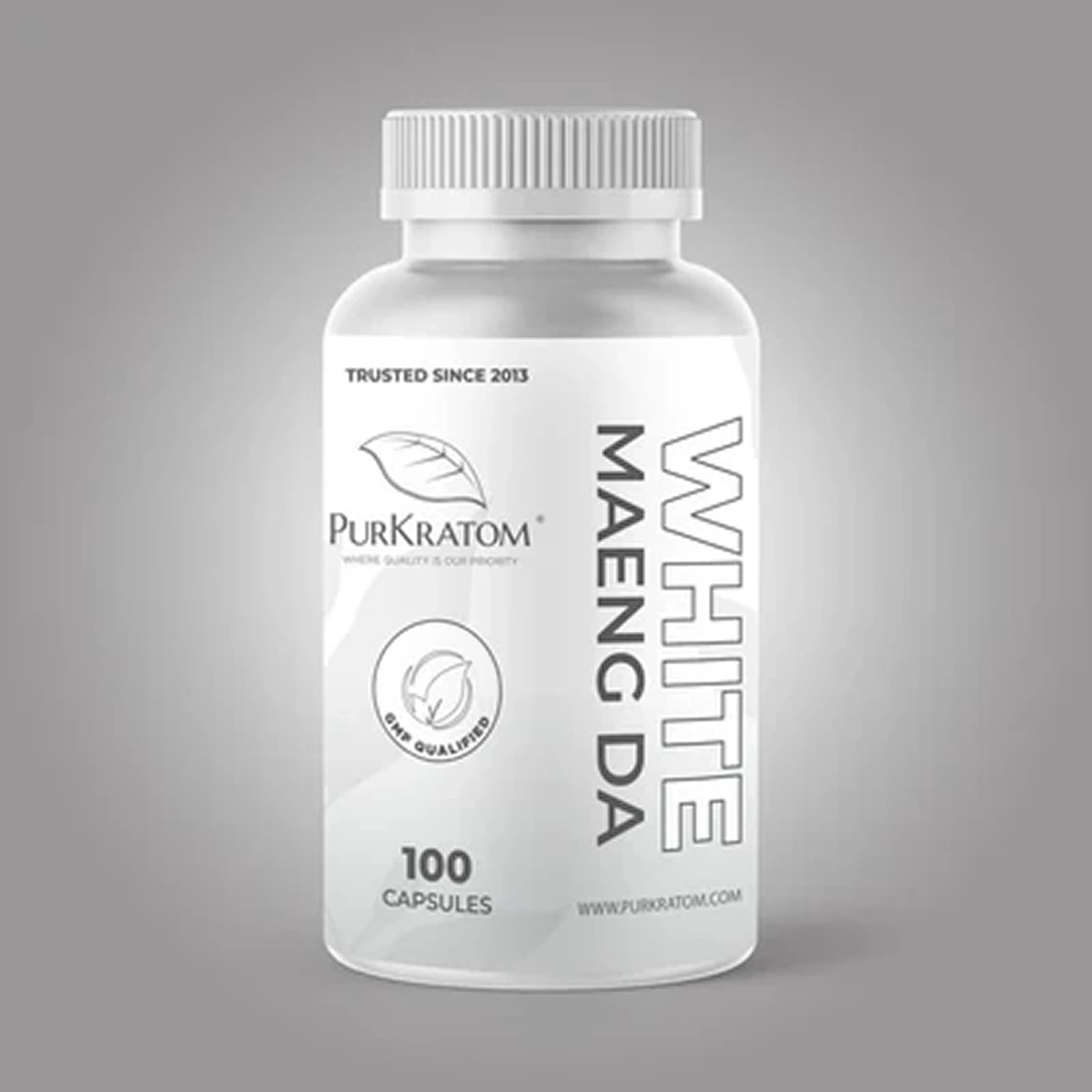
White Maeng Da Kratom Capsules
$26.99
Red Maeng Da Kratom Capsules
$26.99

White Maeng Da Kratom Powder
$31.99
Super Green Maeng Da Kratom Capsules
$26.99

Green Maeng Da Kratom Powder
$31.99