 Login


When researching kratom products, it is easy to encounter phrases such as “lab tested,” “quality tested,” or “Certificate of Analysis available.” These statements may sound reassuring, but they do not tell you exactly what a laboratory measured, which sample was tested, or what the results actually mean.
A kratom Certificate of Analysis (COA) can provide more specific information. It documents analytical findings for a tested sample and may include measurements of alkaloids, heavy metals, microbiological contaminants, or other parameters.
The important distinction is that a COA provides evidence about the tests performed and the sample analyzed. It does not automatically establish that a product is completely safe, that every possible contaminant was evaluated, or that all products from the same company have identical characteristics.
This guide explains what a kratom COA can tell you, what it cannot establish, how to interpret common laboratory results, and how to check whether a report corresponds to the product you are researching.
Whether you are learning about kratom for the first time or comparing existing product documentation, understanding these limitations can help you ask better questions and distinguish measurable laboratory findings from assumptions.
What Is a Kratom Certificate of Analysis?
A Certificate of Analysis, commonly abbreviated as COA, is a document reporting analytical findings for a sample submitted for laboratory testing.
In the context of kratom, a COA may contain results for selected alkaloids, specified heavy metals, microbiological targets, or other measured characteristics. The exact contents depend on the laboratory, analytical methods, testing panel, and sample submitted.
Kratom comes from Mitragyna speciosa, a tropical tree whose leaves contain naturally occurring alkaloids. Mitragynine and 7-hydroxymitragynine are among the compounds discussed in scientific research and product testing.
A COA helps translate laboratory analysis into documented results that a reader can examine.
However, not every COA covers the same substances or uses the same analytical methods. Two reports can both be legitimate laboratory documents while providing different types of information.
What is the purpose of a COA?
A COA can serve several practical purposes:
-
Document the results of specified laboratory tests.
-
Identify the sample that was analyzed.
-
Record the laboratory's reported measurements.
-
Show which testing methods or analytical parameters were used, when included.
-
Support traceability between a report and a particular product or lot.
-
Give consumers a basis for asking informed questions about product documentation.
The report is most useful when its findings can be connected to a clearly identified sample and the reader can understand the limits of the testing performed.
Is a COA the same as a product label?
No. A product label and a COA serve different purposes.
A label identifies the product and may state its ingredients, format, quantity, or other product information. A COA reports analytical findings for a sample.
|
Product label |
Certificate of Analysis |
|---|---|
|
Identifies the product as presented for sale |
Documents analytical results for a tested sample |
|
May list ingredients and product specifications |
May report measured compounds and contaminants |
|
May include manufacturer-provided information |
Records laboratory findings within the stated test scope |
|
May identify a lot or batch |
Can help verify that the laboratory sample corresponds to that lot |
|
Does not independently establish laboratory findings |
Does not independently establish every claim made on the product label |
The two documents can complement each other. Neither should be treated as a substitute for the other.
What Can a Kratom COA Tell You?
A COA can answer specific questions, provided the relevant tests were performed and the results are clearly reported.
1. Which sample was tested?
Sample identification is one of the most important parts of a laboratory report.
Depending on the document, you may find a product name, sample number, lot identifier, client name, or other reference information.
These details help establish what material the laboratory received and analyzed.
Without a clear connection between the report and the product under consideration, the results may have limited value for that purchasing decision.
2. Which alkaloids were measured?
An alkaloid analysis may report measurements for mitragynine, 7-hydroxymitragynine, or other compounds included in the testing panel.
These measurements describe the chemical characteristics of the analyzed sample within the scope of the laboratory's method.
They do not, by themselves, establish the product's overall quality, suitability for an individual, or expected effects.
3. Were specified heavy metals tested?
A COA may contain results for selected metals, such as lead, arsenic, cadmium, or mercury.
The exact metals included must be checked on the report. A document that lists results for some metals should not be assumed to cover every potentially relevant element.
The FDA has published research and public-health information concerning heavy metals in certain kratom products. This makes it important to distinguish a specific, documented testing panel from a broad claim that a product has been checked for contaminants.
4. Were specified microorganisms tested?
Some laboratory panels examine microbiological parameters, including particular organisms or indicators.
The results may help readers understand whether the specified targets were detected under the conditions of the test.
However, a microbiology report only addresses the organisms and parameters covered by the actual testing. It cannot establish that every possible microorganism is absent.
The Centers for Disease Control and Prevention documented a multistate Salmonella outbreak associated with kratom products in 2017–2018. That investigation illustrates why microbiological testing is a distinct consideration rather than something that can be inferred from an alkaloid result.
5. When was the sample tested?
Testing dates provide context.
A report may identify when a laboratory received a sample, completed its analysis, or issued the document. These dates are not necessarily interchangeable.
A recent date can be useful, but it does not automatically make a report more reliable than an older one. The relevance of the report depends on its sample identity, methods, testing scope, and connection to the product being evaluated.
6. What did the laboratory actually measure?
A COA can help distinguish a measured result from a general statement about product quality.
For example, a report might provide a numerical measurement for one alkaloid and separate results for selected heavy metals. Those are specific analytical findings.
They should not be expanded into a claim that the laboratory evaluated every aspect of the product.
The key principle: A COA tells you about the parameters tested, not every characteristic a consumer might want to know.
What a Kratom COA Cannot Tell You
A laboratory report can be useful without answering every question. Recognizing its limits is just as important as understanding its findings.
A COA cannot guarantee complete product safety
No limited testing panel should be treated as proof that a product is free from every possible hazard.
A laboratory may test for specific alkaloids, selected heavy metals, and specified microorganisms. Those results do not automatically address every other contaminant, manufacturing issue, interaction, or individual health risk.
The FDA continues to warn consumers about kratom-related health concerns, including serious adverse events. A favorable laboratory report does not remove those broader concerns.
A COA cannot prove that every unit has identical characteristics
A laboratory analyzes a particular sample. That sample may represent a batch or lot, but the strength of that connection depends on how the sample was selected, identified, and handled.
A report for one lot does not automatically establish the results of a different lot.
Even when the same product name appears on two documents, the reports may concern different production groups or samples.
This is why matching the report's sample identification to the product's batch information matters.
A COA cannot predict individual responses
Laboratory measurements describe the tested sample. They do not predict how a particular person will respond to a product.
An alkaloid measurement is not a clinical assessment, and it does not establish that a product will produce a particular effect.
Individual health circumstances, medications, and other substances raise questions that a routine product COA is not designed to answer.
Anyone considering kratom who has health concerns or takes medication should seek guidance from a qualified healthcare professional rather than treating laboratory findings as personalized medical advice.
A COA cannot establish that a product is legal everywhere
A laboratory report is not a legal determination.
Kratom-related rules can differ by jurisdiction and may change over time. A COA does not establish that a product may lawfully be sold, purchased, possessed, or shipped to every location.
Consumers should check current laws and applicable restrictions before making a purchase.
A COA cannot establish that a product is FDA-approved
A laboratory report is not FDA approval.
The U.S. Food and Drug Administration states that kratom products have not been approved as drugs for any medical use. A laboratory analysis does not change that status.
A COA cannot prove every marketing claim
A test result for a specific compound does not automatically substantiate claims about a product's overall quality, effectiveness, or expected experience.
For example, an alkaloid measurement cannot, by itself, prove that a product is superior to another product or that it will produce a guaranteed outcome.
Consumers should evaluate marketing language separately from documented laboratory findings.
How to Read a Kratom Lab Report
A COA may look technical at first, but you can review it systematically.
The following steps help you identify the information that matters most.
Step 1: Identify the product and sample
Begin with the sample identification section.
Look for:
-
Product or sample name
-
Sample identification number
-
Batch or lot number, if provided
-
Client or submitting party
-
Sample description
-
Laboratory report number
Not every report includes all these fields. The goal is to establish as clearly as possible what the report represents.
Step 2: Match the batch or lot number
If a product has a lot identifier, compare it with the information on the COA.
A matching identifier helps establish a connection between the product and the report. A different identifier should prompt you to ask whether the report is actually relevant to the product you are considering.
Do not assume that an older report or a report for a similar product automatically applies to a current lot.
Step 3: Verify the laboratory
Look for the laboratory's name and contact or identification information.
Then examine whether the report provides sufficient information to understand who performed the analysis and which methods were used.
Where relevant, you can also investigate laboratory accreditation. Accreditation should be verified against the issuing accreditation body's records and the laboratory's actual scope of work.
Step 4: Review the testing categories
Identify every testing category listed in the report.
For example, the document may include:
-
Alkaloid analysis
-
Heavy metal analysis
-
Microbiology testing
-
Other specified analytical measurements
Do not assume that a category was tested merely because it is common on other COAs or mentioned in a product description.
Step 5: Read the result and its units together
A numerical result is only meaningful when you understand what was measured and how the result is expressed.
Common units may include milligrams per gram (mg/g), percentage (%), and parts per million (ppm). These units represent different ways of expressing measurements and should not be compared as though they were interchangeable.
For example, a result reported in ppm should not be compared directly with a result reported in mg/g without converting the units correctly.
Always interpret a result alongside its analyte name, units, and applicable method.
Step 6: Check reporting limits and notes
A report may contain terms such as not detected, below reporting limit, or below quantification limit.
These terms describe how the result relates to the laboratory method's ability to detect or quantify a substance. Their exact meaning depends on the terminology used in the report.
Read the definitions and notes rather than assuming all laboratories use identical conventions.
Step 7: Check the dates and report status
Look at the dates of sample receipt, analysis, and report issuance when available.
Also check whether the document is complete and whether any notes or qualifications affect the interpretation of the results.
If a report is unclear, incomplete, or difficult to match to a product, ask the seller or laboratory for clarification rather than filling in missing details yourself.
Understanding Alkaloid Results
Alkaloid testing is often a prominent part of a kratom COA, but its significance depends on the compound measured and the context in which the result is used.
What is mitragynine?
Mitragynine is a naturally occurring alkaloid found in Mitragyna speciosa.
When a COA reports mitragynine, it provides a measurement for that compound in the analyzed sample using the stated analytical method.
The result may help describe the sample's chemical composition. It does not independently determine whether the product is suitable for an individual or establish a guaranteed outcome.
What is 7-hydroxymitragynine?
7-hydroxymitragynine, often abbreviated as 7-OH, is another alkaloid associated with kratom.
It is important to distinguish naturally occurring levels in botanical material from products formulated with added or enhanced concentrations. The FDA has specifically raised concerns about concentrated 7-OH products and has distinguished these products from the trace amounts naturally present in kratom leaf.
When reviewing a COA, check what the document actually reports rather than relying on a product's name or promotional description.
Does a higher alkaloid result mean a better product?
No. A higher reported value is not an automatic measure of overall product quality.
The number describes a specific analytical measurement. It does not independently establish the product's overall composition, contamination profile, suitability, or legal status.
A more meaningful evaluation considers the full report, including sample identity, testing scope, units, and any relevant product information.
Why units matter for alkaloid results
Consider two hypothetical reports:
|
Report |
Reported result |
What can be concluded? |
|---|---|---|
|
Sample A |
12 mg/g mitragynine |
The report states a measured concentration in that sample. |
|
Sample B |
1.2% mitragynine |
The report states a percentage for that sample. |
These hypothetical results would be numerically equivalent only if the percentage is expressed on a compatible mass basis: 1.2% by mass equals 12 mg/g.
Even when two values can be converted to the same unit, their meaning still depends on the sample identity, analytical method, and reporting details.
The example is illustrative, not a report of any PurKratom product.
Understanding Heavy Metal Testing
Heavy metal testing can provide information about specified elements in the sample. It is a separate testing category from alkaloid analysis.
The relevant question is not simply whether a website says “heavy metals tested.” It is whether the available documentation identifies the elements measured and reports interpretable results.
Which metals might appear on a COA?
Depending on the laboratory panel, a report may include:
-
Lead
-
Arsenic
-
Cadmium
-
Mercury
The list above is illustrative. It does not mean that every kratom COA tests all four metals or that any particular PurKratom report includes them.
Check the actual analyte list.
How should you interpret the results?
For each listed metal, review:
-
The element tested.
-
The reported numerical result or qualitative finding.
-
The unit of measurement.
-
The reporting or detection limit, where provided.
-
The analytical method.
-
Any specification or acceptance criterion stated in the document.
A reported concentration is not automatically a pass or fail. Interpretation may require a relevant, justified criterion and appropriate context.
Do not assume that a low numerical value proves the absence of all possible contaminants or that the product presents no health risks.
Does a heavy metal COA prove the product is safe?
No. It provides information about the metals tested in the sample.
It does not establish that every potentially relevant substance was examined or that the product has no other risks.
The FDA's published elemental analysis of kratom-related products illustrates why the identity of the tested elements, analytical approach, and interpretation of findings matter.
Understanding Microbiology Results
Microbiology testing examines specified microorganisms or other microbiological parameters. It addresses a different question from chemical testing.
A report that measures alkaloids does not automatically provide information about microbial contamination.
What might a microbiology panel include?
The actual panel varies. Depending on the testing program, a report may identify particular organisms or indicators and show the corresponding results.
Read the report's test names carefully. Avoid assuming that one microbiology result represents a complete examination of all possible microbial hazards.
What does “not detected” mean on a microbiology report?
“Not detected” generally means that the target was not detected under the stated testing conditions at or above the applicable detection threshold.
It does not mean that every organism was tested for, that the entire batch was examined individually, or that contamination is impossible.
The sample size, method, and testing scope matter.
Why is microbiology testing important to understand separately?
The CDC's investigation of the 2017–2018 Salmonella outbreak linked to kratom involved epidemiological and laboratory evidence, including the detection of Salmonella in collected product samples.
That history demonstrates why microbiological findings should be examined on their own terms.
A favorable alkaloid result cannot substitute for microbiology testing, just as a microbiology result cannot establish the complete chemical composition of a product.
How to Evaluate the Laboratory and Testing Methods
The credibility of a COA depends partly on the quality and transparency of the analytical work behind it.
A document can contain many numbers without giving readers enough information to evaluate what those numbers mean.
Check the laboratory's identity
Start by identifying the laboratory responsible for the report.
Look for a laboratory name, report identifier, and sufficient details to establish the document's origin. If the information is unclear, request clarification from the seller or laboratory.
Review the methods used
Analytical methods influence what a laboratory can measure and how it reports its findings.
A method suitable for one analyte or sample type may not be suitable for another. The method's scope and limitations therefore matter when interpreting the report.
A COA does not need to teach the reader analytical chemistry in full, but it should provide enough information to understand the tests performed.
What does laboratory accreditation mean?
Laboratory accreditation can provide additional information about a laboratory's technical competence within a defined scope.
For testing laboratories, ISO/IEC 17025 is an internationally recognized standard covering competence requirements for testing and calibration laboratories. The International Laboratory Accreditation Cooperation describes the international recognition framework for laboratory accreditation.
However, accreditation should not be treated as a blanket endorsement of every test a laboratory performs.
When accreditation is relevant, verify:
-
The laboratory's identity.
-
The accreditation body's identity.
-
Whether the accreditation is current.
-
The scope of accreditation.
-
Whether the relevant testing method or activity falls within that scope.
Do not assume a laboratory is accredited simply because a report uses technical language or displays a logo.
Why the reporting limit matters
A reporting limit helps explain how small a quantity can be reported under a given method.
A result below that limit is not necessarily proof that the substance is entirely absent. It may indicate that the amount, if present, was too low to report or quantify according to the method's criteria.
For this reason, a result without its relevant limits can be harder to interpret.
Why testing scope matters more than the phrase “lab tested”
A broad statement such as “lab tested” does not reveal:
-
Which compounds or contaminants were examined.
-
Which laboratory performed the tests.
-
Whether the report matches the product or batch.
-
What methods were used.
-
Which results were reported.
-
What limitations apply.
A traceable report with understandable findings offers more specific information than an unsupported general statement.
Common COA Red Flags
Not every incomplete report is necessarily fraudulent or scientifically invalid. However, missing or inconsistent information can make a report difficult to evaluate.
Use the following checklist when reviewing laboratory documentation.
1. No identifiable sample
The report does not clearly identify the sample or product being tested.
2. A mismatched lot number
The product's identifier does not match the identifier on the report, or the connection cannot be established.
3. Missing laboratory details
The document does not clearly identify the laboratory or provide enough information to verify its origin.
4. Unclear units or results
Numerical values appear without clear analyte names, units, or explanations.
5. Unclear testing scope
The report does not make it clear which parameters were actually tested.
6. Missing method or reporting information
Important notes, methods, reporting limits, or qualifications are absent or difficult to interpret.
7. Marketing claims that go beyond the evidence
The report is presented as proof of complete safety, guaranteed effects, or universal superiority.
If you encounter any of these issues, ask for clarification or additional documentation. An unclear report is a reason to investigate further, not sufficient evidence by itself to conclude that the document is fraudulent.
How to Verify a PurKratom COA
The page describes a search process using report or lot information and distinguishes between the results available through those search options. Consult the live page for its current instructions and available records.
To review a report, follow this process.
1. Open the laboratory-results page
Visit PurKratom's laboratory results database.
Use the search method described on the page and the identifier available for the product you are evaluating.
2. Match the report to the product
Compare the product information and lot or sample identifier with the information available on the report.
Do not assume that a report for a similar product or another lot applies to your product.
3. Identify the tests included
Read the actual report to determine which parameters were tested. Check whether alkaloid, heavy metal, or microbiology results are included in that specific document.
The existence of a searchable database does not mean every product or lot necessarily has every possible test available.
4. Interpret the results carefully
Review the analyte names, units, reported findings, dates, and available method information.
If a result is unclear, seek clarification rather than inferring a conclusion that the report does not support.
5. Contact the company if you cannot find a matching report
If the report is missing or you cannot establish a clear match, contact PurKratom's customer support and ask whether documentation is available for the specific product or lot.
Do not assume that a missing result means a product failed testing. Equally, do not assume that an unrelated report proves the product has been tested.
Your next step: Review PurKratom's available laboratory results and compare the available documentation with the product-specific information you have.
Using a COA to Compare Products
A COA is most useful when it helps answer a defined question about a product. It is less useful when reduced to a single score or used to rank products without considering their differences.
If you are comparing products, start with the documentation rather than a broad marketing claim.
|
Comparison factor |
What to examine |
What it does not automatically prove |
|---|---|---|
|
Product identity |
Product name and sample description |
That every similarly named product is identical |
|
Lot information |
Batch or lot identifier |
That results apply to a different lot |
|
Alkaloid profile |
Compounds measured and reported values |
Overall quality or a guaranteed experience |
|
Heavy metals |
Elements tested, units, and results |
Absence of all contaminants |
|
Microbiology |
Organisms or indicators included |
Absence of every possible microorganism |
|
Laboratory details |
Laboratory identity and available credentials |
That every test falls within an accreditation scope |
|
Testing date |
Sample and report dates |
That the report covers a current lot |
|
Reporting limits |
Detection or quantification information |
Absolute absence below the limit |
|
Product label |
Ingredients and product specifications |
Independent verification of all label claims |
Comparing product formats
Powder, capsules, and extracts are different product formats, and the documentation relevant to each may differ.
A format name alone does not establish the exact chemical composition or testing scope of a specific product.
If you are comparing formats, PurKratom provides a guide to kratom powder, capsules, and extracts.
Use that educational resource to understand format differences, then examine the specific product information and available laboratory results separately.
Why you should not choose based on one number
It can be tempting to compare products using a single alkaloid value or an apparently favorable result.
That approach overlooks important questions about sample identity, testing coverage, and the meaning of the measurement.
A better comparison starts by establishing what the reports actually show, whether the reports refer to comparable samples, and what information remains unknown.
If the available documentation does not answer a question, treat that as an information gap rather than assuming the most favorable interpretation.
Frequently Asked Questions (FAQs)
1. What is a kratom Certificate of Analysis?
A kratom Certificate of Analysis is a laboratory document reporting analytical findings for a tested sample. Depending on the testing panel, it may include alkaloid measurements, selected heavy metals, microbiological results, or other specified parameters.
2. Does a kratom COA prove a product is safe?
No. A COA documents results for the sample and tests covered by the report. It cannot guarantee complete safety, rule out every possible contaminant, predict individual responses, or establish that a product is suitable for every person.
3. What should I look for on a kratom COA?
Look for sample identification, product and lot information, laboratory identity, testing dates, analytes, results, units, methods, reporting limits, and relevant notes. These details help you understand what was tested and how the findings should be interpreted.
4. Does every kratom COA include heavy metal testing?
No. Testing panels vary. Check the actual report to determine which metals, if any, were tested. Do not assume that a general claim about laboratory testing includes every relevant element.
5. What does “not detected” mean on a kratom lab report?
“Not detected” generally means the laboratory did not detect the specified target under the stated test conditions at or above the applicable threshold. It does not necessarily mean the substance is completely absent or that other contaminants were evaluated.
6. Does a higher mitragynine result mean better quality?
No. A higher mitragynine measurement describes a particular chemical characteristic of the sample. It does not automatically establish overall quality, suitability, safety, or a particular outcome.
7. Can I use a COA from an older batch?
An older report may provide information about the sample it documents, but it should not automatically be treated as evidence about a different or current batch. Verify the sample and lot identifiers and ask the seller for current, applicable documentation when needed.
8. How can I tell whether a COA is legitimate?
Check the laboratory's identity, sample details, report number, dates, methods, and consistency of the reported information. Where relevant, verify claimed accreditation with the issuing accreditation body. If you cannot confirm the report's origin or product match, request clarification.
A kratom Certificate of Analysis can be a useful source of product-specific information, but its value depends on what was tested, how the sample was identified, which laboratory performed the analysis, and how clearly the findings are reported.
A COA may provide information about alkaloids, selected heavy metals, and microbiological parameters. It cannot establish that a product is completely safe, that every batch has identical characteristics, or that all marketing claims are supported.
The most useful approach is to read the report as a record of specific laboratory findings rather than as a universal quality rating.
Check the sample identification, match the lot number, review the testing categories, understand the units, and pay attention to the report's limitations. If essential information is missing, ask questions instead of making assumptions.
For readers researching PurKratom products, the practical next step is to examine the available documentation directly.
Review PurKratom's searchable laboratory results to look for relevant testing records and evaluate what the available evidence does and does not establish. You can also continue with PurKratom's educational guide to kratom safety, research, and responsible consumer information for a broader discussion of research limitations and consumer considerations.
Disclaimer: This content is for educational and informational purposes only and is not intended to provide medical advice, diagnose, treat, cure, or prevent any disease or health condition. Kratom research is still developing, and individual responses may vary. Consult a qualified healthcare professional before using kratom, especially if you take medications, have a medical condition, are pregnant or breastfeeding, or have concerns about potential interactions. Laws and regulations regarding kratom vary by location and may change, so verify current local requirements before purchasing or using kratom.
Based on your interest,
we recommend:
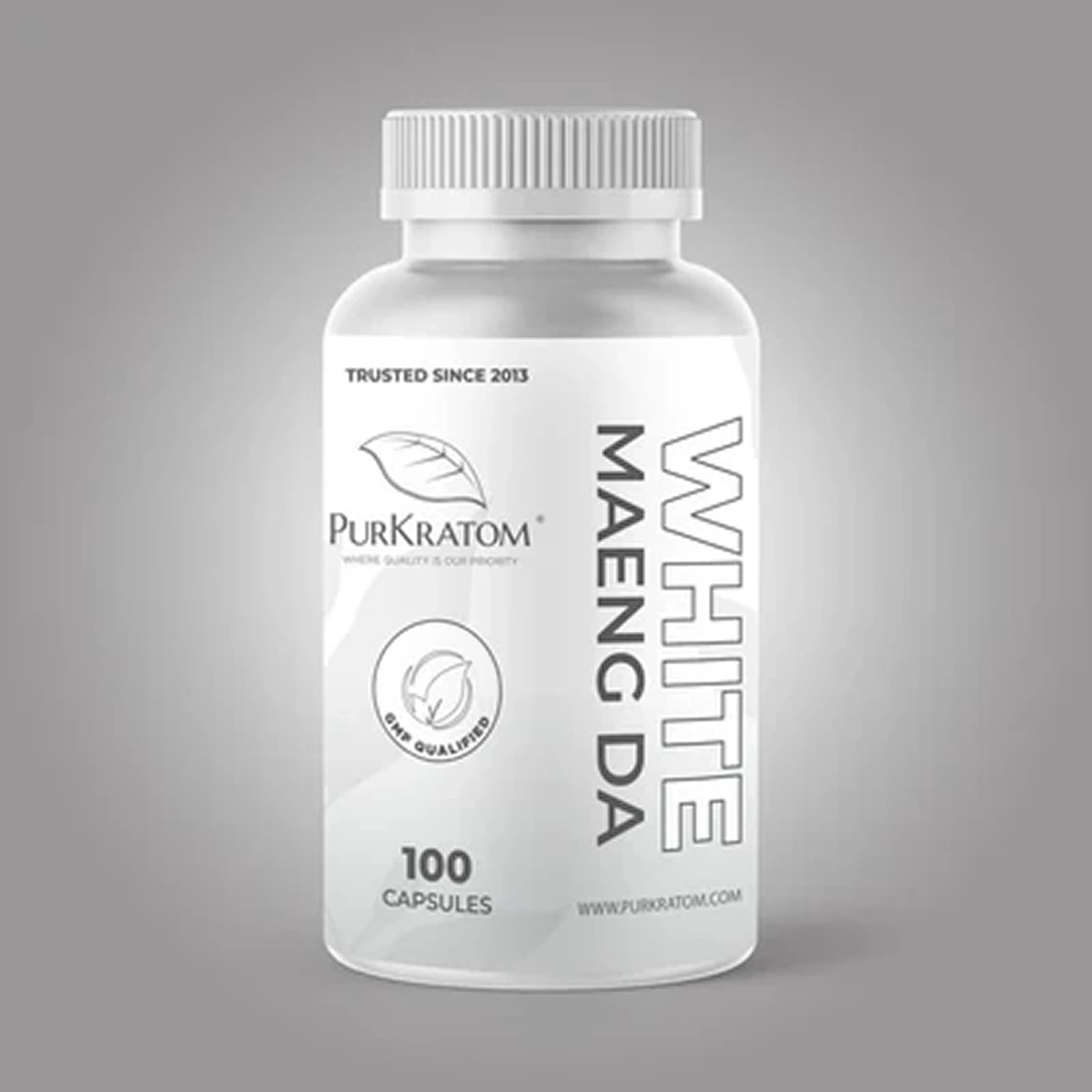
White Maeng Da Kratom Capsules
$26.99
Red Maeng Da Kratom Capsules
$26.99

White Maeng Da Kratom Powder
$31.99
Super Green Maeng Da Kratom Capsules
$26.99

Green Maeng Da Kratom Powder
$31.99