 Login
Login


If you're comparing red kratom vs. white kratom, the biggest difference you'll hear about is their commonly reported character: red kratom is generally associated with calming and relaxing experiences, while white kratom is often associated with energy, alertness, and focus.
But there's an important detail that can get lost in simple strain comparisons: kratom color does not tell the entire story.
Kratom comes from Mitragyna speciosa, a tree native to Southeast Asia. Its leaves contain numerous naturally occurring compounds, including the alkaloids mitragynine and 7-hydroxymitragynine. Research into these compounds and kratom's effects is still developing, and scientists continue to investigate how genetics, growing conditions, harvesting, processing, and product composition influence the final material.
That means choosing between red and white kratom should involve more than simply asking which color is "stronger" or "better."
In this guide, we'll explain what red and white kratom mean, how they are commonly described, what science says about color and alkaloids, how the two compare, and what consumers should look for when evaluating product quality.
What Is Kratom?
Kratom is the common name for Mitragyna speciosa, a tropical tree in the coffee family, Rubiaceae. It is native to parts of Southeast Asia, including Thailand and neighboring countries.
Historically, people in Southeast Asia have used kratom leaves in traditional practices, including chewing fresh leaves and preparing them as tea. Modern commercial products can look quite different from those traditional preparations, with kratom now commonly sold as powders, capsules, extracts, and other formats.
The plant contains many alkaloids. Mitragynine is generally considered the most abundant major alkaloid, while 7-hydroxymitragynine is present naturally at much lower levels in the plant. Both compounds have attracted scientific interest because of their interactions with opioid receptors.
However, this does not mean every kratom product has the same chemical profile.
Research has found that kratom's composition can vary depending on factors such as genetics, cultivation conditions, harvest timing, and post-harvest processing. A recent study specifically found that post-harvest conditions can influence powder color and that powder color does not necessarily correlate with alkaloid composition.
This is one reason why the familiar red, green, and white categories are useful for describing products but shouldn't be treated as precise scientific measurements.
What Is Red Kratom?
Red kratom, often called red vein kratom, is one of the most widely recognized kratom categories.
The "red" designation traditionally refers to the reddish appearance associated with the veins of certain kratom leaves. In modern commerce, however, the term can also refer to the resulting processed powder or product classification.
PurKratom's existing educational material describes red vein kratom as a popular category commonly associated with calming and relaxing characteristics.
How Is Red Kratom Commonly Described?
In consumer and commercial discussions, red kratom is frequently associated with:
- Relaxation
- Calm
- A more soothing character
- Evening-oriented use
- A less stimulating experience than white kratom
These descriptions are best understood as general reports and product-category conventions, rather than scientifically guaranteed outcomes.
Individual experiences can vary considerably. The composition of one red kratom product may also differ from another red product because "red" is not a standardized chemical specification.
Common Red Kratom Varieties
Depending on the retailer and naming system, red kratom may be sold under names such as:
- Red Bali
- Red Maeng Da
- Red Borneo
- Red Malay
- Red Thai
- Red Indo
The geographic names traditionally used in kratom marketing often refer to the region associated with the product's name. They should not automatically be interpreted as proof that a product's chemical profile is identical to material grown in that location.
PurKratom currently offers red categories including Red Bali, Red Maeng Da, and Red Vein Borneo.
Recommended internal link: [Red Kratom Collection]
For readers specifically comparing red options, a collection page can be a logical next step after learning the general characteristics of the category.
Who Typically Looks at Red Kratom?
People researching red kratom often begin with questions such as:
- "What is red kratom?"
- "How is red kratom different from white?"
- "Which kratom color is more relaxing?"
- "What are the different red kratom varieties?"
The most useful approach is to answer those questions without promising a particular outcome.
Red kratom is commonly marketed and described as the more calming or relaxing color category, but individual experiences and product composition vary.
What Is White Kratom?
White kratom, commonly called white vein kratom, is another major kratom category.
Like red kratom, its name comes from traditional descriptions of leaf appearance. White kratom is commonly associated in consumer discussions with younger or differently processed leaves and is frequently marketed as having a more stimulating or energizing character.
PurKratom's educational resources similarly describe white kratom as a category commonly associated with energy, alertness, and focus.
How Is White Kratom Commonly Described?
White kratom is often associated with:
- Energy
- Alertness
- Focus
- An uplifting character
- Daytime-oriented use
Again, these descriptions should not be interpreted as guaranteed physiological effects.
Scientific evidence does not support the idea that every white kratom product will reliably produce the same result.
Common White Kratom Varieties
Common names include:
- White Maeng Da
- White Sumatra
- White Borneo
- White Thai
- White Indo
PurKratom currently lists White Maeng Da and White Sumatra among its white kratom powder offerings.
Readers who already understand the basic distinction between colors can use a relevant collection page to compare available products and formats.
Why Do People Compare White and Red Kratom?
The comparison usually comes down to the commonly reported contrast between the two categories.
Red is often positioned toward the calming end of the spectrum, while white is often positioned toward the energizing end.
That makes the comparison intuitive for consumers but it can also oversimplify a complicated botanical product.
Red Kratom vs. White Kratom: Quick Comparison
| Characteristic | Red Kratom | White Kratom |
|---|---|---|
| Common classification | Red vein | White vein |
| Common market description | Calming, soothing, relaxing | Energizing, stimulating, uplifting |
| Traditional association | Mature-looking red-veined leaf material | White-veined leaf material |
| Common consumer interest | Relaxation-oriented products | Energy/focus-oriented products |
| Typical marketing position | Often associated with evening use | Often associated with daytime use |
| Chemical profile | Varies by product | Varies by product |
| Does color guarantee effects? | No | No |
| Does origin determine quality by itself? | No | No |
| Should testing information matter? | Yes | Yes |
The most important point in this table is the last few rows.
Color is a useful product descriptor, but it is not a laboratory analysis.
Does Kratom Color Really Determine Its Effects?
Not by itself.
This is one of the most important points to understand when comparing red kratom vs. white kratom.
For years, kratom consumers have commonly used color categories to describe differences between products. Those descriptions can be useful as a starting point, but modern research suggests that the relationship between color and chemical composition is more complicated.
A 2025 study examining kratom alkaloid biosynthesis found that post-harvest processing conditions can substantially influence the final color of kratom powder. The researchers also reported that powder color did not necessarily correlate with alkaloid composition.
That finding matters because it challenges a simple assumption:
Different-looking powder does not automatically mean completely different chemistry.
Why Is This Important for Consumers?
Imagine two products labeled "red" and "white."
It would be tempting to assume:
Red = one specific chemical profile
and
White = another specific chemical profile
But actual composition can be influenced by multiple variables.
These may include:
- Plant genetics
- Growing conditions
- Harvest timing
- Geographic origin
- Leaf maturity
- Drying conditions
- Processing methods
- Storage
- Product formulation
As a result, the label "red" or "white" shouldn't be treated as a substitute for product-specific information.
Red Kratom vs. White Kratom and Alkaloids
To understand the comparison more clearly, it helps to understand alkaloids.
Alkaloids are naturally occurring chemical compounds found in many plants. Kratom contains numerous alkaloids, with mitragynine being the most prominent major alkaloid discussed in scientific literature.
Another well-known compound is 7-hydroxymitragynine, commonly abbreviated as 7-OH.
Both compounds have been studied because they interact with opioid receptors. However, research into kratom's pharmacology and effects in humans remains incomplete.
Mitragynine
Mitragynine is the primary alkaloid found in kratom by quantity.
Its pharmacological properties are an important area of ongoing research. Scientists are studying how it is absorbed, metabolized, and interacts with different receptor systems.
7-Hydroxymitragynine
7-hydroxymitragynine naturally occurs in kratom at much lower concentrations than mitragynine.
It is particularly important to distinguish naturally occurring 7-OH from products that contain enhanced or added 7-OH.
The FDA has issued specific warnings about concentrated 7-OH products and recommends avoiding products containing added or enhanced 7-OH.
Does Red Kratom Have More Alkaloids Than White Kratom?
There is no reliable universal rule that allows consumers to determine a product's alkaloid content simply from whether it is labeled red or white.
Research indicates that alkaloid production can vary according to genetics, season, post-harvest handling, and other factors.
So rather than assuming:
"Red is stronger than white"
or
"White always has more mitragynine,"
it's more accurate to say:
The chemical composition of kratom can vary between products, and color alone is not a reliable measurement of alkaloid content.
What Factors Can Affect Kratom Composition?
If color isn't the entire story, what is?
Several factors may influence the final characteristics of kratom material.
1. Genetics
Different kratom plants can naturally produce different chemical profiles.
Research into kratom chemotypes has shown that genetic differences can contribute to variation in alkaloid production.
2. Growing Conditions
Soil, climate, rainfall, sunlight, and other environmental factors can influence plant development.
This is one reason geographic names alone should not be treated as a guarantee of identical composition.
3. Harvest Timing
The maturity of leaves can affect their chemical characteristics.
This is relevant when discussing traditional distinctions between different kratom colors.
4. Drying and Processing
Post-harvest processing is particularly important.
Research has demonstrated that processing conditions can affect the final color of kratom powder, meaning that the appearance of a finished powder may reflect processing as well as the original leaf.
5. Storage
Exposure to environmental conditions after processing may also influence product quality over time.
For consumers, proper storage information and clear labeling are therefore useful parts of product transparency.
6. Product Testing
Testing can provide information that visual appearance cannot.
This is particularly important because regulators have identified contamination concerns in some kratom products, including heavy metals and pathogenic bacteria.
If product quality is becoming your next question, review PurKratom's available product information and testing-related resources before comparing individual products.
Red Kratom vs. White Kratom in Powder and Capsule Formats
Color is only one comparison.
The product format also matters.
Red Kratom Powder
Red kratom powder is finely processed kratom leaf material.
PurKratom currently offers a red kratom powder collection that includes products such as Red Maeng Da, Red Bali, and Red Vein Borneo.
White Kratom Powder
White kratom powder is similarly offered as a powdered leaf product.
PurKratom's current white powder collection includes White Maeng Da and White Sumatra.
Capsules
Capsules can be attractive to consumers who prefer a pre-measured format rather than loose powder.
PurKratom currently offers both red and white capsule categories.
However, consumers should still read the label and understand the amount of material per capsule.
Kratom Safety and Responsible Consumer Education
A responsible comparison of red and white kratom should include safety information.
Kratom is not simply a conventional food ingredient. It contains pharmacologically active compounds, and research into its short- and long-term effects is still developing.
The FDA warns consumers about potential serious adverse events associated with kratom, including liver toxicity, seizures, and substance use disorder.
NCCIH also reports that people who regularly use kratom may experience withdrawal symptoms after stopping, and that reported adverse effects include nausea, constipation, dizziness, and drowsiness.
Product Quality Is Also a Safety Consideration
The quality of the product itself matters.
NCCIH notes that harmful contaminants, including heavy metals and disease-causing bacteria, have been found in some kratom products.
The FDA has also published laboratory findings identifying significant levels of lead and nickel in some tested kratom products.
This is why consumers should not assume that two products are interchangeable simply because both are labeled "red" or "white."
What About Medication Interactions?
Kratom may interact with medications.
NCCIH notes that kratom can interact with numerous medications and recommends discussing supplement use with a healthcare professional or pharmacist when appropriate.
Anyone taking prescription or over-the-counter medication should consider this before using kratom.
Common Questions About Kratom
1. What is the main difference between red kratom and white kratom?
The main traditional and commercial distinction is the color classification. Red kratom is commonly described as more calming or relaxing, while white kratom is commonly described as more energizing or stimulating. However, these descriptions are not guaranteed effects, and color does not reliably determine chemical composition.
2. Is red kratom stronger than white kratom?
There is no reliable scientific rule stating that red kratom is universally stronger than white kratom. Product composition can vary based on genetics, growing conditions, harvest timing, and processing.
3. Is white kratom more energizing than red kratom?
White kratom is commonly marketed and described as having a more stimulating or energizing character than red kratom. However, individual experiences can differ, and research does not establish a universal effect based solely on color.
4. Does the color of kratom indicate its alkaloid content?
Not reliably. Research indicates that processing can influence powder color and that color does not necessarily correlate directly with alkaloid composition.
5. What are the main alkaloids in kratom?
Mitragynine is the primary major alkaloid commonly discussed in kratom research. 7-hydroxymitragynine is another important compound that occurs naturally at much lower levels.
Red kratom is commonly associated with calming and relaxing characteristics, while white kratom is commonly associated with energy, alertness, and focus.
But that is only the starting point.
Kratom is a chemically complex botanical, and the relationship between color, processing, alkaloid composition, and reported effects is not as straightforward as many strain charts suggest. Research indicates that post-harvest processing can influence the color of kratom powder and that color alone does not necessarily predict its alkaloid profile.
For consumers, the better approach is to look beyond the color label.
Consider:
- What type of product is it?
- Is it powder, capsules, or an extract?
- Is the product clearly labeled?
- Is batch or laboratory information available?
- Can testing information be reviewed?
- Are you aware of potential safety concerns?
- Is kratom legal where you live?
- Are you taking medications that could interact with it?
Most importantly, remember that red and white are categories, not guarantees.
PurKratom provides educational resources and product categories that can help consumers explore the differences among kratom varieties. If you're ready to move from general education to product comparison, a logical next step is to review the relevant red and white collections and compare the available product information.
Explore PurKratom's Red Kratom Collection or PurKratom's White Kratom Powder Collection to review currently available options, product formats, and individual product information before making a purchasing decision.
Disclaimer: This content is for educational and informational purposes only and is not intended to provide medical advice, diagnose, treat, cure, or prevent any disease or health condition. Kratom research is still developing, and individual responses may vary. Consult a qualified healthcare professional before using kratom, especially if you take medications, have a medical condition, are pregnant or breastfeeding, or have concerns about potential interactions. Laws and regulations regarding kratom vary by location and may change, so verify current local requirements before purchasing or using kratom.
Based on your interest,
we recommend:
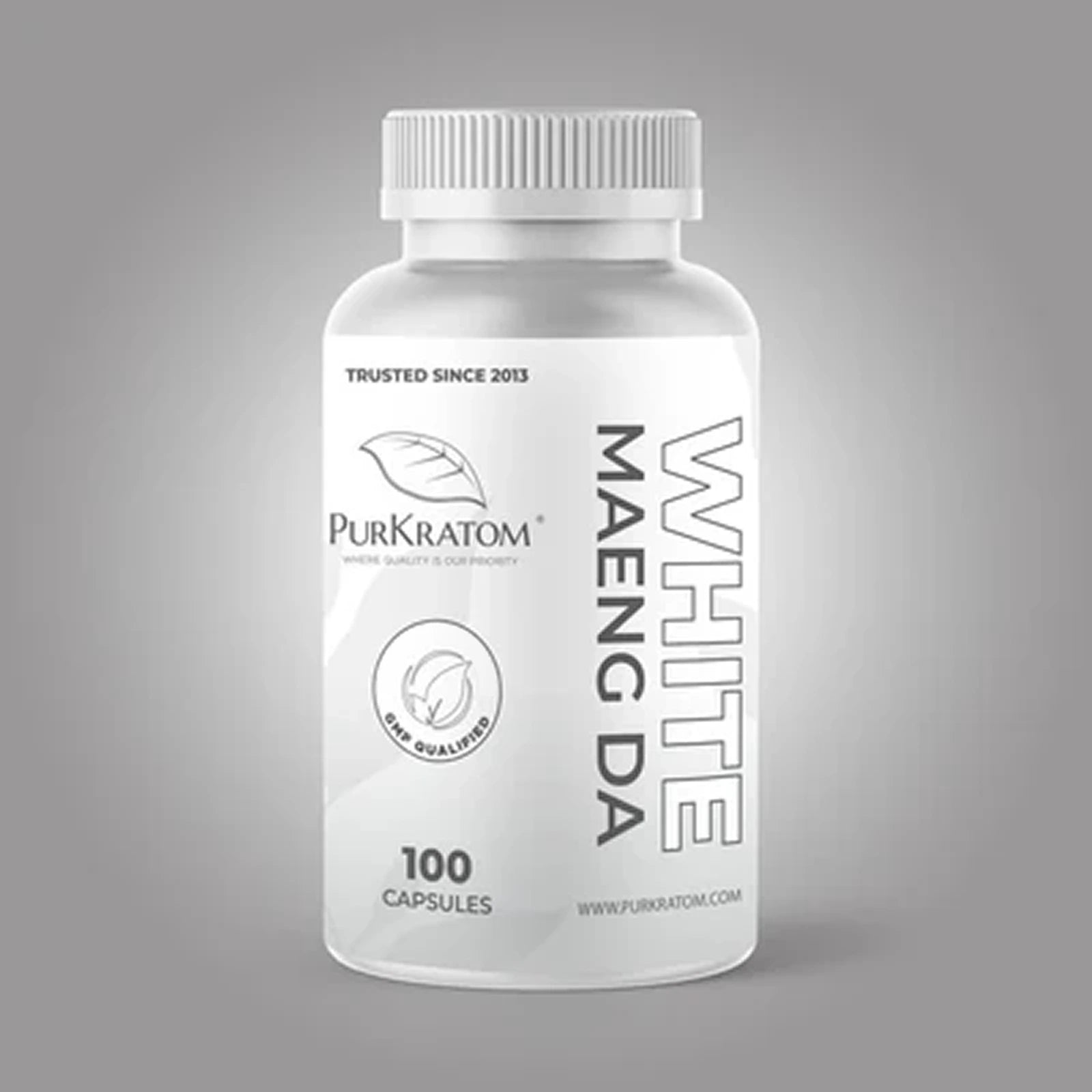
White Maeng Da Kratom Capsules
$26.99
Red Maeng Da Kratom Capsules
$26.99

White Maeng Da Kratom Powder
$31.99
Super Green Maeng Da Kratom Capsules
$26.99

Green Maeng Da Kratom Powder
$31.99