 Login
Login


If you're comparing red kratom vs. green kratom, the simplest explanation is that the names generally refer to the color of the veins in the kratom leaf and are used in the marketplace to distinguish different product types. However, color alone does not reliably tell you exactly what a particular product will contain or how a person will experience it.
Research has found that kratom products sold under different color labels can have overlapping alkaloid profiles, while newer botanical research also shows that plant variety, geography, plant part, and processing can influence alkaloid composition.
That makes the comparison more nuanced than simply saying red kratom is one thing and green kratom is another.
This guide explains the difference between red and green kratom, how color relates to the plant, what researchers know about alkaloids such as mitragynine and 7-hydroxymitragynine, how product formats affect the buying decision, and what to look for when comparing products.
What Is Red Kratom?
Red kratom, also called red vein kratom, is a category of kratom products traditionally associated with leaves displaying reddish or darker-colored veins.
Kratom itself comes from Mitragyna speciosa, a tropical tree native to Southeast Asia. The leaves contain numerous naturally occurring compounds, including the alkaloids mitragynine and 7-hydroxymitragynine.
In commercial markets, red kratom is often described using terms such as:
- Red Vein
- Red Bali
- Red Borneo
- Red Maeng Da
- Red Thai
- Red Malay
These names can refer to a combination of color classification and strain or geographic-style naming conventions.
What Is Red Kratom Commonly Described As?
In consumer and commercial descriptions, red kratom is frequently characterized as more calming or relaxing than green or white varieties.
However, that description should not be treated as a scientific guarantee.
People can respond differently to kratom products, and the actual chemical composition of a product can vary according to factors such as plant material, growing conditions, processing, storage, and manufacturing.
PurKratom currently offers a dedicated red kratom collection containing products such as Red Bali, Red Maeng Da, and Red Vein Borneo.
Is Red Kratom Always the Same?
No.
Two products labeled “red kratom” can differ.
The color classification doesn't tell you everything about:
- Alkaloid concentration
- Botanical source
- Harvest conditions
- Processing methods
- Product format
- Laboratory results
- Potential contaminants
- Batch-to-batch variation
That is one reason consumers should avoid treating the color name as a complete description of a product.
What Is Green Kratom?
Green kratom, or green vein kratom, is another common kratom classification associated with green-colored veins in the leaf.
Green kratom products may be sold under names such as:
- Green Maeng Da
- Green Malay
- Super Green Maeng Da
- Green Borneo
- Green Vein
Like red kratom, these labels can combine color terminology with a strain or regional name.
Green kratom is commonly marketed as a middle ground between red and white varieties. Commercial descriptions often associate it with a balance between calming and stimulating characteristics.
Again, these are general descriptions rather than guaranteed pharmacological outcomes.
PurKratom's current kratom-powder collection includes Green Maeng Da, Super Green Maeng Da, and Premium Green Malay products.
Red Kratom vs. Green Kratom: The Main Differences
The easiest way to understand the comparison is to separate what the labels mean from what consumers commonly expect them to mean.
| Factor | Red Kratom | Green Kratom |
|---|---|---|
| Common classification | Red-veined leaf/product category | Green-veined leaf/product category |
| Common marketplace description | More calming or relaxing | More balanced or stimulating |
| Scientific certainty about effects | Limited; color is not a guarantee | Limited; color is not a guarantee |
| Main kratom alkaloid | Mitragynine | Mitragynine |
| Other notable alkaloid | 7-hydroxymitragynine occurs naturally in trace amounts | 7-hydroxymitragynine occurs naturally in trace amounts |
| Product variability | Can vary by source and processing | Can vary by source and processing |
| Available formats | Powder, capsules and other formats | Powder, capsules and other formats |
| Best comparison factor | Testing + labeling + product information | Testing + labeling + product information |
The Key Difference Is Not Simply “Red vs. Green”
One of the biggest misconceptions about kratom is that the color label alone determines the product's chemical composition.
It doesn't.
A 2023 study published in Journal of Psychoactive Drugs examined self-reported experiences among 644 kratom users and compared products sold as red, green, and white strains. The researchers found that users reported differences that generally matched common marketplace descriptions. However, laboratory analysis of the products did not find significant cross-strain differences in alkaloid content in that particular sample.
That finding matters because it shows why consumer descriptions and chemical composition should not automatically be treated as the same thing.
At the same time, newer research shows that botanical differences can produce measurable chemical variation.
A 2026 study examining kratom samples found differences in mitragynine content between green- and red-veined botanical material, while also finding that geographic origin and plant part influenced alkaloid composition.
In simple terms: red and green labels may correspond with real botanical and processing differences, but the label itself isn't enough to predict a product's exact alkaloid profile.
Is Red Kratom Stronger Than Green Kratom?
There is no reliable rule that red kratom is always stronger than green kratom, or vice versa.
The perceived strength of a kratom product can depend on its actual alkaloid concentration, product formulation, serving size, individual factors, and other variables.
The word “stronger” is also ambiguous.
It could mean:
- Higher mitragynine concentration
- Greater subjective intensity
- A different perceived effect
- A higher amount of plant material
- A more concentrated extract
Those are not interchangeable concepts.
Color Is Not a Potency Measurement
If you want to compare two kratom products, don't assume that a darker or lighter color means one contains more active compounds.
Instead, look for measurable information where available.
Useful information can include:
- Product type
- Batch or lot information
- Alkaloid testing
- Microbiological testing
- Heavy-metal testing
- Manufacturer information
- Ingredient information
- Certificate of Analysis availability
PurKratom maintains a searchable laboratory-results page where customers can look up available Certificates of Analysis by product number or lot information.
This is a more evidence-oriented approach than assuming that a color label tells you everything about a product.
Does Kratom Color Really Predict Effects?
Not reliably on its own.
Red kratom is commonly marketed around relaxation, while green kratom is often marketed around balance, alertness, or energy. Those descriptions are widespread in the kratom marketplace, including on commercial product pages.
But scientific research has not established a simple formula such as:
Red = one predictable effect
Green = another predictable effect
Several factors can affect the composition of kratom material.
Factors That May Influence Kratom Chemistry
1. Plant Genetics
Different plants can naturally produce different concentrations of alkaloids.
2. Geography
Growing conditions and geographic origin may contribute to chemical variation.
The 2026 study mentioned earlier found differences associated with northern and southern Thai samples.
3. Plant Part
Leaves and other plant parts can have different chemical profiles.
4. Harvest Timing
The maturity of plant material can influence its chemical composition.
5. Processing
Drying, storage, fermentation, and extraction can change the composition of the final material.
6. Product Formulation
A plain leaf powder is not necessarily chemically equivalent to an extract or concentrated product.
7. Individual Differences
Even when two people use products with similar laboratory measurements, their experiences may differ.
For these reasons, “red” and “green” are useful starting points for understanding product categories, but they should not be treated as precise scientific measurements.
What Do Alkaloids Have to Do With the Difference?
To understand kratom more accurately, it helps to understand alkaloids.
Alkaloids are naturally occurring chemical compounds found in many plants. Kratom contains numerous alkaloids, with mitragynine being one of the most abundant and well-studied.
Another compound that receives significant attention is 7-hydroxymitragynine, commonly abbreviated as 7-OH.
Mitragynine
Mitragynine is the primary alkaloid found in kratom leaves and is a major focus of laboratory and pharmacological research.
Its concentration can vary across botanical samples and products.
7-Hydroxymitragynine
7-hydroxymitragynine occurs naturally in kratom in much smaller amounts than mitragynine.
This distinction is particularly important because consumers may encounter products that contain enhanced or added 7-OH, which are different from ordinary kratom leaf products.
The FDA has specifically warned consumers about products containing enhanced levels of 7-OH and distinguishes these products from naturally occurring trace amounts in kratom leaf.
Important: A product's red or green label does not mean that it has a guaranteed 7-OH or mitragynine concentration.
Why Alkaloid Testing Matters
If a company provides laboratory testing, consumers may be able to see information that is much more useful than a color name.
For example, a Certificate of Analysis may provide information about:
- Mitragynine
- 7-hydroxymitragynine
- Microbiological results
- Heavy metals
- Other tested characteristics
Testing does not eliminate all uncertainty, but it provides a more objective basis for evaluating a batch.
How to Compare Red and Green Kratom Products
If you're deciding between two products, use a structured comparison rather than relying only on the color.
1. Start With the Product Label
Look at the complete product label.
Check:
- Product name
- Ingredients
- Net weight
- Serving information
- Batch or lot identification
- Manufacturer information
- Any relevant warnings
A color name should be only one part of your evaluation.
2. Look for Laboratory Results
Laboratory testing can provide information that isn't visible from the product's appearance.
Look for testing related to:
- Alkaloids
- Heavy metals
- Microorganisms
- Contaminants
PurKratom provides a searchable COA resource for available laboratory results.
3. Compare Like With Like
If you're comparing red and green products, make sure you're comparing similar formats.
For example:
- Powder vs. powder
- Capsule vs. capsule
- Leaf product vs. leaf product
Comparing a plain powder with a concentrated extract can make a simple red-versus-green comparison misleading.
4. Check the Product's Batch Information
Batch-level information can be particularly useful because botanical products may vary between production lots.
A specific batch's laboratory results are more informative than assuming that every product carrying the same color label is chemically identical.
5. Consider the Source
Look for transparency about where the product comes from and how it is evaluated.
Responsible purchasing means asking questions rather than assuming that attractive packaging or a familiar strain name guarantees quality.
6. Separate Marketing From Evidence
Words such as “energizing,” “calming,” “premium,” or “potent” may appear in product descriptions.
Treat those terms as marketing descriptions unless they are supported by appropriate evidence.
Why Laboratory Testing Matters
Laboratory testing is particularly relevant for kratom because the appearance and name of a botanical product cannot tell consumers everything about its contents.
The FDA has reported laboratory findings involving contaminants in some kratom products, including heavy metals. In a recent analysis of 30 kratom products, FDA testing identified concerning levels of lead and nickel in some samples.
The agency has also issued warnings involving microbial contamination in kratom products, including Salmonella.
This does not mean every kratom product is contaminated.
It does mean that product quality and testing deserve serious consideration.
What About Kratom Safety and Regulation?
Understanding the difference between red and green kratom is only part of responsible consumer education.
Kratom is a scientifically and regulatorily scrutinized botanical. Research into its pharmacology, potential risks, product variability, and long-term effects remains ongoing.
The U.S. Food and Drug Administration warns consumers about serious potential risks associated with kratom, including liver toxicity, seizures, and substance use disorder. The FDA also states that there are no FDA-approved kratom drug products or over-the-counter drugs containing kratom legally marketed in the United States.
The DEA's 2024 Drugs of Abuse resource states that kratom is not controlled under the federal Controlled Substances Act, while noting that state and local restrictions may apply.
That means legality should always be checked for the specific location where you live or intend to use or purchase the product.
Red and Green Kratom Are Not Risk-Free Categories
It would be misleading to suggest that one color is universally safe while another is unsafe.
Both are forms of kratom, and both deserve the same responsible approach to labeling, testing, sourcing, and legal requirements.
Consumers should also be cautious about combining kratom with other substances. The FDA has raised concerns about adverse events and interactions involving kratom and other drugs.
If you're taking medications, have an existing medical condition, are pregnant or breastfeeding, or have concerns about substance use or dependence, consult an appropriately qualified healthcare professional before using kratom.
Red and Green Kratom: What the Research Actually Tells Us
The most important scientific takeaway is that the relationship between kratom color and chemistry is more complicated than traditional strain descriptions suggest.
One study examining commercially sold red, green, and white products found that consumers reported different subjective experiences, but the tested products did not show significant cross-strain differences in alkaloid content.
A newer 2026 study reached a different but complementary conclusion: botanical samples classified by vein color showed measurable differences in mitragynine content, while geographic origin and plant part also influenced chemical composition.
These findings are not necessarily contradictory.
They demonstrate that:
- Color may correlate with some botanical differences.
- Commercial strain names do not guarantee a fixed chemical profile.
- Growing conditions can matter.
- Processing can matter.
- Laboratory testing can reveal variation that color cannot.
- More research is needed before making broad claims about predictable effects from color alone.
This is why a high-quality educational resource should avoid presenting red and green kratom as two chemically standardized substances.
Common Questions About Red Kratom vs. Green Kratom
1. What is the main difference between red kratom and green kratom?
The terms generally refer to the color classification of kratom leaf veins and the resulting commercial product categories. Red and green products are commonly marketed with different effect descriptions, but color alone does not guarantee a specific chemical composition or subjective effect.
2. Is red kratom more relaxing than green kratom?
Red kratom is commonly marketed as more calming or relaxing, while green kratom is often described as more balanced. However, these descriptions are not guarantees, and scientific research does not support treating color as a precise predictor of individual effects.
3. Is green kratom stronger than red kratom?
Not necessarily. “Strength” can refer to several different things, including alkaloid concentration or subjective intensity. The color of a product alone cannot reliably establish its potency.
4. Does red kratom have more 7-hydroxymitragynine?
You should not assume that red kratom contains more 7-hydroxymitragynine simply because it is red. Alkaloid composition can vary by botanical material, geography, processing, and other factors. Products containing enhanced levels of 7-OH are a separate safety concern highlighted by the FDA.
5. Does green kratom contain more mitragynine?
Some botanical research has found higher mitragynine levels in tested green-veined material than red-veined material, but that does not mean every green commercial product contains more mitragynine than every red product.
The biggest difference between red kratom vs. green kratom is the classification associated with the leaf's vein color and the way these products are identified in the marketplace. Red is commonly described as more calming, while green is often positioned as a balanced option.
But the science is more nuanced.
Color does not provide a complete chemical profile. Research shows that kratom's alkaloid composition can vary according to botanical characteristics, geographic origin, plant part, and processing. At the same time, research on commercially marketed color strains has found that traditional strain descriptions do not always correspond neatly with measurable alkaloid differences.
For consumers, the practical lesson is straightforward:
Don't stop at the color label.
Look at the product format, label, batch information, available laboratory testing, alkaloid results, sourcing information, and applicable regulations.
If you're comparing PurKratom's red and green categories, start with the relevant product collections and use the available laboratory-results resource to investigate product information before making a purchasing decision.
Explore PurKratom's Red Kratom collection or browse available kratom powder categories, then review available testing information through PurKratom's Certificate of Analysis search.
Disclaimer: This content is for educational and informational purposes only and is not intended to provide medical advice, diagnose, treat, cure, or prevent any disease or health condition. Kratom research is still developing, and individual responses may vary. Consult a qualified healthcare professional before using kratom, especially if you take medications, have a medical condition, are pregnant or breastfeeding, or have concerns about potential interactions. Laws and regulations regarding kratom vary by location and may change, so verify current local requirements before purchasing or using kratom.


Based on your interest,
we recommend:
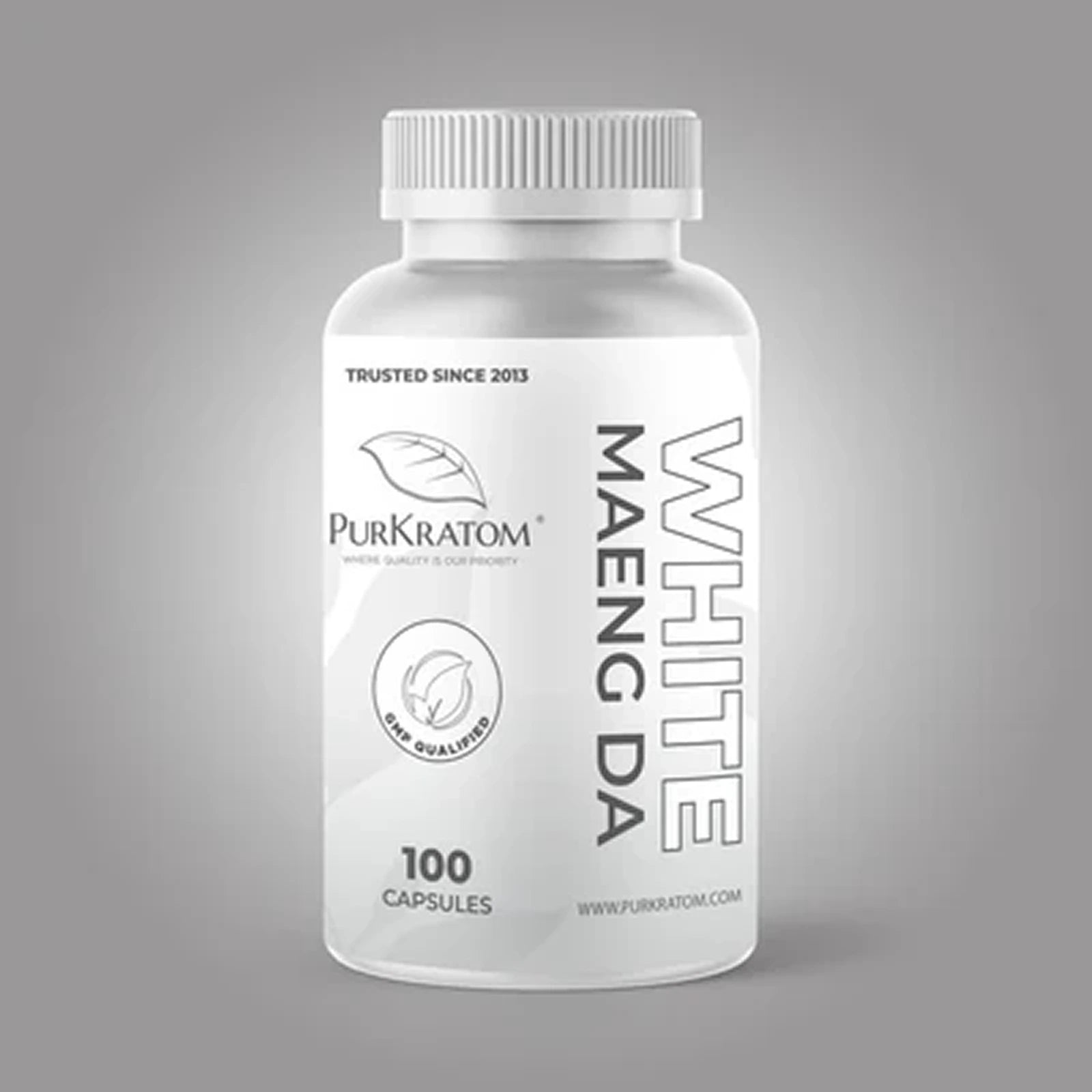
White Maeng Da Kratom Capsules
$26.99
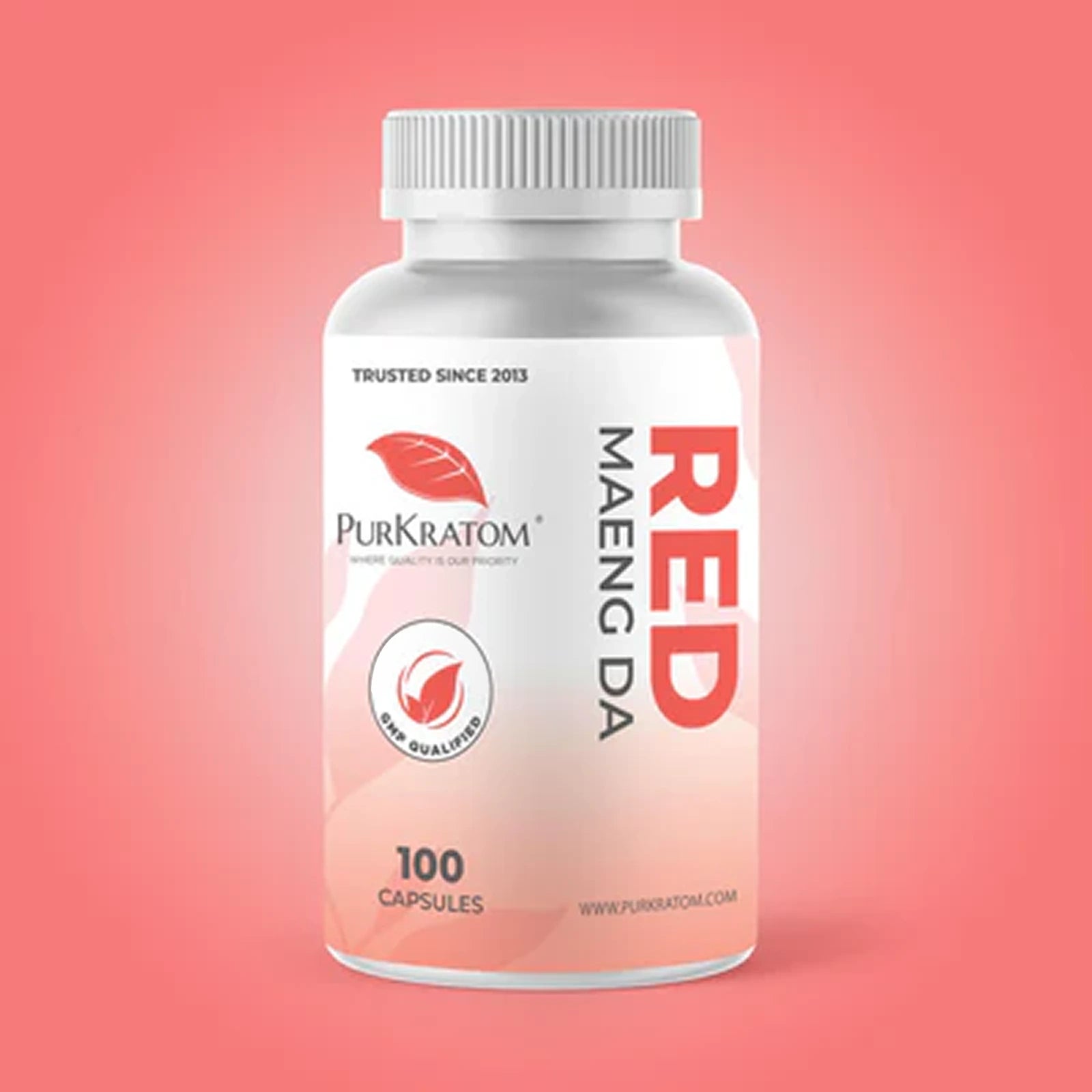
Red Maeng Da Kratom Capsules
$26.99

White Maeng Da Kratom Powder
$31.99
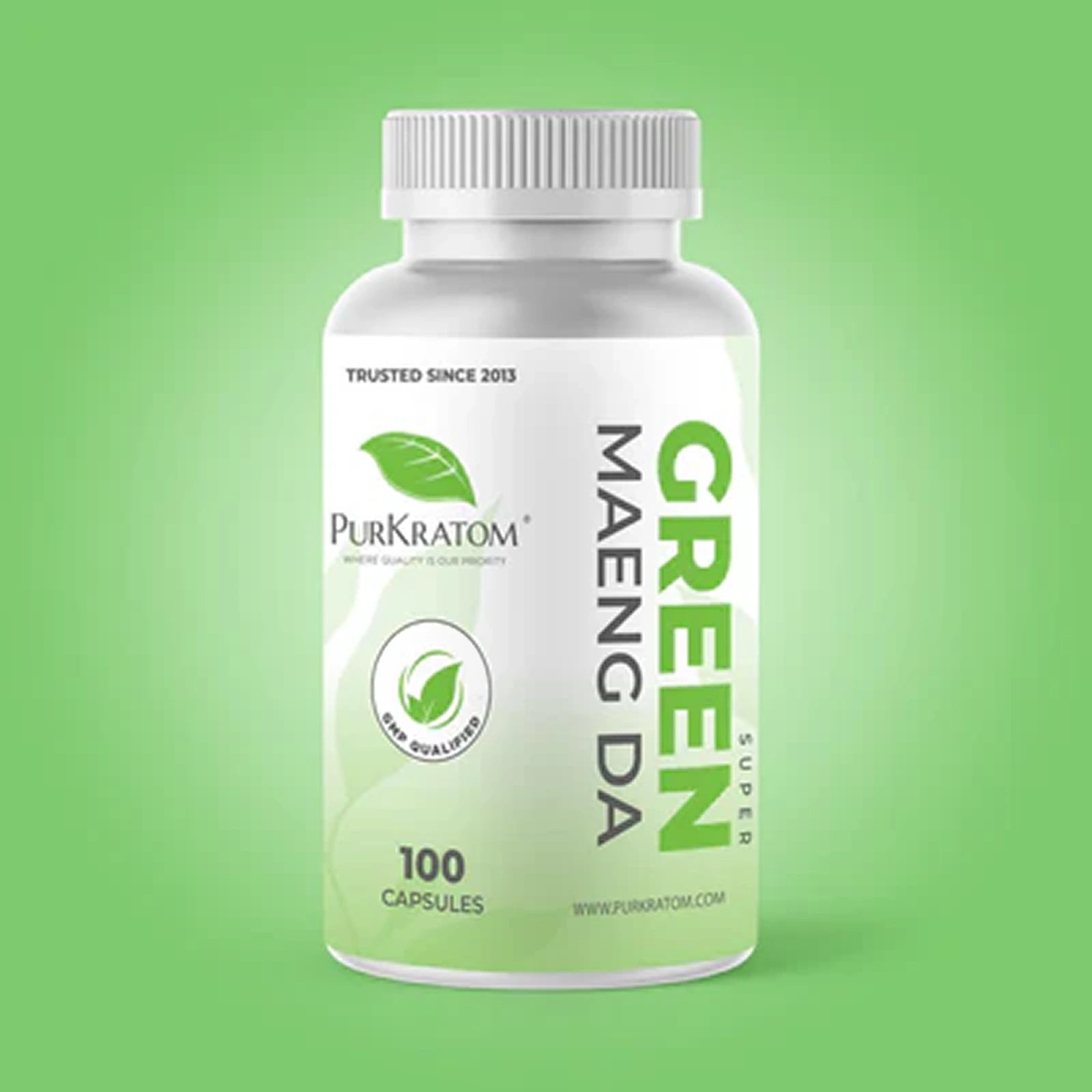
Super Green Maeng Da Kratom Capsules
$26.99

Green Maeng Da Kratom Powder
$31.99