 Login
Login

When a kratom company mentions a cGMP distribution facility, what does that actually mean? Does it refer to a warehouse, a manufacturing site, a third-party audit, or the procedures used to handle products before they reach customers?
These distinctions matter when evaluating a kratom retailer's quality documentation. A facility's procedures can affect how products are received, identified, stored, handled, packaged, and prepared for distribution. However, the phrase itself does not tell you which standards apply, which activities have been audited, or whether a particular product has supporting laboratory results.
For adults researching PurKratom, understanding these details provides a more practical way to evaluate quality-related statements than relying on a certification logo or a general marketing claim.
A cGMP distribution facility is associated with documented practices for managing products during relevant handling and distribution activities. The precise meaning depends on the applicable standards and the scope of the facility's documented qualification.
PurKratom publishes information about its GMP history, and the American Kratom Association (AKA) maintains a public GMP Qualified Vendors list. The AKA explains that its program uses independent third-party audits and evaluates facility and process compliance rather than certifying individual products. Current documentation is still necessary to establish the exact activities and dates covered by a particular qualification.
What Does a cGMP Distribution Facility Mean?
A cGMP distribution facility is a facility where relevant handling and distribution activities are managed according to applicable current Good Manufacturing Practice requirements or a defined GMP standards program.
Depending on its role and the standards involved, a facility may be responsible for receiving shipments, identifying lots, maintaining records, storing products under appropriate conditions, controlling access, managing inventory, and preparing orders for dispatch.
The important point is that the term describes a quality-management context, not a universal certification with identical requirements for every facility.
A warehouse that stores finished goods may have a different operational role from a facility that blends, processes, repackages, or labels products. A qualification covering one organization or set of activities should not automatically be assumed to cover every location, contractor, or operation in its supply chain.
The AKA's published standards program addresses manufacturing, testing, processing, packaging, storage, distribution, and labeling according to the activities applicable to each participant. Its program also describes independent third-party evaluation of facilities and related documentation.
Why does the word "current" matter?
In cGMP terminology, "current" emphasizes that practices must reflect applicable requirements and appropriate procedures rather than simply relying on outdated methods.
The acronym is widely used in regulated manufacturing contexts. However, its appearance in a company's marketing does not, by itself, prove that a specific facility is certified, inspected by a government agency, or compliant with a particular regulation.
For any specific claim, readers should identify:
-
The standard or program being referenced.
-
The company or legal entity named on the documentation.
-
The facility and activities covered.
-
The issuing or administering organization.
-
The applicable dates and current status.
-
Any exclusions or limitations described in the documentation.
This information turns a broad phrase into something that can be evaluated.
Is a distribution facility the same as a manufacturing facility?
No. The terms describe different operational roles, although one location may perform both.
|
Facility type |
Main operational role |
What to verify |
|---|---|---|
|
Distribution facility |
Receives, stores, handles, or dispatches products |
Storage and handling scope, traceability, records, and distribution procedures |
|
Manufacturing facility |
Performs specified production or processing activities |
Covered processes, production controls, documentation, and applicable audits |
|
Packaging or labeling facility |
Packages products or applies labels |
Packaging controls, labeling records, and the activities included in its qualification |
|
Third-party testing laboratory |
Analyzes samples and reports specified results |
Laboratory identity, analytical methods, sample identification, and report scope |
|
Multi-purpose facility |
Performs several operational functions |
Whether each relevant activity and location is included in the documentation |
These categories are practical descriptions, not a substitute for the actual wording of a certificate or audit report.
What this means for consumers: If a company refers to a cGMP distribution facility, ask what the facility does and which activities the documentation actually covers. Do not assume that a distribution qualification automatically proves that all manufacturing and testing activities were independently assessed.
What Does cGMP Stand For?
cGMP stands for current Good Manufacturing Practice. GMP refers to practices intended to support consistent processes, appropriate documentation, and control over relevant aspects of production and product handling.
In regulated industries, applicable requirements depend on the product's legal classification and the activity being performed. For example, the U.S. Food and Drug Administration describes distinct cGMP frameworks for certain food operations under 21 CFR Part 117 and dietary supplement manufacturing, packaging, labeling, and holding operations under 21 CFR Part 111.
That distinction matters in kratom-related content. The existence of a regulation for a particular category does not mean that kratom can legally be marketed within that category.
The FDA states that kratom is not lawfully marketed in the United States as a drug product, dietary supplement, or conventional food ingredient under its stated regulatory position. A company must not imply that kratom has FDA approval simply because a GMP-related phrase appears in its materials.
What principles are commonly associated with GMP?
Although specific requirements vary, GMP-related quality management can involve several important principles.
1. Documented procedures
Written procedures explain how particular tasks should be performed. Documentation can help employees follow consistent steps and allow reviewers to determine whether established processes were followed.
2. Product identification
Clear product and lot identification helps distinguish one batch or shipment from another. This matters when reviewing records, investigating discrepancies, or identifying which products may be affected by a quality issue.
3. Appropriate handling and storage
Storage and handling practices should reflect the applicable product requirements and the activities covered by the relevant standard. A company's actual procedures must be verified rather than assumed from a certification label.
4. Personnel training
Where required by the applicable standard, training helps ensure that personnel understand their responsibilities and relevant procedures.
5. Recordkeeping
Records may document receiving, inventory movements, processing steps, inspection activities, or other relevant operations. The exact records required depend on the applicable framework.
6. Deviation and corrective-action management
Quality systems may document problems, investigate causes, and record corrective actions. The existence, scope, and implementation of a particular procedure should be confirmed through appropriate records.
These principles provide a useful framework for understanding quality management. They are not a claim that PurKratom uses every listed procedure at every facility. That requires current company documentation.
Does cGMP mean a facility is automatically FDA-approved?
No.
A cGMP statement and FDA approval are not interchangeable. A private standards program, independent audit, government inspection, regulatory registration, and product approval have different meanings.
The AKA describes its GMP Standards Program as a third-party-audited qualification process. It also explicitly states that participation does not constitute an AKA endorsement of a vendor or its products and does not remove the participant's legal or regulatory obligations.
For kratom-related claims, the distinction is particularly important because the FDA has not approved kratom products to diagnose, treat, cure, or prevent disease.
What Happens Inside a Distribution Facility?
A distribution facility connects incoming goods with the next stage of the supply chain. Depending on its responsibilities, that stage might be another business, a retailer, or an individual customer.
The specific workflow varies. The following describes common distribution activities and the types of records a consumer or auditor might ask about. It is not a verified description of every PurKratom operation.
1. Receiving incoming products
Receiving is the point where a facility accepts a shipment and establishes what arrived.
Relevant checks may include comparing shipment documents with purchase records, checking package condition, recording quantities, and identifying product lots.
Where required, a documented receiving process can help identify missing items, damaged packages, labeling discrepancies, or other irregularities before products enter normal inventory.
Why it matters: If the business cannot identify what it received, it may be harder to trace a particular product through later stages of distribution.
2. Identifying products and lots
Product names alone may not be enough to distinguish individual batches.
A lot or batch identifier can link physical inventory with associated records. Depending on the system, those records may include supplier information, receipt dates, product descriptions, testing reports, or distribution records.
For a consumer reviewing a Certificate of Analysis (COA), a meaningful question is whether the document can be connected to the product or lot being considered.
A laboratory report for a different lot does not automatically establish the results for the lot in front of you.
3. Managing storage conditions
Products should be stored according to the requirements that apply to them and the procedures relevant to the facility.
Depending on the product and standard, storage controls may involve cleanliness, protection from contamination, packaging integrity, environmental conditions, inventory organization, or access controls.
A generic statement that a warehouse follows GMP practices does not establish which storage controls are used at a particular location. Those details need documentation.
4. Preventing mix-ups and handling errors
Distribution operations may handle multiple products, packages, labels, and lot numbers. Organized inventory and documented procedures can help reduce the chance of an item being confused with another.
Examples of practices that may be relevant include:
-
Clearly identifying stored inventory.
-
Separating products where the applicable procedures require it.
-
Recording inventory movements.
-
Checking product identity before order fulfillment.
-
Documenting and investigating discrepancies.
Whether any specific practice is required or implemented depends on the applicable standard and the operation.
5. Maintaining records through distribution
Records can help connect a received product with its subsequent movement through the supply chain.
Depending on the operation, records may identify the product, lot, quantity, receipt, storage location, and destination. Traceability systems can also support investigations when a problem is discovered.
For consumers, the practical benefit of traceability is that questions can be directed toward a specific product or lot instead of relying only on a general brand statement.
6. Preparing orders for dispatch
Before an order leaves a facility, the business may have procedures for confirming the order contents, package condition, applicable labels, and shipping documentation.
The relevant details depend on the product and the operation. A distribution-facility claim should not be treated as proof of any specific shipping method, delivery time, temperature control, or geographic shipping eligibility.
Those details should be checked separately against current company policies and applicable law.
7. Managing problems and complaints
A documented quality system may include procedures for reviewing complaints, recording discrepancies, investigating possible product issues, and determining appropriate corrective action.
The presence of a formal procedure does not prove that no problems occur. Instead, it provides a process for recording and evaluating issues.
For readers evaluating a retailer, useful questions include whether the business can identify the affected lot, explain how a concern is investigated, and direct customers to the appropriate support channel.
Why the entire distribution process matters
Product quality is not determined by one step alone. Sourcing, processing, packaging, storage, transportation, and testing may each contribute information relevant to evaluating a product.
A distribution audit can provide evidence about the activities within its scope. It cannot independently establish every fact about upstream manufacturing, every possible contaminant, or the condition of every unit sold.
That is why certification information should be considered alongside product-specific documentation and other relevant evidence.
Explore PurKratom's published quality information: Visit the GMP certifications page to review the company's published statements, then use the lab results search to look for available product testing documentation.
What Does the AKA GMP Standards Program Evaluate?
The American Kratom Association operates a voluntary GMP Standards Program for participating kratom vendors. Its stated purpose is to help consumers make informed decisions by evaluating whether participating businesses follow the program's requirements.
According to the AKA, the program involves independent third-party inspection of facilities, relevant GMP documentation, and product labels and labeling. Its requirements cover applicable manufacturing, testing, processing, packaging, storage, distribution, and labeling activities. The program is tailored to a participant's business model and the activities it performs.
How does the qualification process work?
The AKA's published program outlines a process that includes registration, preparation for compliance, an independent third-party audit, submission of the audit report, and review by the AKA.
The program also states that participants must complete an annual independent audit to maintain their qualified status. The AKA may suspend or remove a participant's status for reasons such as failing to maintain required standards or failing to submit the required audit.
This makes the date and scope of the qualification important. A historical audit can establish that an audit occurred at a particular time, but it should not automatically be represented as proof of current qualification.
What does an independent third-party audit mean?
An independent third-party audit is an assessment conducted by an organization or auditor separate from the business being assessed.
In the AKA program, the third-party audit is part of the process used to evaluate compliance with the program's standards. The AKA also describes its role in reviewing audit submissions and making the final determination about qualification.
An audit is evidence of an assessment, not proof that every possible issue has been eliminated.
When reading an audit-related claim, consider:
-
Who conducted the audit?
-
Which facility or legal entity was assessed?
-
What activities fell within the scope?
-
When was the audit completed?
-
What status was awarded?
-
Is there evidence that the qualification remains current?
-
Were any limitations or exclusions documented?
A certificate image without its supporting details may not answer these questions.
Is AKA GMP qualification a product certification?
The distinction is explicit in the AKA's published program: it describes AKA GMP qualification as facility and process certification rather than product certification. The AKA also says that qualification does not mean it endorses the quality of a vendor's products.
In practical terms, a facility or process qualification and a product laboratory report provide different kinds of evidence.
A facility audit concerns the relevant operations and processes. A laboratory report concerns the particular sample submitted for analysis and the tests reported.
Neither should be presented as proof of facts outside its scope.
Does qualification establish legal compliance for every activity?
No. The AKA states that participation in its program does not relieve participants of their statutory or regulatory obligations.
A private standards program and applicable laws operate differently. A business must still assess the legal requirements that apply to its operations, products, labeling, marketing, and distribution.
This is one reason why terms such as “GMP qualified,” “third-party audited,” “FDA registered,” and “FDA approved” should not be used interchangeably.
What should readers verify?
Before publication or reliance on a specific claim about a cGMP distribution facility, the following information should be confirmed with current supporting documents.
|
Verification item |
Why it matters |
|---|---|
|
Certificate holder |
Identifies the legal entity covered by the document |
|
Issuing or administering body |
Clarifies who issued the certificate or determined qualification |
|
Current status |
Helps establish whether the qualification remains active |
|
Issue and expiry dates |
Shows the applicable certification period, where dates are specified |
|
Facility identification |
Establishes which location was assessed |
|
Covered activities |
Clarifies whether manufacturing, storage, distribution, packaging, labeling, or other operations are included |
|
Audit documentation |
Provides evidence of the assessment and its scope |
|
Applicable products |
Clarifies whether the claim concerns an operation, product category, or specific product |
|
Restrictions or exclusions |
Prevents broader claims than the documentation supports |
Editorial limitation: The publicly accessible PurKratom page describes its GMP history, but the material reviewed for this article does not establish every detail needed to characterize a particular facility as currently “cGMP-certified,” including the precise certificate holder, current dates, and covered distribution activities. Those details must be verified before using that exact description as a factual claim.
The correct editorial approach is to explain what the term means while distinguishing documented facts from details that still require confirmation.
GMP Qualification vs. Laboratory Testing vs. FDA Approval
These terms are related to quality and regulation, but they do not mean the same thing.
|
Term |
What it refers to |
What it does not establish by itself |
|---|---|---|
|
GMP qualification |
Assessment of relevant processes and facilities against a defined standards program |
That every individual product is safe or that every batch has been tested |
|
Independent laboratory testing |
Analysis of a particular sample for specified characteristics |
That the entire facility meets GMP requirements or that every unit matches the sample |
|
Certificate of Analysis (COA) |
A report documenting specified analytical results for a sample |
That all possible contaminants were assessed or that the product has FDA approval |
|
FDA registration |
Registration of a facility when required under an applicable regulatory framework |
FDA endorsement or approval of every product made or handled there |
|
FDA product approval |
Regulatory approval of a specific product for a particular authorized use |
A status that can be inferred from a private GMP audit or certificate |
The FDA explains that cGMP frameworks establish requirements for specified regulated activities. Its current kratom information also states that kratom is not lawfully marketed in the United States as a drug product, dietary supplement, or conventional food ingredient under the agency's stated position.
Why do facility audits and laboratory reports complement each other?
A facility audit may evaluate whether relevant processes and records follow a defined standard. A laboratory report may provide analytical evidence about a sample.
Consider a hypothetical example:
A business has documentation showing that its relevant distribution procedures were assessed. Separately, a laboratory analyzes a sample associated with a particular product lot and reports results for specified substances or contaminants.
The first document addresses the assessed facility and processes. The second addresses the sample and analytical tests.
Together, these documents may provide more useful information than either one alone. However, their combined value still depends on their authenticity, scope, relevance, and dates.
A consumer should not assume that a facility audit proves that a particular lot has passed every relevant test. Nor should a laboratory report be interpreted as proof that the business follows every applicable handling procedure.
What about alkaloid testing?
Kratom contains naturally occurring alkaloids, including mitragynine. A laboratory report may provide information about specified alkaloid measurements when those tests are included.
The reported result needs to be interpreted in context. Readers should check the sample identity, units, test method where available, and reporting laboratory.
The presence of an alkaloid measurement does not establish that a product is medically effective or safe. It also does not substitute for reviewing other relevant testing information.
The FDA has separately raised concerns about products containing added or enhanced concentrations of 7-hydroxymitragynine, commonly called 7-OH. That concern should not be confused with a general claim that every natural kratom leaf product has the same composition or risk profile.
How to Review Kratom Quality Documentation
Quality-related documentation is most useful when it answers a specific question. Rather than looking only for a logo or the words “GMP certified,” use a structured review.
Step 1: Identify the exact claim
Start by identifying what the company says.
Is it claiming that:
-
A particular facility has been assessed?
-
The company has qualified under a voluntary GMP program?
-
A product has been tested by an independent laboratory?
-
A specific batch has a COA?
-
A process follows a defined quality standard?
These claims are not interchangeable. Each requires evidence appropriate to the claim being made.
Step 2: Identify the document issuer
Determine who issued the certificate or report.
For an AKA qualification, consult the AKA's own program materials and current vendor listing. For laboratory results, identify the laboratory named on the report.
A logo on a retailer's webpage may help identify the claimed program, but it is not a substitute for checking the underlying source.
Step 3: Confirm the date and status
Quality documentation can become outdated. A previous qualification does not necessarily establish that the same status remains active.
Check the applicable dates, current public listing, and any renewal requirements described by the issuing organization.
If the document does not provide enough information to establish its current status, ask the company for clarification.
Step 4: Read the scope
Look for the operations, products, and locations covered by the document.
For example, an assessment may concern a particular legal entity or facility rather than every outside contractor or location used by the business.
Similarly, a report covering a particular product sample should not be represented as a test of every product sold by the retailer.
Step 5: Match the COA to the product or lot
When laboratory information is available, compare the report with the product you are evaluating.
Check for:
-
A clear product or sample identifier.
-
A lot or batch number, where applicable.
-
The report date.
-
The laboratory's identity.
-
The tests performed.
-
The units and reported results.
-
Any stated limitations or qualifications.
A report should not be treated as relevant to a product merely because its product name looks similar.
Step 6: Understand what was tested
A laboratory can report only the tests performed on the sample it received.
If a report covers heavy metals and alkaloids, for example, do not assume that it also covers microbiological contaminants, pesticides, or every other possible hazard.
Likewise, a result for a particular sample does not establish that all products from the same company have identical characteristics.
Step 7: Check whether the company explains its quality claims clearly
A transparent explanation should distinguish among facility practices, certification status, laboratory testing, and product-specific evidence.
If a claim is unclear, ask for the supporting document rather than assuming the broadest possible interpretation.
Step 8: Consider the broader regulatory context
A quality certificate does not establish that a product is approved by a regulator or legally available in every location.
The FDA's information on kratom explains the agency's current regulatory position and its concerns about kratom-related products. Readers should review authoritative information rather than relying solely on a retailer's description.
Frequently Asked Questions (FAQs)
1. What does cGMP mean in a kratom distribution facility?
cGMP stands for current Good Manufacturing Practices. These practices establish procedures for maintaining consistent quality, appropriate handling, sanitation, documentation, and process controls. In a kratom distribution facility, applicable practices may help support product traceability and reduce the risk of handling or storage errors.
2. Why are cGMP practices important for kratom distribution?
cGMP practices can help create consistent procedures for receiving, storing, handling, documenting, and distributing products. They also support accountability by establishing records and processes that can be reviewed to identify potential quality issues.
3. How does proper storage support quality in a kratom distribution facility?
Proper storage helps maintain product integrity during handling and distribution. Appropriate environmental conditions, clean storage areas, organized inventory practices, and measures to prevent cross-contamination can support consistent quality. Clear procedures and documentation also help facilities identify and address potential storage or handling issues.
4. Is a cGMP distribution facility the same as a cGMP-certified facility?
Not necessarily. A facility may follow certain Good Manufacturing Practices without holding a formal certification. The meaning of “certified” depends on the certifying organization, the applicable standards, the facility or operations covered, and the validity of the certification. Consumers should verify specific claims through current documentation.
5. How does laboratory testing relate to cGMP practices?
Laboratory testing can complement quality management procedures by evaluating samples for specified characteristics or potential contaminants. Depending on the testing performed, reports may include information about microbial contamination, heavy metals, or alkaloid content. Testing scope and results vary, so consumers should review the actual laboratory report rather than assume every product undergoes identical testing.
6. What is a Certificate of Analysis (COA)?
A Certificate of Analysis, or COA, is a document reporting analytical results for a particular sample. It may identify the product or batch, testing laboratory, methods, and results for selected parameters. A COA is most useful when it can be matched to the product being evaluated and clearly identifies what was—and was not—tested.
7. What should consumers look for when evaluating a kratom distributor's quality practices?
Consumers can look for clear product identification, traceability records, transparent testing information, appropriate storage and handling procedures, and accessible quality documentation. They can also ask whether a claimed certification is current, which facility it covers, and which organization issued it. These details help consumers evaluate claims without relying solely on marketing language.
8. Does PurKratom's use of the term cGMP distribution facility mean every product is independently certified?
Not automatically. A facility-related quality claim does not establish that every product has a separate certification or that every batch has undergone the same independent testing. Consumers should consult PurKratom's current documentation for details about its facility practices, testing procedures, and the scope of any certifications or third-party assessments.
Understanding what PurKratom means by a cGMP distribution facility starts with recognizing the importance of consistent quality practices, proper product handling, documentation, and traceability. Good Manufacturing Practices can provide a structured approach to managing quality, but they should not be mistaken for a guarantee of product safety or proof that every product has been independently certified.
For consumers, the best approach is to look beyond marketing claims and evaluate the available evidence. Review laboratory testing information, check Certificates of Analysis when available, and ask questions about the scope and validity of any claimed certification. Transparent documentation and clearly explained quality procedures can help consumers make more informed purchasing decisions.
Ultimately, understanding the difference between established quality practices, independent testing, and formal certification makes it easier to evaluate kratom distributors responsibly. Verify specific claims through current documentation, and remember that kratom products may carry health risks and have not been established as safe and effective by the FDA for any medical use.
Ready to learn more? Visit PurKratom to explore the company’s products and resources, or use the PurKratom Lab Results Search to review available product testing information.
Disclaimer: This content is for educational and informational purposes only and is not intended to provide medical advice, diagnose, treat, cure, or prevent any disease or health condition. Kratom research is still developing, and individual responses may vary. Consult a qualified healthcare professional before using kratom, especially if you take medications, have a medical condition, are pregnant or breastfeeding, or have concerns about potential interactions. Laws and regulations regarding kratom vary by location and may change, so verify current local requirements before purchasing or using kratom.
Based on your interest,
we recommend:
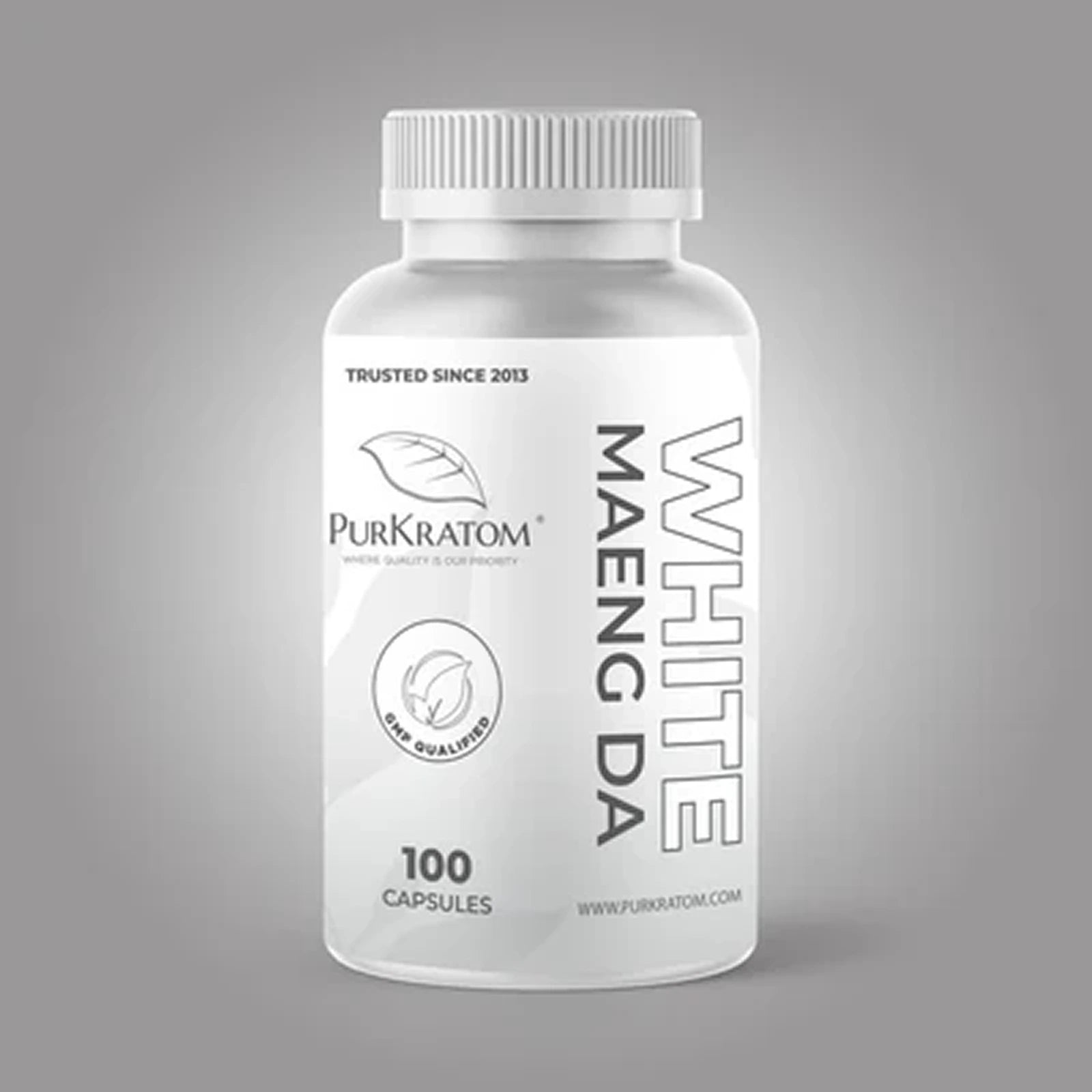
White Maeng Da Kratom Capsules
$26.99
Red Maeng Da Kratom Capsules
$26.99

White Maeng Da Kratom Powder
$31.99
Super Green Maeng Da Kratom Capsules
$26.99

Green Maeng Da Kratom Powder
$31.99