 Login
Login

When a kratom product moves from a supplier toward a retailer or consumer, distribution involves more than receiving a shipment and sending it back out. A documented quality process can help a business track inventory, review available product information, identify discrepancies, and determine what to do when a shipment or record does not meet its requirements.
For adults researching kratom products, understanding this process provides a practical way to evaluate quality-related statements. For retailers and purchasing professionals, it explains how documentation, inventory controls, and traceability can fit into distribution operations.
However, an important distinction matters from the beginning: a quality process is not the same as proof that a product is safe, and a general description of industry practices does not establish that PurKratom performs every step described here. PurKratom-specific procedures, testing arrangements, and certifications must be verified through current company documentation.
A kratom distribution quality process can involve supplier documentation, incoming inventory checks, batch identification, laboratory testing records, storage controls, labeling reviews, order traceability, and procedures for handling problems. The exact process varies by business. Consumers should verify product-specific records and current certifications rather than assume that every distributor follows the same procedures or that testing guarantees safety.
What does the process typically include?
|
Process stage |
Main purpose |
Example of supporting documentation |
|---|---|---|
|
Supplier review |
Evaluate the supplier and available records |
Supplier qualification records |
|
Receiving checks |
Document incoming shipments and discrepancies |
Receiving inspection records |
|
Batch identification |
Connect products with relevant records |
Lot numbers and inventory records |
|
Laboratory review |
Understand available analytical results |
Laboratory reports or COAs |
|
Release review |
Confirm applicable release requirements have been addressed |
Approval records or documented review |
|
Packaging and labeling checks |
Verify applicable identification and labeling requirements |
Label review records |
|
Storage and inventory |
Maintain product identification and stock records |
Inventory and storage logs |
|
Order fulfillment |
Connect orders with dispatched products |
Picking, packing, and shipment records |
|
Issue management |
Document and investigate concerns |
Deviation, complaint, or corrective-action records |
These are examples of quality-management activities, not a claim that every kratom distributor follows the same process. The exact controls depend on the products handled, the company's role, its written procedures, applicable requirements, and any independently verified standards it follows.
Why Quality Control Matters During Distribution
Distribution is an important part of a product's supply chain because a product can pass through several businesses and locations before reaching a consumer.
Records may become difficult to interpret if batch identifiers are missing, documents refer to different products, or a shipment cannot be connected to the information supplied by the original producer.
A structured process can help a business identify such gaps.
For example, a distributor might receive a shipment accompanied by a laboratory report. Before relying on that report, the business would need to establish whether the report corresponds to the material or finished product it actually received. If the identifiers do not match, the document may not support the intended conclusion.
Quality control also matters because laboratory analysis has a defined scope. A report covering selected alkaloids does not automatically provide information about microbiological contamination, heavy metals, or every other possible quality concern.
The U.S. Food and Drug Administration has published laboratory findings concerning heavy metals in sampled kratom products and has separately warned about kratom products associated with Salmonella contamination. These findings demonstrate why specific hazards and product samples matter when evaluating quality documentation. They do not establish that every kratom product has the same composition or contamination profile.
Step One: Supplier and Source Documentation
A quality-focused distribution process may begin before a shipment arrives.
The supplier review stage helps a business understand who it is purchasing from, what the supplier is providing, and which records should accompany the products.
What can supplier verification involve?
Depending on the business and its procedures, supplier verification may include:
-
Recording the supplier's business identity and contact details.
-
Documenting the product or material being purchased.
-
Reviewing applicable product specifications.
-
Identifying which records are expected with each shipment.
-
Reviewing available laboratory reports and their scope.
-
Recording applicable agreements and quality requirements.
-
Documenting how supplier-related concerns are handled.
These are examples of possible controls. They should not be interpreted as a list of procedures that PurKratom has confirmed it performs.
Why does source documentation matter?
Source documentation helps connect a product to the business that supplied it and to the records associated with that transaction.
If a product's identity, description, or batch identifier differs across purchase records, packaging, and laboratory documents, that discrepancy needs to be resolved before the records can be relied upon.
A supplier's reputation or a long-standing business relationship does not replace product-specific documentation. Likewise, receiving a document from a supplier does not automatically verify that the document is authentic, current, or applicable to the shipment.
Questions a quality review may ask
A documented review might establish:
-
Whether the supplier and product are correctly identified.
-
Whether required records were provided.
-
Whether the records match the product or batch received.
-
Whether discrepancies have been documented and resolved.
-
Whether the supplier meets the business's stated qualification criteria.
Consumers generally cannot see every commercial agreement or supplier audit. They can, however, look for clear product identification, relevant testing information, and transparent explanations of what a business can substantiate.
Important distinction: Source verification helps establish where a product came from. It does not, by itself, prove that the product meets every quality specification.
Step Two: Receiving and Incoming Shipment Checks
Once a shipment arrives, a distributor may perform receiving checks to compare the delivery with its purchase and shipping records.
The receiving stage is an opportunity to identify discrepancies before the inventory is moved into normal storage or made available for further distribution.
What can happen when a shipment arrives?
A receiving procedure may include the following activities:
-
Matching the shipment against the purchase order or receiving record.
-
Confirming product descriptions and quantities.
-
Recording visible damage or discrepancies.
-
Checking available batch or lot identifiers.
-
Reviewing accompanying documentation.
-
Recording damaged, incomplete, or unidentified goods.
-
Applying a documented hold when required by the business's procedures.
The appropriate checks depend on the type of product, its packaging, the supplier agreement, and the organization's established controls.
A receiving inspection is not necessarily a laboratory test. Looking at a package can reveal visible damage or missing information, but it cannot determine the full chemical or microbiological composition of the contents.
What happens if information does not match?
Suppose a shipment label displays a lot number that differs from the number on the accompanying laboratory report.
The mismatch creates a documentation problem. A quality-focused process would record the discrepancy and determine whether the documents refer to the same material. The business should not assume that the report applies simply because the product name looks similar.
Depending on the documented procedure and applicable requirements, the affected goods may be held while the discrepancy is investigated.
This example illustrates an important principle: a laboratory report is only useful for a particular product when its connection to that product can be established.
Why receiving records matter
Receiving records create an initial record of what entered the distribution system.
When the information is accurate, later records can be linked to the incoming shipment. When important identifiers are missing, tracking the product may become more difficult.
A consumer-facing quality statement should therefore be based on the records that actually exist, not on assumptions about what probably happened at the receiving dock.
Step Three: Batch Identification and Traceability
Batch traceability is one of the most useful concepts for understanding distribution quality.
Batch traceability is the ability to connect a product or defined group of products with records showing its identity and movement through relevant stages of the supply chain.
A batch or lot number is commonly used to distinguish one defined group of products from another. The exact meaning of a number depends on the business's identification system.
How does batch traceability work?
A documented traceability system may connect several records:
-
Supplier or purchase documentation.
-
Incoming shipment and receiving records.
-
Product or batch identification.
-
Applicable laboratory reports.
-
Inventory movements.
-
Packaging or order records, where relevant.
-
Dispatch records and other distribution documentation.
Not every business uses the same system, and not every record will be available to consumers. The objective is to maintain a reliable connection between the product and the records that apply to it.
Example: Connecting a batch to a laboratory report
Imagine that a product package displays lot number LOT-EXAMPLE-001.
This is a fictional example, not a real PurKratom batch.
A reviewer finds a laboratory report with the same identifier and checks whether the report also identifies the product, sample, testing date, analytical methods, and reported results.
The matching lot number is useful, but the review does not end there. The product description and other available identifiers must also be consistent. The reviewer should determine whether the report applies to the finished product or to a different material associated with the production process.
A matching number can support traceability, but it does not independently prove that the report is authentic or that every package in the lot was individually tested.
Why traceability matters when a problem is discovered
If a business identifies a potential issue, traceability records can help it determine which products or shipments may be involved.
Depending on the circumstances, relevant records may support an investigation into:
-
Which batch was affected.
-
Which inventory remains in the distribution system.
-
Whether other records refer to the same batch.
-
Which customers, retailers, or distribution partners may need to be contacted.
-
Whether a hold, withdrawal, recall, or other corrective action may be appropriate under applicable requirements.
These are possible uses of traceability. They are not claims that PurKratom has a particular recall system or follows a specific procedure.
What should consumers look for?
When batch information is available, check whether the product identifier can be connected to the relevant documentation.
Look for consistency between the label, product description, batch or lot number, and laboratory report. If those details do not match or the connection is unclear, ask the business to clarify rather than assuming the documents apply.
Step Four: Laboratory Testing and COA Review
Laboratory testing can provide information about specific characteristics of a sample. The usefulness of the results depends on the questions the laboratory was asked to answer, the methods used, the sample received, and the limitations of the analysis.
It is therefore important to distinguish between testing a product and managing the quality of a distribution process.
Testing can generate evidence. Quality management determines how that evidence is reviewed, recorded, and used in decisions.
What types of testing may be relevant?
The following table describes categories that may appear in product-related laboratory documentation. It does not mean every kratom product is tested for every category or that PurKratom uses any particular test.
|
Testing category |
What it may examine |
Important limitation |
|---|---|---|
|
Alkaloid analysis |
The reported amounts of selected alkaloids |
Does not establish the full chemical profile or overall product quality |
|
Heavy metal analysis |
Selected elements, such as lead or nickel |
Results depend on the elements tested, sample, method, and reporting limits |
|
Microbiological testing |
Selected microorganisms or microbial indicators |
A test covers only the organisms or indicators included in its scope |
|
Identity testing |
Characteristics relevant to identifying the tested material |
Identification methods have defined capabilities and limitations |
|
Other chemical analysis |
Specific compounds or properties requested for testing |
Does not address substances or characteristics outside the analysis |
The applicable report should state which analyses were conducted and provide the results and other information needed to interpret them.
A report that lists mitragynine, for example, should not be described as comprehensive contaminant testing unless the report actually supports that description.
What is a Certificate of Analysis?
A Certificate of Analysis (COA) is a document that reports analytical results for an identified sample or material. Its contents depend on the laboratory, product, and testing scope.
A COA may include:
-
Product or sample identification.
-
A sample or batch identifier.
-
The laboratory's name.
-
Sample receipt or testing dates.
-
The analytical methods used.
-
The parameters tested.
-
Reported results and units.
-
Applicable reporting limits or other qualifications.
-
The report's issue date and identifying number.
The exact fields vary. A document titled "Certificate of Analysis" should be evaluated based on its actual contents rather than its title alone.
Does a COA prove that a kratom product is safe?
No. A COA can provide evidence about the specific sample and parameters it covers. It cannot automatically establish that a product is free from every possible contaminant, that every package in a batch has identical characteristics, or that the product carries no health risk.
The FDA has reported heavy-metal findings in a selection of sampled kratom products. Its public information also describes concerns involving contaminated products and other adverse health risks. These findings reinforce the importance of reading test results within their stated scope rather than interpreting a laboratory report as a blanket safety guarantee.
What should a distributor review before relying on a COA?
A documented review may ask:
-
Does the report identify the relevant product or sample?
-
Is the batch or lot number consistent with the product records?
-
Which tests were performed?
-
Are the analytical methods and results identified?
-
Are the units and reporting limits understandable?
-
Is the report dated?
-
Are there qualifications, exceptions, or missing information?
-
Is the document suitable for the decision being made?
Where authenticity or applicability is uncertain, further verification may be necessary.
How can consumers review PurKratom laboratory information?
PurKratom's search lab results page is the relevant starting point for locating available testing documentation.
When reviewing a result, confirm which product or batch it covers and what was tested. Do not assume that every item in a collection has the same laboratory results, that a report remains applicable to a different batch, or that a test establishes characteristics it did not measure.
If product transparency is part of your purchasing decision, review PurKratom's available laboratory results. Use the actual report to determine which product information, test parameters, and results are available.
Step Five: Documentation Review and Product Release
After receiving records and reviewing any applicable test results, a business may use a documented process to determine whether its internal requirements for handling or distributing a product have been met.
This is sometimes called a release review, although terminology and responsibilities vary between businesses.
The central question is whether the required information is complete and whether identified issues have been resolved according to the applicable procedure.
What may a release review involve?
A quality-focused review could include:
-
Checking whether required supplier records are present.
-
Confirming that product and batch identifiers agree.
-
Reviewing applicable laboratory documentation.
-
Checking whether required inspections have been recorded.
-
Confirming that discrepancies have been addressed.
-
Documenting the decision and any relevant conditions.
The decision should follow the business's actual procedures and applicable requirements. A reviewer should not infer that a product has been formally approved for distribution merely because a laboratory report exists.
Why documentation review is different from testing
Testing answers specific analytical questions about a sample. Documentation review evaluates whether the available records support a particular decision.
For example, a laboratory may report results for selected heavy metals. A distributor reviewing the report still needs to determine whether the report applies to the relevant product, whether the results meet the applicable criteria, and whether other required records are complete.
These are separate activities.
A test result, a document review, and a release decision are not interchangeable.
What if the documentation is incomplete?
If required information is missing or inconsistent, a quality process may call for further review, a request for clarification, or a documented hold.
The appropriate response depends on the issue and the organization's procedures. The important principle is that a missing record should not be treated as proof that a check was completed.
For PurKratom, the exact release criteria, approval responsibilities, and hold procedures require internal documentation before they can be described as established company practices.
Step Six: Packaging, Labeling, and Product Identification
Packaging and labeling are important because they help identify what a product is and communicate the information presented to the purchaser.
A distribution quality process may include checks to confirm that the product's identifying details and packaging records are consistent with applicable requirements.
What can a packaging and labeling review examine?
Depending on the product and the business's responsibilities, the review may consider:
-
Product name and format.
-
Batch or lot identification, where applicable.
-
Ingredient or composition information where required.
-
Label version and product-record consistency.
-
Packaging condition.
-
Required warnings and other applicable label information.
-
Accuracy of product identifiers used in inventory and order systems.
This list describes possible review criteria, not verified PurKratom labeling procedures.
Why does consistency matter?
Consider a hypothetical situation in which the inventory system identifies one product format, while the package label identifies another. Even if the contents were tested, inconsistent identification could create confusion about which documentation applies.
The issue is not resolved simply by having a laboratory report. The product identity and the records need to be connected correctly.
Similarly, product descriptions should not go beyond what the underlying evidence supports. A report for selected alkaloids does not justify broad claims about overall quality, and a certification for a facility does not automatically certify every individual product.
What about different kratom formats?
Kratom may be sold in formats such as powder, capsules, extracts, gummies, or shots. These formats can have different compositions, packaging, and documentation needs.
Consumers who want to understand the differences can consult PurKratom's Kratom Powder vs. Capsules vs. Extracts: Complete Comparison.
The comparison is an educational starting point, not proof that a specific product has been tested or that its specifications remain current. Verify individual product details against current labeling and available documentation.
Step Seven: Storage and Inventory Management
A quality-focused distribution process may continue after a product has been received and its records reviewed.
Storage and inventory controls help a business keep products identified, maintain accurate stock records, and document how goods move through its facility.
What can storage controls involve?
Depending on the product and applicable procedures, a business may document:
-
Designated storage locations.
-
Product and batch identification.
-
Inventory quantities and movements.
-
Packaging condition during storage.
-
Relevant environmental conditions, where specified.
-
Stock status, including products placed on hold.
-
Discrepancies between physical stock and inventory records.
These are examples of possible controls. They do not establish PurKratom's actual warehouse conditions or inventory practices.
Why does inventory control matter?
Accurate inventory records can help a business identify which batch is stored in a particular location and whether the recorded quantity matches the available stock.
If a product is subject to an investigation or distribution hold, reliable records can help distinguish affected inventory from unrelated products.
However, inventory accuracy is not the same as product testing. Knowing where a package is located does not establish its chemical composition, microbiological status, or overall risk profile.
Can consumers verify storage conditions?
Usually, consumers have limited visibility into a distributor's internal storage practices. They should not assume that particular temperatures, humidity controls, handling methods, or storage durations are used unless the business has provided documentation that supports those statements.
If storage conditions are important to a purchasing decision, ask whether the business has documented requirements relevant to the product and whether it can explain the scope of its controls.
Step Eight: Order Fulfillment and Distribution Records
The final stages of distribution connect inventory records to the products prepared for delivery.
A distribution process may use order and shipment records to identify what was picked, packed, and dispatched. The details depend on the business's fulfillment system and the requirements that apply to its products.
What can happen during order fulfillment?
Possible activities include:
-
Retrieving the product identified by the order.
-
Checking the product description and relevant identifiers.
-
Recording the quantities prepared for shipment.
-
Checking packaging and required order information.
-
Creating the applicable shipment record.
-
Recording dispatch details and any relevant exceptions.
Not every business follows the same workflow. The list is illustrative and should not be presented as a confirmed description of PurKratom's order-processing system.
How do fulfillment records support traceability?
A complete record system can connect incoming inventory to outgoing distribution activity. Depending on the available records, this may help a business identify which products were shipped during a particular period or which batch identifiers were associated with certain orders.
The ability to trace a product depends on the quality and completeness of those records.
A tracking number alone typically identifies a shipment rather than proving the analytical status of the product inside it. Similarly, a shipping confirmation does not establish that a product passed any particular laboratory test.
What Happens When a Quality Concern Is Identified?
A quality process is not defined only by the checks performed when everything appears normal. It also depends on how a business documents and responds to discrepancies.
A concern could involve an inconsistent lot number, missing paperwork, damaged packaging, an unexpected laboratory result, or a complaint about a product.
The appropriate response depends on the nature of the concern, the evidence available, and applicable legal or business requirements.
How can a quality concern be handled?
A documented issue-management process may involve several stages.
1. Record the concern. Document what was observed, when it was identified, and which product or batch may be involved.
2. Establish the scope. Review available records to determine whether the issue relates to a particular shipment, product, batch, or broader process.
3. Apply appropriate controls. Depending on the circumstances, a business may place affected inventory on hold while the concern is assessed.
4. Investigate the evidence. Review relevant records, test results, supplier information, and other available evidence.
5. Determine the appropriate response. The response may involve correcting a record, requesting further information, conducting additional investigation, contacting relevant parties, or taking other action required by the circumstances.
6. Document the outcome. Record the findings and any corrective action taken, where applicable.
These steps describe a general approach to issue management. They do not confirm that PurKratom follows a specific complaint, investigation, hold, or recall procedure.
What is corrective action?
Corrective action generally refers to steps taken to address an identified problem and, where appropriate, its underlying cause.
For example, if a business finds that product records repeatedly contain inconsistent identifiers, an investigation might examine how those identifiers are entered, checked, and transferred between systems.
The purpose is not merely to correct one record. It is to determine whether a broader process issue exists and whether a documented change is warranted.
The details should be supported by actual records rather than assumed from general quality-management terminology.
Why transparency matters during an investigation
Clear communication helps prevent a narrow finding from being exaggerated.
If a report identifies one parameter in one sample, the result should not be presented as proof of every characteristic of every product. If a discrepancy remains unresolved, it should not be described as though the issue has been cleared.
Quality communication should distinguish between confirmed facts, pending investigations, and matters that remain unknown.
What Does AKA GMP Qualification Actually Mean?
The American Kratom Association operates a Good Manufacturing Practice Standards Program for businesses involved in applicable kratom product activities.
According to the AKA's published program description, qualification involves an independent third-party evaluation of applicable facilities, documentation, and practices. The program addresses relevant aspects of manufacturing, packaging, labeling, holding, and distribution according to its standards and the activities covered. The AKA also states that qualification does not constitute its endorsement of a participant's products.
This distinction matters because quality certifications are sometimes described too broadly.
What can AKA GMP qualification indicate?
Where a business's current status is independently verified, the qualification can indicate that the business has undergone the applicable program evaluation and met its requirements within the program's scope.
The AKA describes its program as involving independent audits and ongoing requirements for maintaining qualified status. Its published information also explains that program requirements are tailored to a participant's business model and applicable activities.
Frequently Asked Questions (FAQs)
1. What happens inside a kratom distribution quality process?
A kratom distribution quality process may include supplier verification, incoming shipment inspections, batch identification, laboratory documentation review, labeling checks, inventory management, and shipment recordkeeping. The exact steps depend on the distributor's documented procedures and responsibilities.
2. What is kratom quality control?
Kratom quality control involves checks used to evaluate specific product characteristics or determine whether defined requirements have been met. Claims about quality control should be supported by documentation identifying the checks performed and their scope.
3. What is a Certificate of Analysis (COA) for kratom?
A Certificate of Analysis is a laboratory document that reports analytical results for an identified sample or material. It may include product identification, batch information, testing methods, dates, and results. Its scope depends on the analyses actually performed.
4. Does laboratory testing guarantee kratom product safety?
No. Laboratory testing provides information about the sample and parameters examined. It does not guarantee that a product is free from every possible contaminant or risk, nor does it establish that every package in a batch has identical characteristics.
5. Why is batch traceability important in kratom distribution?
Batch traceability connects products with relevant supplier records, laboratory reports, inventory movements, and distribution documentation. Accurate records can help businesses investigate quality concerns and identify potentially affected products.
6. What should consumers look for in a kratom laboratory report?
Consumers should review the product and sample identification, batch or lot number where available, laboratory identity, testing dates, analytical parameters, methods, units, and reported results. The documentation should support the specific quality claim being made.
7. What does AKA GMP qualification mean for a kratom distributor?
The American Kratom Association's GMP Standards Program evaluates applicable business practices and processes within its defined scope. Qualification is not FDA approval, government certification, an endorsement of a company's products, or a guarantee of product safety.
8. Where can consumers find PurKratom's laboratory testing information?
Consumers can visit PurKratom's laboratory-results search page to review available documentation. Check the applicable product or batch identifiers and the specific testing parameters before drawing conclusions about a product.
PurKratom's shipping policy is the appropriate starting point for reviewing its published shipping information. Eligibility must be checked against current policy and applicable law; it should not be inferred from a previous order or an outdated third-party statement.
Before making a purchasing decision, compare the available product documentation with the information in the PurKratom FAQ and current shipping policy. Confirm any details that affect your decision directly with the company.
Ready to learn more? Visit PurKratom to explore the company’s products and resources, or use the PurKratom Lab Results Search to review available product testing information.
Disclaimer: This content is for educational and informational purposes only and is not intended to provide medical advice, diagnose, treat, cure, or prevent any disease or health condition. Kratom research is still developing, and individual responses may vary. Consult a qualified healthcare professional before using kratom, especially if you take medications, have a medical condition, are pregnant or breastfeeding, or have concerns about potential interactions. Laws and regulations regarding kratom vary by location and may change, so verify current local requirements before purchasing or using kratom.
Based on your interest,
we recommend:
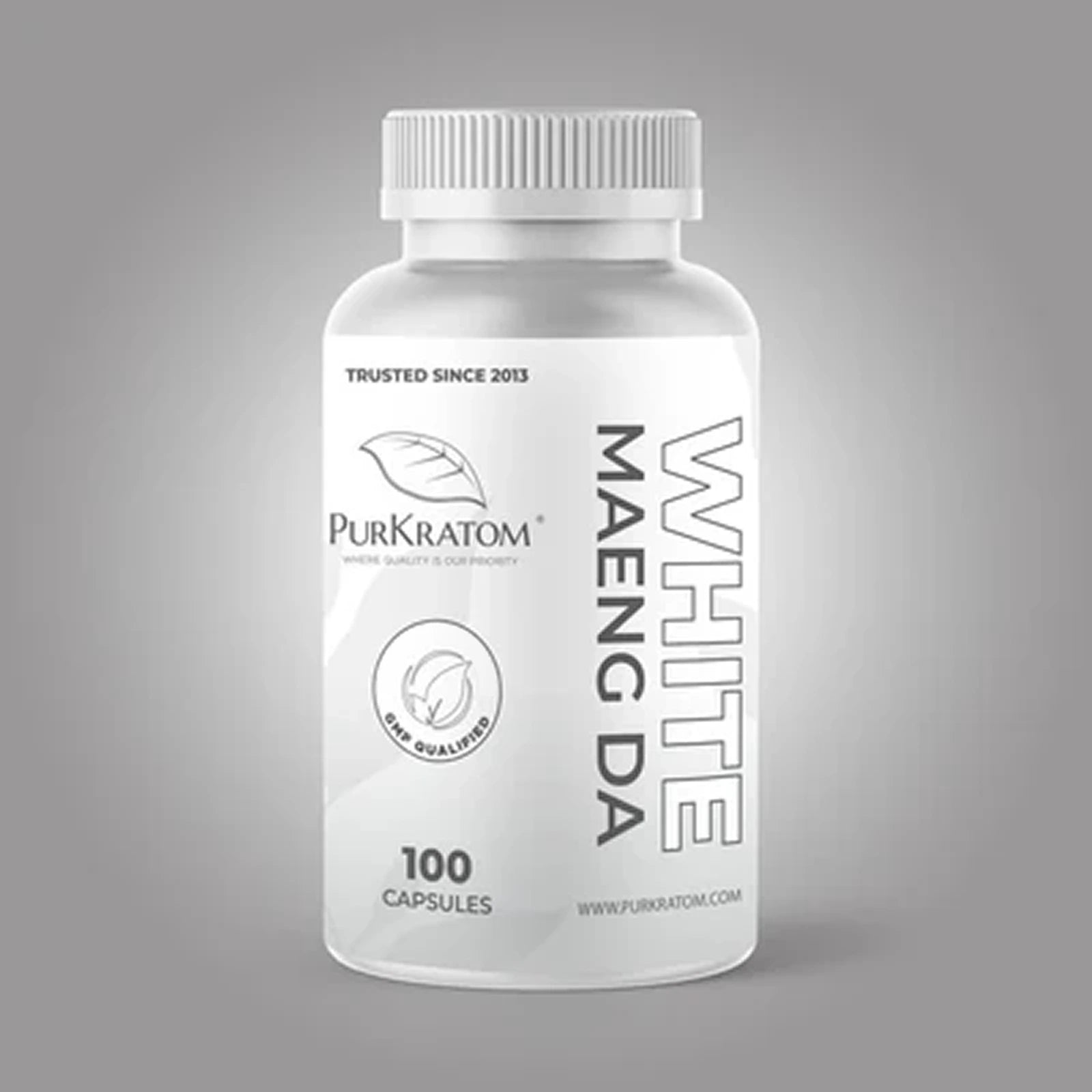
White Maeng Da Kratom Capsules
$26.99
Red Maeng Da Kratom Capsules
$26.99

White Maeng Da Kratom Powder
$31.99
Super Green Maeng Da Kratom Capsules
$26.99

Green Maeng Da Kratom Powder
$31.99