 Login
Login

To verify a kratom vendor’s GMP claim, check the issuing organization, current qualification status, audit or certification scope, applicable dates, and whether the claim applies to the vendor’s actual operations. For product quality information, separately review product-specific laboratory results. GMP qualification and laboratory testing answer different questions and should not be treated as proof of absolute product safety.
If a kratom vendor says it follows Good Manufacturing Practices (GMP), that claim should be something you can investigate, not simply something you have to trust.
But what exactly should you verify?
A legitimate GMP claim involves more than a badge on a website. Depending on the program, it can involve independent audits, documentation, manufacturing or distribution practices, labeling, testing procedures, and continuing qualification requirements. At the same time, GMP qualification is not the same thing as FDA approval, and it does not automatically establish that every individual product or batch is safe.
For adults researching kratom vendors, the most useful approach is to treat GMP as one part of a larger verification process.
The American Kratom Association (AKA), for example, describes its GMP Standards Program as a program involving third-party evaluation of participating vendors and their manufacturing, testing, processing, packaging, storage, distribution, and labeling practices. The AKA also states that its Qualified Vendor designation is not an endorsement of a product and represents facility and process qualification rather than product certification.
That distinction matters.
What Does GMP Mean for a Kratom Vendor?
Good Manufacturing Practices, commonly abbreviated GMP, are systems and requirements intended to help control how products are manufactured, packaged, labeled, held, or otherwise handled.
The exact meaning depends on the specific GMP framework being referenced.
For example, FDA's dietary supplement CGMP framework under 21 CFR Part 111 addresses manufacturing, packaging, labeling, and holding operations for dietary supplements. FDA explains that the regulation requires covered parties to establish and follow current good manufacturing practices to help ensure product quality and appropriate packaging and labeling.
The AKA's kratom-specific GMP program is a separate industry program. The AKA says its standards are substantially based on the manufacturing requirements in 21 CFR Part 111, while also explaining that participation in its program does not mean that products must be labeled as dietary supplements.
GMP is about processes, not a magic quality label
When a vendor says it is GMP qualified, the useful question is not simply:
"Does this company have a GMP logo?"
A better question is:
"What organization evaluated the vendor, what activities were evaluated, when was the evaluation performed, and is the qualification still current?"
That approach turns a marketing statement into something that can actually be checked.
Why Should You Verify a GMP Claim?
Kratom products can vary in composition, format, processing, and concentration. Kratom, or Mitragyna speciosa, contains multiple alkaloids, with mitragynine and 7-hydroxymitragynine among the compounds that have received substantial research attention.
The broader kratom marketplace can also include powders, capsules, extracts, gummies, shots, and other formats.
That makes documentation particularly useful.
How to Verify a Kratom Vendor's GMP Claims
Start with the source of the claim, confirm current status, review the scope and dates, and then separately evaluate product-specific laboratory documentation.
A practical verification process looks like this:
- Identify the GMP program or issuing organization.
- Check the vendor against the organization's current records where available.
- Confirm the qualification or certification is current.
- Determine what activities and facilities are covered.
- Look for evidence of independent auditing.
- Review available product-specific laboratory results.
- Match testing documentation to the actual product or batch.
- Examine the vendor's labeling and quality claims.
- Watch for language that turns GMP into an unsupported safety guarantee.
- Check current regulatory information before making assumptions about legality or FDA status.
The key is to verify the claim and then verify the product separately.
Step 1: Identify Who Issued the GMP Qualification
The first question should always be:
Who says this vendor is GMP qualified?
A website may display phrases such as:
- GMP certified
- GMP approved
- GMP compliant
- cGMP facility
- GMP manufacturer
- AKA GMP qualified
Those terms are not interchangeable.
If the claim refers to the American Kratom Association, go directly to the AKA's current GMP information rather than relying solely on the vendor's own description.
The AKA describes its program as a third-party audit-based program and maintains a list of qualified vendors. The organization also explains that qualified participants must maintain their status through annual independent audits.
What to record
When checking a GMP claim, note:
| Verification item | What to look for |
|---|---|
| Program | Name of the GMP program |
| Issuing organization | Organization administering the program |
| Vendor | Exact legal or trading name |
| Facility | Facility or operation covered |
| Status | Current qualification or certification |
| Date | Relevant audit, certification, or renewal date |
| Scope | Activities covered |
| Auditor | Independent auditor where applicable |
| Renewal | Evidence of continuing qualification |
If the vendor cannot identify the program behind its GMP claim, that is a reason to investigate further.
Step 2: Check Whether the Status Is Current
A certificate or audit from several years ago may demonstrate that something happened in the past. It does not automatically establish the vendor's current status.
This is one of the most important parts of verification.
The AKA states that vendors participating in its GMP Standards Program must undergo an annual independent audit to maintain qualified status.
Therefore, a useful verification question is:
Can the current GMP status be independently confirmed today?
The AKA maintains a Qualified Vendors listing for this purpose. Its current online listing includes PurKratom among the vendors displayed as qualified.
However, a listing should still be interpreted correctly.
The AKA says its list is provided for informational purposes and that participation should not be interpreted as an endorsement of an organization, vendor, product, or service.
Step 3: Understand What the Audit Actually Covers
The AKA says its GMP Standards Program evaluates elements of manufacturing, packaging, labeling, holding, and related activities. Its current program also references manufacturing, testing, processing, packaging, storage, distribution, and labeling requirements applicable to the participant's activities.
This means scope matters.
Imagine two statements:
"Our company is GMP qualified."
versus:
"Our specific facility and applicable operations were evaluated under [named program], with the current status independently verifiable."
The second statement gives a reader substantially more information.
Ask what facility is actually covered
This matters particularly when a brand uses third-party manufacturers, co-packers, distributors, or multiple facilities.
A brand's website and the physical location responsible for manufacturing or handling a product may not always be the same entity.
That is why a careful reader should ask:
- Is the vendor itself qualified?
- Is a manufacturing facility qualified?
- Is a distribution facility involved?
- Is the qualification applicable to the actual operation producing or packaging the product?
- Does the program cover the activity being described?
Step 4: Review the Vendor's Laboratory Documentation
A trustworthy quality-verification process should make it reasonably clear how consumers can access relevant laboratory information when such information is available.
For PurKratom, the verified laboratory-results resource is:
PurKratom Search Lab Results / Certificates of Analysis
The purpose of reviewing a COA or laboratory report is not to prove that a product is "completely safe."
Instead, it allows the reader to examine what was actually tested and what the laboratory reported.
What should you look for?
Depending on the document, examine:
- Product or sample identification
- Lot or batch information
- Testing laboratory
- Report or certificate number
- Collection or testing date
- Test date
- Type of analysis
- Analytical results
- Units of measurement
- Detection limits where relevant
- Any reported specifications
- Whether the report appears to correspond to the product being considered
Not every laboratory report will contain the same fields, and testing panels vary.
That is why it is better to ask what a particular document demonstrates than to assume every COA proves the same thing.
Step 5: Check Product and Batch Identification
A laboratory report becomes more useful when you can determine exactly what it represents.
For example, if a website displays a laboratory report but does not clearly identify the corresponding product, lot, or sample, the consumer may have difficulty determining whether that report applies to the item being purchased.
Ask:
Can I connect this report to the product I am evaluating?
A strong documentation trail should make that connection reasonably understandable.
Product-level verification checklist
Before relying on a laboratory result, check:
- Does the product name match?
- Does the lot or batch information match, if provided?
- Is the report reasonably current for the product being evaluated?
- Is the laboratory identified?
- Is the testing scope stated?
- Are actual results shown?
- Is the document complete enough to interpret?
- Does the vendor explain what the test does and does not establish?
If the answer to several of these questions is no, ask the vendor for clarification rather than assuming the report covers everything.
Step 6: Examine the Vendor's Language
The language used to describe GMP status can tell you a great deal about how carefully a vendor communicates.
The AKA itself places an important limitation on its GMP designation: it says qualified vendors cannot represent the designation as anything beyond successful completion of an independent third-party audit demonstrating compliance with the AKA GMP Standards Program. It also explicitly says the program is not an endorsement of product quality and represents facility and process certification rather than product certification.
That makes wording important.
More precise language
A vendor can explain:
- which GMP program it participates in,
- that its status can be independently checked,
- what operations are covered,
- when the relevant audit occurred,
- what laboratory testing is available, and
- where consumers can review documentation.
Language that deserves closer scrutiny
Be cautious when a vendor turns GMP into broad claims such as:
- "GMP means this product is completely safe."
- "GMP proves every batch is pure."
- "GMP means the FDA approved our kratom."
- "The AKA guarantees our products."
- "GMP certification proves there are no risks."
Those statements go beyond what the AKA says its own program establishes.
GMP vs. COAs vs. Third-Party Testing
Consumers often encounter these terms together, but they describe different pieces of information.
| Quality term | What it generally tells you | What it does not automatically prove |
|---|---|---|
| GMP qualification | A facility/vendor has met the requirements of a particular GMP program or framework | That every product is safe |
| Third-party audit | An independent party evaluated specified operations against specified requirements | That every product or batch passed every possible test |
| COA | Analytical results for a specific sample or testing event | That the vendor's entire operation is GMP compliant |
| Product laboratory testing | Findings from specified analytical tests | That the product has no possible health risks |
| Vendor transparency | How clearly the company presents relevant information | That every claim is independently verified |
This distinction is useful beyond kratom.
A manufacturing audit and a laboratory analysis are complementary forms of evidence. They are not substitutes.
Why Laboratory Testing Still Matters
Kratom contains numerous naturally occurring compounds, including alkaloids such as mitragynine and 7-hydroxymitragynine. Their concentrations can vary among preparations, and scientific literature continues to examine the pharmacology and potential risks of these compounds.
That makes analytical testing useful for understanding the characteristics of a particular product or sample.
Testing may address different categories depending on the laboratory panel.
For example, a vendor may make laboratory information available relating to:
- alkaloid analysis,
- microbiological testing,
- heavy metals,
- identity,
- or other specified analytical parameters.
However, never assume that a laboratory report covers a particular contaminant or characteristic unless the report actually shows that test.
Testing should be interpreted according to its stated scope.
A Practical Kratom Vendor GMP Checklist
Use this checklist when evaluating any vendor.
Vendor-level verification
- Is the GMP program clearly named?
- Is the organization administering the program identified?
- Can the vendor's status be independently checked?
- Is the status current?
- Is the facility or operation identified?
- Is the audit or qualification scope clear?
- Is there evidence of independent evaluation?
- Are renewal or continuing qualification requirements clear?
Product-level verification
- Is product-specific testing available?
- Can the testing documentation be accessed?
- Is the product clearly identified?
- Is the lot or batch identifiable where applicable?
- Is the testing laboratory identified?
- Are actual analytical results provided?
- Is the testing date available?
- Is the scope of testing clear?
Claim-level verification
- Does the vendor distinguish GMP from laboratory testing?
- Does the vendor avoid implying FDA approval?
- Does the vendor avoid calling GMP proof of absolute safety?
- Does the vendor distinguish facility/process qualification from product testing?
- Are regulatory claims current and appropriately qualified?
If you cannot answer these questions, that does not automatically prove a vendor is unreliable. It simply means there is more information to verify.
Frequently Asked Questions (FAQs)
1. What does GMP mean for a kratom vendor?
GMP refers to good manufacturing practices and related controls used to manage applicable production, processing, packaging, labeling, holding, storage, distribution, and documentation activities. The exact requirements depend on the GMP framework or program being referenced.
2. How do I verify a kratom vendor's GMP claim?
Identify the program, check the issuing organization, verify current status, examine the audit scope and dates, and confirm whether the qualification applies to the relevant facility or operations. Then separately review available product-specific laboratory documentation.
3. Is AKA GMP qualification the same as FDA approval?
No. The AKA expressly states that its GMP Standards Program is not FDA approval and that its Qualified Vendor designation does not constitute AKA endorsement of a vendor's products.
4. Does GMP certification mean a kratom product is safe?
No. GMP qualification should not be interpreted as a guarantee of absolute safety. It concerns compliance with specified manufacturing and related standards. Product-specific testing and other information should be evaluated separately.
5. Is a COA the same as GMP certification?
No. A COA generally reports analytical findings for a particular sample or testing event. GMP qualification concerns processes and operational controls under a particular standard or program.
6. What should I look for on a kratom COA?
Look for product or sample identification, relevant batch or lot information when available, the laboratory's identity, test date, test type, analytical results, units, and any applicable specifications or limits. Always interpret the document according to the tests actually performed.
7. Does third-party testing prove a kratom product is safe?
No. Third-party testing can provide useful analytical information, but a laboratory report should not be converted into an absolute safety guarantee.
8. How often does the AKA GMP program require qualification to be maintained?
The AKA states that qualified vendors must register and pass an annual independent audit to maintain qualified status.
Verifying a kratom vendor's GMP claim is not difficult once you know what evidence to look for.
The most important step is to separate the marketing claim from the underlying documentation.
Start by identifying the GMP program and issuing organization. Confirm the vendor's current status through an independent source when possible. Determine which facility and operations are covered. Check the audit or qualification dates and understand the scope.
Then take the next step: investigate the actual product.
Review available laboratory reports and COAs. Determine what was tested, which laboratory performed the testing, what product or batch the report represents, and what the results actually establish.
If you are comparing kratom vendors, take the time to review the evidence behind their quality claims. Start with the GMP program and current qualification status, then review product-specific laboratory information and applicable policies before making a purchasing decision.
Interested in understanding what is documented about the products you are researching? Start with PurKratom's available laboratory-results information, review the documentation relevant to the product you are considering, and use the available educational resources to make a more informed decision.
Disclaimer: This content is for educational and informational purposes only and is not intended to provide medical advice, diagnose, treat, cure, or prevent any disease or health condition. Kratom research is still developing, and individual responses may vary. Consult a qualified healthcare professional before using kratom, especially if you take medications, have a medical condition, are pregnant or breastfeeding, or have concerns about potential interactions. Laws and regulations regarding kratom vary by location and may change, so verify current local requirements before purchasing or using kratom.
Based on your interest,
we recommend:
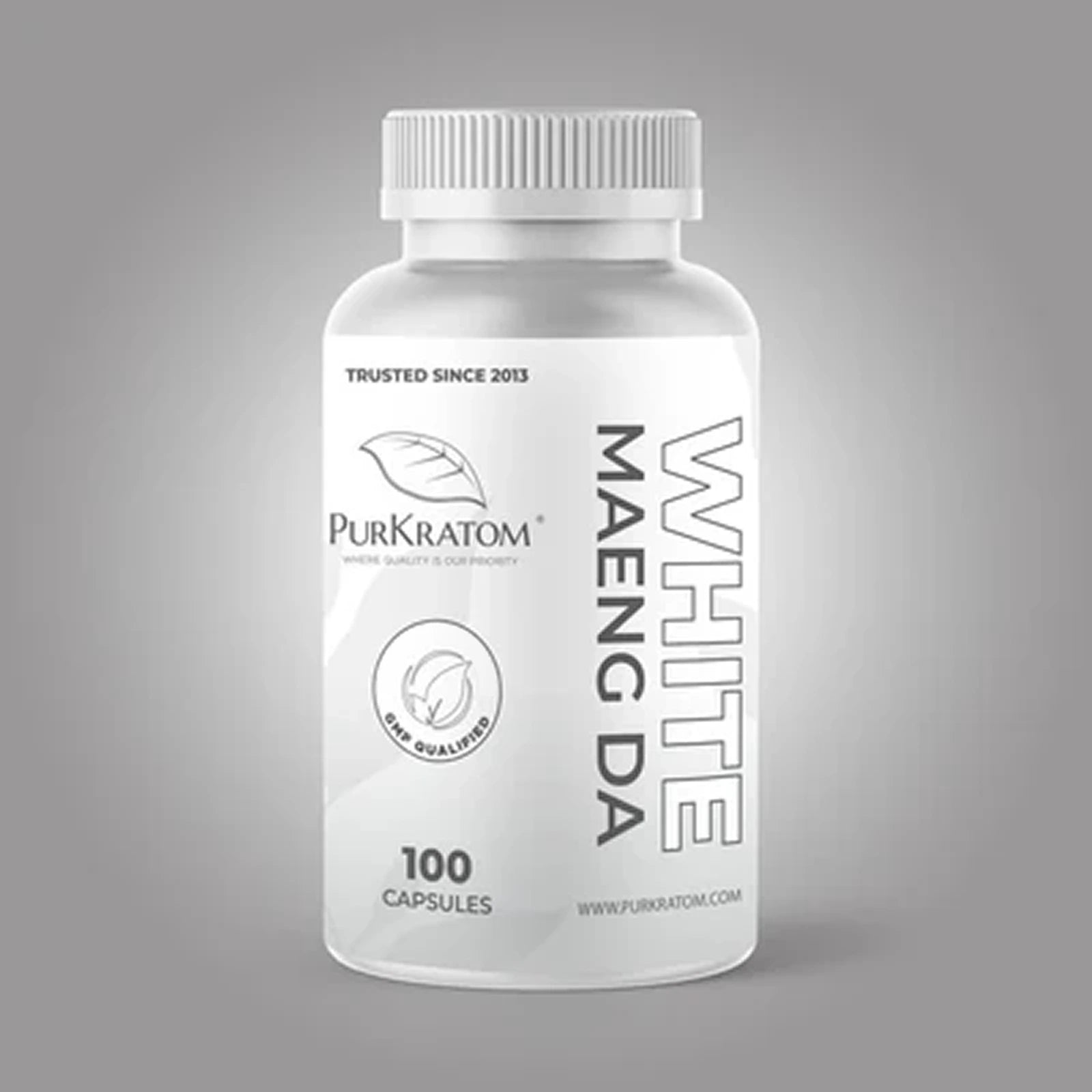
White Maeng Da Kratom Capsules
$26.99
Red Maeng Da Kratom Capsules
$26.99

White Maeng Da Kratom Powder
$31.99
Super Green Maeng Da Kratom Capsules
$26.99

Green Maeng Da Kratom Powder
$31.99