 Login
Login

If you are researching kratom vendors, you may have seen the phrase “AKA GMP Qualified” displayed on a website, product page, or vendor listing. But what does it actually mean?
AKA GMP Qualified refers to participation in the American Kratom Association's GMP Standards Program, a voluntary program that uses independent third-party evaluation to assess whether participating vendors meet the program's established standards.
That distinction matters.
AKA GMP qualification is not the same thing as FDA approval, and it does not mean that the American Kratom Association has endorsed a particular vendor or guaranteed the safety or effectiveness of a specific product. The AKA states that its program evaluates facility and process compliance rather than functioning as a product certification or endorsement.
For consumers, the designation can therefore be one piece of a larger vendor-evaluation process. It can prompt useful questions about manufacturing practices, documentation, labeling, testing, and transparency. But it should not be treated as the only information needed to evaluate a kratom product.
This guide explains what AKA GMP Qualified means, what the program covers, what it does not mean, and what additional documentation consumers can review when comparing kratom vendors.
Kratom is a regulated and health-adjacent product category. Regulations and product restrictions can change by jurisdiction. The information in this article is educational and should not be interpreted as legal or medical advice.
What Does AKA GMP Qualified Mean?
AKA GMP Qualified is a designation associated with the American Kratom Association's GMP Standards Program.
According to the AKA, participating vendors must demonstrate through a rigorous third-party evaluation that they follow applicable standards covering areas such as manufacturing, testing, processing, packaging, storage, distribution, and labeling. The program is intended to provide consumers with information that may help them make more informed decisions about kratom-containing products.
The AKA also makes an important distinction: qualification does not authorize a vendor to claim that the AKA endorses its products. The program's own description states that the independent audit verifies compliance with program standards, rather than serving as an AKA endorsement of product quality.
Think of AKA GMP qualification as information about how a participating vendor's applicable operations and processes are evaluated against a defined set of standards.
It is not a statement that:
- Every product from the vendor is universally safe.
- Every product is effective for a particular purpose.
- The FDA has approved the products.
- The government has certified the vendor.
- The AKA endorses the vendor's products.
- A consumer no longer needs to review product-specific information.
That distinction is one of the most important things to understand when evaluating the designation.
What Is GMP?
GMP stands for Good Manufacturing Practices.
The general idea behind GMP systems is straightforward: products should be produced, handled, packaged, labeled, stored, and otherwise managed using controlled processes designed to meet established quality requirements.
The exact requirements depend on the applicable regulatory or standards framework.
For the AKA program, the organization states that its GMP Standards Program includes requirements related to the manufacturing and labeling of kratom-containing products and that its manufacturing requirements are largely based on GMP concepts found in 21 CFR Part 111, while also incorporating standards specific to its program.
It means the AKA has established a separate voluntary standards program that incorporates relevant GMP concepts and uses third-party evaluation as part of its qualification process.
Why do manufacturing practices matter?
For consumers, manufacturing practices can affect how much information is available about the way a product is handled before it reaches the marketplace.
A well-defined quality system can address areas such as:
- Written procedures
- Facility practices
- Processing controls
- Packaging
- Labeling
- Storage
- Distribution
- Testing procedures
- Documentation
- Recordkeeping
- Corrective actions
The exact scope depends on the standards and the activities applicable to the participating vendor.
This is why GMP terminology can be useful when evaluating a vendor, but it should always be interpreted within the context of the actual program involved.
What Does the AKA GMP Standards Program Evaluate?
The AKA describes its GMP Standards Program as a third-party evaluation of a participant's facilities, GMP-related documentation, and product labels and labeling. The program is intended to assess applicable processes and practices involved in bringing kratom-containing products to market.
Under the current program description, the evaluation can encompass areas including:
| Area | What it generally concerns |
|---|---|
| Manufacturing | Processes used to produce or handle applicable products |
| Testing | Procedures and controls related to testing |
| Processing | Handling and processing activities |
| Packaging | Practices used when preparing products for distribution |
| Storage | How applicable materials or products are held |
| Distribution | Applicable distribution practices |
| Labeling | Information presented to consumers |
| Documentation | Records and procedures supporting compliance |
| Third-party auditing | Independent evaluation against program standards |
The exact requirements depend on the vendor's business model and the activities covered by its qualification.
The AKA specifically notes that the program is not one-size-fits-all and that requirements are tailored to the participant's business model, business size, and finished-goods output.
Why that distinction matters
A consumer should not assume that every vendor has exactly the same operations.
For example, one business may manufacture products directly, while another may have a different role in the supply and distribution process.
Therefore, the meaningful question is not simply:
“Does this company say GMP?”
A better question is:
“What GMP program is involved, what activities are covered, and what current documentation supports the designation?”
That approach gives the consumer more useful information.
How Does a Vendor Become AKA GMP Qualified?
The AKA outlines a multi-step process for vendors seeking qualification.
The program currently describes steps including reviewing the GMP Standards Requirements and Terms and Conditions, registering with the AKA, completing an orientation process, implementing the required standards, arranging an independent audit, and submitting the audit documentation for review.
The process can be summarized as follows:
- Review the applicable AKA GMP requirements.
- Review the program's terms and conditions.
- Register with the program.
- Prepare the business and applicable operations for compliance.
- Arrange an independent third-party audit.
- Complete the audit.
- Submit the audit report to the AKA.
- Receive the applicable determination from the AKA.
- Maintain qualification through ongoing program requirements.
The AKA states that auditors and testing laboratories used for the program must be pre-approved by the organization.
Is the qualification permanent?
No.
The AKA states that vendors seeking to maintain qualified status must register and pass an annual independent audit. The organization also describes circumstances under which qualified status may be suspended or removed, including failure to maintain required standards or failure to submit the required annual audit.
AKA GMP Qualification vs. Product-Specific Testing
One of the most useful distinctions for consumers is the difference between vendor/process qualification and product-specific testing.
AKA GMP qualification
AKA GMP qualification primarily provides information about compliance with the AKA's standards program through the program's qualification and audit process.
It can help answer questions such as:
- Has the vendor participated in the program?
- Has the applicable operation undergone the required independent audit?
- Does the vendor maintain the program's qualification requirements?
- What activities are covered by the qualification?
Product-specific laboratory testing
Product-specific testing addresses a different question:
What did the applicable laboratory analysis show about the particular sample or batch tested?
Depending on the documentation, laboratory results may provide information about characteristics such as alkaloid content or particular testing categories.
This is why consumers should not treat an AKA GMP designation and a Certificate of Analysis as interchangeable.
They answer different questions.
A practical way to think about the difference
GMP qualification:
“How does this vendor's applicable operation compare with the standards of this GMP program?”
Product testing:
“What did the laboratory documentation report about this particular tested material?”
Labeling:
“What information does the vendor provide to identify and describe the product?”
Consumer evaluation:
“Do the available documents and information give me enough information to make a responsible decision?”
All four can be relevant.
What Should Consumers Look for in a Kratom Vendor?
AKA GMP qualification can be one useful data point, but responsible vendor evaluation should go beyond a logo or badge.
1. Verify the current GMP status
If a vendor states that it is AKA GMP Qualified, look for current information supporting that status.
The AKA maintains a list of GMP Qualified Vendors and states that qualified participants undergo annual independent third-party audits.
A vendor's website should not be treated as the only source for verifying an external designation.
2. Look for accessible testing information
A vendor that makes laboratory-testing information available gives consumers an opportunity to review documentation rather than relying entirely on promotional statements.
For PurKratom, the available laboratory-results resource is:
Review PurKratom's laboratory results and Certificates of Analysis
The supplied PurKratom brief specifically instructs that a product should not be described as having passed a particular test unless the applicable documentation has actually been reviewed.
That is a useful standard for responsible content generally.
3. Examine labeling
Clear labeling can help consumers understand what they are purchasing.
Depending on the product and applicable requirements, relevant information can include:
- Product identity
- Net quantity
- Ingredient information
- Applicable warnings
- Manufacturer, packer, or distributor information
- Batch or lot information
- Testing information
- Other legally required information
Consumers should also be cautious about labels that make aggressive disease or treatment claims.
The AKA's own consumer guidance encourages consumers to pay attention to labeling and independent laboratory testing.
4. Separate facts from marketing claims
A vendor may make statements about quality, sourcing, testing, manufacturing, or product characteristics.
Consumers should ask:
- Is the statement supported by documentation?
- Is the documentation current?
- Does it apply to this specific product?
- Does it apply to this specific batch?
- Is the claim describing a fact or an interpretation?
- Is the claim broader than what the underlying document establishes?
This approach is especially useful in categories where product information can vary considerably between vendors.
5. Check applicable restrictions
Kratom laws and restrictions can vary between jurisdictions.
A consumer should not assume that a product is legal to purchase or receive simply because it is available online.
Before ordering, check the vendor's current shipping information and the applicable state or local rules.
For PurKratom, the supplied verified resource library identifies the PurKratom Shipping Policy as the appropriate source for current shipping information.
Questions to Ask About AKA GMP Qualification
If a vendor advertises AKA GMP qualification, consumers can use the following checklist.
Vendor verification checklist
- Is the vendor currently listed as AKA GMP Qualified?
- Is the qualification current?
- Does the qualification apply to the vendor's relevant activities?
- Has the vendor completed the required independent audit?
- Are current testing documents available?
- Are product-specific laboratory results accessible?
- Can applicable batch or lot information be connected to testing documentation?
- Is product labeling clear?
- Does the vendor avoid unsupported medical claims?
- Does the vendor clearly distinguish third-party testing from regulatory approval?
- Are applicable shipping restrictions disclosed?
- Are the vendor's policies easy to locate?
- Does the vendor provide enough information for consumers to understand what they are purchasing?
No single answer automatically resolves every purchasing question.
Instead, the goal is to build a clearer picture from multiple pieces of information.
Why Transparency Matters When Evaluating a Vendor
Transparency is especially important when a product category involves laboratory testing, regulatory questions, manufacturing standards, and varying local restrictions.
A transparent vendor should make it reasonably clear which statements are:
- Company information
- Third-party testing results
- Certification or qualification information
- Regulatory information
- Product specifications
- Educational information
- Customer experiences
These categories should not be blended together.
For example, a customer review is an individual experience. It should not be presented as scientific evidence or proof that a product is safe or effective.
Similarly, a GMP qualification is a standards-program designation. It should not be transformed into an FDA approval claim.
Transparency also means acknowledging limitations
A trustworthy explanation does not have to claim that every available quality-control measure eliminates risk.
Instead, it can say what the documentation demonstrates and what remains outside its scope.
That approach gives readers a more realistic understanding of vendor quality information.
What About 7-Hydroxymitragynine and Product Transparency?
The distinction between general kratom material and concentrated 7-hydroxymitragynine products is particularly important in current regulatory discussions.
The FDA has specifically warned about products containing enhanced or added levels of 7-OH and has stated that such products can present serious risks.
The FDA also announced in 2025 that it had issued warning letters involving products containing 7-hydroxymitragynine and described 7-OH as not lawful in dietary supplements or as an added ingredient in conventional foods.
More recently, the FDA reported a July 2026 update concerning a DEA temporary scheduling process involving 7-OH above a proposed threshold and certain synthetic 7-OH derivatives.
Because regulatory developments can change, consumers and publishers should verify current federal and state requirements before making time-sensitive legal claims.
This is another reason why GMP qualification should be treated as one part of vendor evaluation, not as a substitute for regulatory review.
Frequently Asked Questions (FAQs)
1. What does AKA GMP Qualified mean?
AKA GMP Qualified means a vendor has qualified under the American Kratom Association's GMP Standards Program after satisfying the program's qualification requirements, including independent third-party evaluation. The program evaluates applicable manufacturing and related processes.
2. Does AKA GMP mean the AKA endorses the vendor?
No. The AKA expressly states that qualified vendors are not permitted to claim that the AKA endorses their products.
3. Does an AKA GMP vendor still need laboratory testing?
GMP qualification and laboratory testing serve different purposes. Consumers should review available product-specific testing information separately rather than assuming that GMP qualification replaces laboratory documentation.
4. How often does a vendor need to maintain AKA GMP qualification?
The AKA states that qualified vendors must register and pass an annual independent audit to maintain qualified status.
5. What does the AKA GMP audit evaluate?
The program can evaluate applicable aspects of manufacturing, testing, processing, packaging, storage, distribution, and labeling, depending on the participant's activities.
6. Can an AKA GMP Qualified vendor say its products are FDA approved?
No. AKA GMP qualification does not constitute FDA approval, and vendors should not represent the designation as FDA approval.
7. Should I look at anything besides GMP status?
Yes. Consumers can also review current product information, available laboratory documentation, labeling, company policies, applicable restrictions, and other relevant information before making a decision.
8. Where can I review PurKratom testing information?
PurKratom's verified laboratory-results resource is available at its laboratory results and Certificates of Analysis page. Specific product or batch claims should be based on the applicable documentation rather than assumed from the existence of a testing page.
So, what does AKA GMP Qualified mean for a kratom vendor?
It means the vendor has qualified under the American Kratom Association's GMP Standards Program, which uses independent third-party evaluation to assess compliance with applicable program standards.
The designation can be useful because it gives consumers information about a vendor's participation in a defined manufacturing and process standards program.
But the designation has clear limits.
It does not mean FDA approval. It does not mean government certification. It does not mean that the AKA endorses the vendor's products. And it does not constitute a blanket guarantee that every product is safe or effective.
The most responsible approach is to view GMP qualification as one part of a broader evaluation.
Consumers can combine information about a vendor's current qualification status with product-specific laboratory documentation, labeling, available product information, applicable policies, and current legal restrictions.
For a category where product information, regulation, and testing can be complex, understanding what a quality designation actually means is more useful than simply seeing a badge and assuming what it represents.
If you are evaluating a kratom vendor, start with the documentation behind the claims. You can review PurKratom's available laboratory results and Certificates of Analysis, or continue learning through PurKratom's kratom safety and responsible consumer education resources.
Disclaimer: This content is for educational and informational purposes only and is not intended to provide medical advice, diagnose, treat, cure, or prevent any disease or health condition. Kratom research is still developing, and individual responses may vary. Consult a qualified healthcare professional before using kratom, especially if you take medications, have a medical condition, are pregnant or breastfeeding, or have concerns about potential interactions. Laws and regulations regarding kratom vary by location and may change, so verify current local requirements before purchasing or using kratom.

Based on your interest,
we recommend:
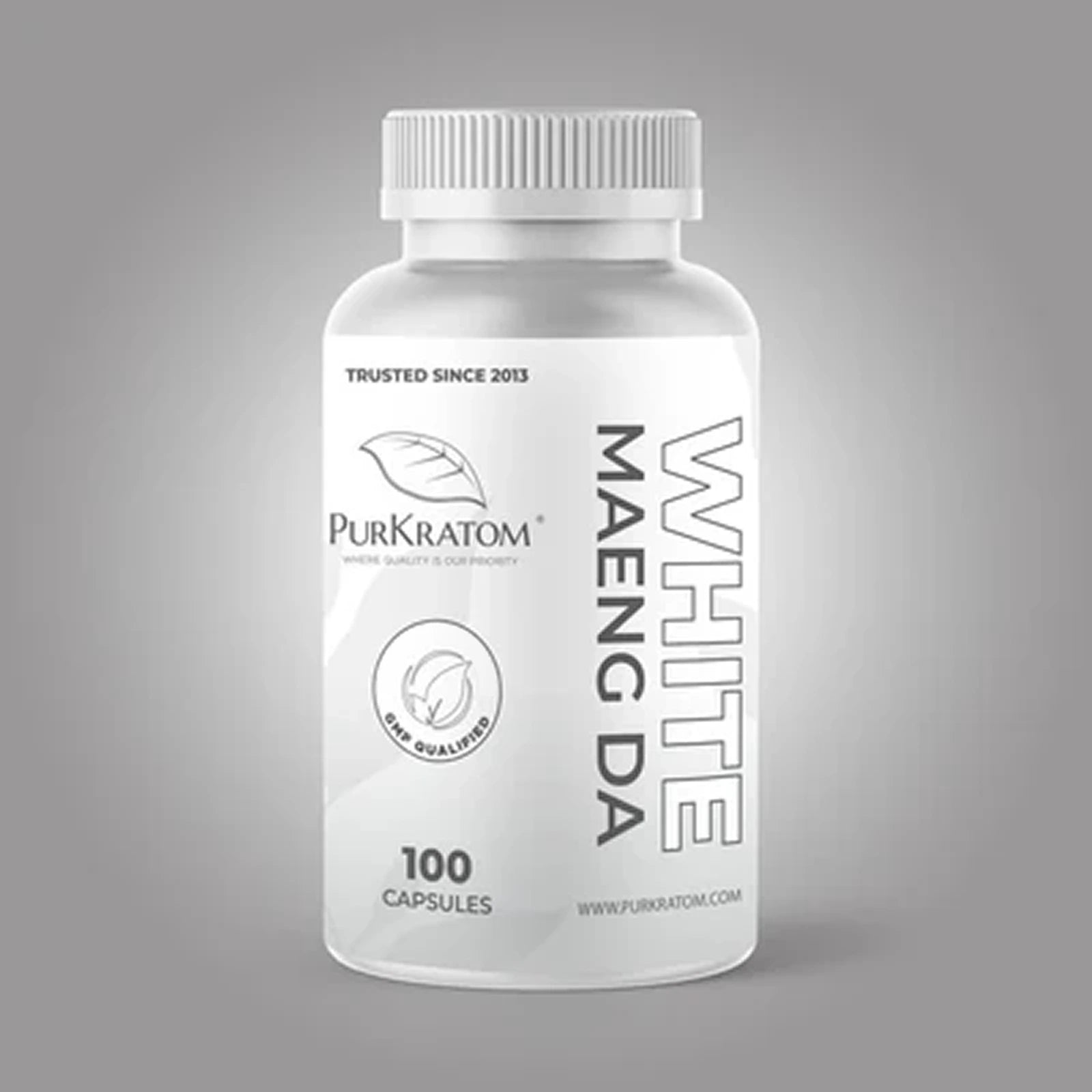
White Maeng Da Kratom Capsules
$26.99
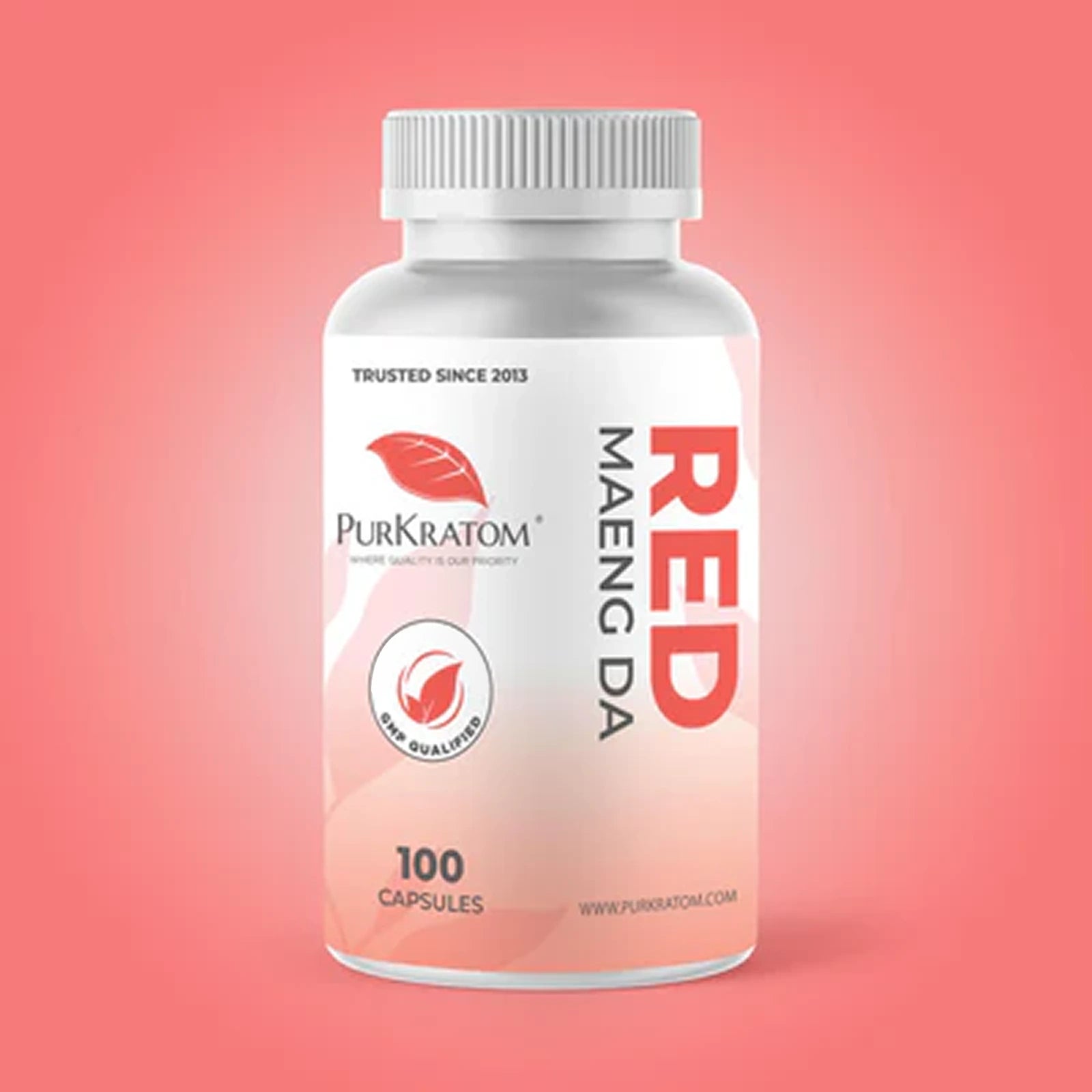
Red Maeng Da Kratom Capsules
$26.99

White Maeng Da Kratom Powder
$31.99
Super Green Maeng Da Kratom Capsules
$26.99

Green Maeng Da Kratom Powder
$31.99