 Login
Login

If you're researching green vein kratom, you've probably seen it described as the middle ground between red and white kratom. But what does "green vein" actually mean? Is it a distinct botanical variety? Does the color predict the alkaloid profile? And how much of what you hear about green kratom is supported by research?
This guide answers those questions in straightforward language.
Green vein kratom generally refers to kratom products marketed under a green-vein or green-leaf designation. Kratom comes from Mitragyna speciosa, a tree native to Southeast Asia. Its leaves contain numerous alkaloids, with mitragynine being the predominant alkaloid commonly discussed in research.
One important point comes first: "green vein" is a commercial and traditional classification, not a scientifically standardized measurement of a specific alkaloid profile or guaranteed effect. Different kratom products can vary because of plant genetics, growing conditions, harvest timing, processing, storage, and other factors. Research has also found substantial variation in kratom's chemical composition.
What Is Green Vein Kratom?
Green vein kratom is kratom marketed under a green-leaf or green-vein designation. It comes from Mitragyna speciosa, the same species used for other major kratom color categories.
The term "green vein" is largely a product and consumer classification. It is commonly associated with leaves or processed material described as green rather than red or white.
Kratom itself is a tropical tree in the coffee family, Rubiaceae. It has a long history of traditional use in Southeast Asia, where people have consumed the leaves in preparations such as teas or chewed leaves.
Modern commercial kratom is available in several formats, including:
- Powder
- Capsules
- Tea preparations
- Extracts
- Other concentrated products
The chemistry can differ substantially between these forms. This is one reason it is risky to assume that every product carrying the same color or strain name will have the same characteristics.
Is "green vein" a scientific classification?
Not in the same way that a botanical species or standardized chemical classification is.
Mitragyna speciosa is the botanical species. "Green vein," "red vein," and "white vein" are consumer-facing categories used to distinguish products.
The problem is that color terminology does not provide a complete chemical analysis.
Two products both labeled "green" can differ in alkaloid concentrations because kratom chemistry can be influenced by genetics, geography, cultivation conditions, maturity, processing, and other factors.
That distinction is important for anyone shopping for green kratom.
Why Is It Called "Green Vein"?
The name comes from the appearance of kratom leaves, particularly the color associated with the leaf veins or leaf material.
Commercial descriptions often connect green kratom with a middle position between red and white categories. PurKratom's current Green Kratom collection similarly presents green kratom as a category positioned between red and white varieties and includes products such as Green Maeng Da, Green Malay, and other green-labeled products.
However, the visual color of a leaf should not be treated as a laboratory measurement.
Does a green leaf automatically mean a specific alkaloid profile?
No.
A green appearance alone cannot tell you exactly how much mitragynine or other alkaloids a finished product contains.
Scientific literature has identified dozens of alkaloids in Mitragyna speciosa, and the relative composition can vary.
That is why responsible product evaluation should go beyond a color name.
Is Green Vein Kratom a Different Plant?
No.
Green vein kratom, red vein kratom, and white vein kratom generally refer to categories of products derived from the same species: Mitragyna speciosa.
The color terminology should therefore not be confused with completely separate plant species.
Green kratom vs. kratom species
| Term | What it means |
|---|---|
| Mitragyna speciosa | Botanical species commonly known as kratom |
| Kratom | Common name for the plant and its leaf-derived products |
| Green vein | Consumer/product category |
| Red vein | Consumer/product category |
| White vein | Consumer/product category |
| Green Maeng Da | Commercial strain name |
| Green Malay | Commercial strain/geographic-style name |
| Green Borneo | Commercial strain/geographic-style name |
The commercial names can be useful for organizing products, but they should not be interpreted as standardized pharmaceutical classifications.
What Makes Green Kratom Different From Red and White Kratom?
The key difference is the product category and the way the material is traditionally or commercially described not a guaranteed pharmacological effect.
Kratom color categories are often marketed according to perceived differences in characteristics.
Green kratom is commonly described as a balanced category. Red kratom is often marketed toward a more calming profile, while white kratom is commonly associated with more stimulating characteristics.
Those descriptions are widespread in consumer markets, but they should be treated as descriptions of consumer expectations rather than established medical facts.
The National Center for Complementary and Integrative Health notes that people who use kratom have reported both stimulant-like effects and effects resembling opioid or sedative activity. It also emphasizes that human research remains limited and that much more needs to be learned about kratom's effects and safety.
Why color alone is not enough
A product's characteristics can be influenced by:
- Plant genetics
- Growing environment
- Geographic origin
- Leaf maturity
- Harvest practices
- Drying and processing
- Storage
- Extraction or concentration
- Alkaloid composition
- Product formulation
This variability helps explain why two products carrying similar names may not necessarily be identical.
Green vs. Red vs. White Kratom
For a shopper, the simplest way to understand the categories is to view them as product-label conventions rather than guarantees.
| Category | Common consumer description | What to remember |
| Green | Often described as balanced between stimulation and relaxation | Color does not guarantee a particular effect |
| Red | Often marketed around calming or relaxing characteristics | Individual products can vary |
| White | Often marketed around energy or alertness | Consumer descriptions are not medical evidence |
This table is intentionally cautious.
There is not enough standardized clinical evidence to conclude that every green product produces one predictable effect while every red or white product produces another.
Which is "strongest"?
There is no scientifically reliable answer based on color alone.
"Strength" can depend on the alkaloid content, product concentration, extraction method, serving size, and other factors.
An ordinary leaf powder and a concentrated extract should not be treated as interchangeable simply because both carry a green label.
What Alkaloids Are Found in Green Vein Kratom?
Kratom's chemistry is one of the most important parts of understanding the plant.
Research has identified more than 40 alkaloids in Mitragyna speciosa. Mitragynine is generally described as the predominant alkaloid, while 7-hydroxymitragynine is another highly studied compound that occurs naturally at much lower levels in the plant.
Other identified alkaloids include compounds such as:
- Paynantheine
- Speciogynine
- Speciociliatine
- Corynantheidine
- 7-hydroxymitragynine
The exact chemical profile can vary between plant material and finished products.
What is mitragynine?
Mitragynine is a naturally occurring indole alkaloid and is one of the principal compounds studied in kratom research.
Researchers have investigated how mitragynine interacts with biological systems, including opioid receptors. However, laboratory findings should not automatically be translated into claims that kratom is a treatment for a medical condition.
What Does Research Say About Green Vein Kratom Effects?
This is where responsible kratom education matters most.
People commonly search for terms such as:
- Green vein kratom effects
- Green kratom benefits
- What does green kratom feel like?
- Is green kratom stimulating?
- Is green kratom relaxing?
The most accurate answer is that research does not support a simple formula in which the green color guarantees a specific effect.
People who use kratom have reported a range of experiences, including stimulant-like and sedative/opioid-like effects. These effects can vary with product composition and exposure.
What is established?
Researchers have established that:
- Mitragyna speciosa contains numerous alkaloids.
- Mitragynine is a major alkaloid.
- Kratom alkaloids interact with biological targets, including opioid receptors.
- Human research remains relatively limited.
- Products can differ substantially in composition.
- Kratom can be associated with adverse effects and dependence.
What remains uncertain?
Researchers are still working to understand:
- Long-term effects
- How different product formulations affect risk
- How individual alkaloids contribute to observed effects
- Potential interactions with medications and other substances
- How consistent commercial products are
- The relationship between traditional preparations and modern concentrated products
NCCIH specifically describes kratom research as being in its early stages.
Why online descriptions can be misleading
A product description might use words such as "energizing," "balanced," "calming," or "focus."
Those terms can describe how a product is positioned in the consumer market, but they should not be interpreted as guaranteed physiological outcomes.
A responsible educational resource should keep those two ideas separate.
Green Kratom Strains: Maeng Da, Malay, Borneo and More
Once someone understands color categories, the next search is often for a specific green strain.
Common names include:
- Green Maeng Da
- Green Malay
- Green Borneo
- Green Bali
- Other regional or commercially developed names
These names help shoppers distinguish products, but they do not necessarily correspond to standardized scientific chemotypes.
Green Maeng Da
Green Maeng Da is one of the most recognizable commercial green kratom names.
PurKratom currently lists Green Maeng Da products in both powder and capsule formats within its green kratom collection.
However, a strain name alone cannot tell you the exact alkaloid concentration of a particular batch.
Green Malay
Green Malay is another widely used commercial designation.
PurKratom currently lists Green Malay products in its Green Kratom collection.
Again, the name is useful for product identification, but it should not be treated as a laboratory guarantee.
Green Borneo
Green Borneo is another geographic-style name commonly found in the kratom market.
As with other strain names, the important question for a specific product is not simply what the label calls it, but what information is available about the actual product and batch.
Green Kratom Powder vs. Capsules
After choosing a color or strain category, format becomes another important decision.
Green kratom powder
Powder is the traditional-style commercial format and allows consumers to choose how they incorporate the product into their preferred preparation.
Potential considerations include:
- Flexible product format
- Ability to inspect the powder itself
- Storage requirements
- Taste and texture
- Need to measure the product carefully
Green kratom capsules
Capsules offer a pre-portioned format that some consumers may find more convenient.
Considerations include:
- Convenience
- Portability
- No direct taste of powder
- Number of capsules needed to reach a particular labeled serving
- Additional capsule material
Neither format is automatically "better."
The right comparison depends on what the consumer values and the product information provided by the manufacturer.
If you're deciding between formats, PurKratom Kratom Powder vs. Capsules is the logical next resource to review before selecting a product.
Green Kratom Safety Considerations
Kratom should not be treated as risk-free simply because it comes from a plant.
NCCIH reports side effects associated with kratom use that range from nausea, constipation, dizziness, and drowsiness to rarer serious effects such as seizures, high blood pressure, and liver problems.
The FDA has also warned about serious adverse events, including liver toxicity, seizures, substance use disorder, and contamination concerns.
Potential safety considerations include:
- Nausea
- Constipation
- Dizziness
- Drowsiness
- Increased heart rate
- Blood-pressure changes
- Liver problems
- Seizures
- Dependence and withdrawal
- Potential interactions with other substances
The risk profile can be affected by the product, amount consumed, individual circumstances, and whether other substances are involved.
Why "natural" does not mean risk-free
The word "natural" describes an origin, not a safety profile.
Many natural substances can produce powerful biological effects or interact with medications.
Kratom's interaction with opioid receptors is one reason researchers and public-health agencies continue to study its effects and risks.
Common Mistakes When Choosing Green Kratom
Mistake 1: Assuming green means "safe"
Color does not establish safety.
Mistake 2: Assuming every Green Maeng Da product is identical
A strain name does not guarantee identical chemistry between manufacturers or batches.
Mistake 3: Treating marketing language as scientific evidence
Words such as "energizing," "calming," or "focus-enhancing" may describe a marketing position or consumer expectation. They should not automatically be interpreted as proven medical effects.
Mistake 4: Ignoring the product format
Plain powder, capsules, and concentrated extracts may have different characteristics.
Mistake 5: Skipping testing information
If quality documentation is available, reviewing it can provide more useful information than relying on the product name alone.
Mistake 6: Ignoring local regulations
Kratom laws can change and may differ by jurisdiction.
Mistake 7: Assuming plant-based means non-addictive
Kratom can be associated with tolerance, dependence, and withdrawal.
How to Approach Green Vein Kratom Responsibly
If you're researching green vein kratom for the first time, a sensible process is to move from education to evaluation, rather than jumping directly from a search result to a product.
Step 1: Understand the terminology
Learn what "green," "red," "white," and strain names actually represent.
Step 2: Separate traditional descriptions from scientific evidence
Recognize that consumer descriptions and clinical evidence are not the same thing.
Step 3: Evaluate the product
Look for clear labeling, transparent product information, and relevant testing documentation.
Step 4: Consider the format
Understand whether you're comparing powder, capsules, or a concentrated product.
Step 5: Check applicable laws
Verify the rules where you live.
Step 6: Consider interactions and personal circumstances
If you take medications or have health concerns, speak with a qualified healthcare professional before using kratom.
Step 7: Avoid unsupported promises
A responsible retailer should provide product information without claiming that kratom can diagnose, treat, cure, or prevent medical conditions.
Once you've reviewed the educational and quality considerations, you can explore PurKratom's current Green Vein Kratom collection to compare available green products and formats.
Common Questions About Green Vein Kratom
1. What is green vein kratom used for?
Consumers report using kratom for various reasons, but research has not established green vein kratom as a safe and effective treatment for a medical condition. Research into kratom's potential effects and risks remains ongoing.
2. Is green kratom stronger than red or white kratom?
There is no reliable scientific basis for ranking kratom strength solely by color. Product concentration, alkaloid composition, processing, and other factors can matter more than a green, red, or white label.
3. What alkaloids are in green vein kratom?
Kratom contains numerous alkaloids. Mitragynine is the predominant alkaloid commonly identified in research, while 7-hydroxymitragynine occurs naturally in much smaller amounts. Other alkaloids include paynantheine, speciogynine, and speciociliatine.
4. Is green vein kratom the same as Green Maeng Da?
Not exactly. Green vein is a broad color category, while Green Maeng Da is a specific commercial strain name within the green category.
5. Does green kratom have side effects?
Kratom has been associated with side effects including nausea, constipation, dizziness, and drowsiness, as well as less common but serious adverse events.
6. Can green vein kratom interact with medications?
Potentially. NCCIH notes that kratom may interact with many medications. Anyone taking medication should discuss potential interactions with a healthcare professional or pharmacist.
7. What should I look for when buying green kratom?
Look beyond the color and strain name. Consider transparent labeling, product information, relevant laboratory testing, batch documentation where available, and whether the seller avoids unsupported health claims.
8. Is green kratom available as powder and capsules?
Yes. Green kratom is commonly sold in multiple formats, including powder and capsules. PurKratom's current green collection includes both types of products.
Green vein kratom is best understood as a consumer category of Mitragyna speciosa products, not as a scientifically standardized substance with one predictable effect.
The green label can help shoppers organize the kratom market, but it cannot tell you everything about a product. Alkaloid composition can vary, and scientific research has not established a simple relationship between leaf color and a guaranteed physiological outcome.
If you're evaluating green kratom, pay attention to the things that matter beyond the name:
- What species is being used?
- What product format are you buying?
- Is the labeling clear?
- Is relevant testing information available?
- Can the product be connected to a particular batch?
- Are you dealing with ordinary leaf material or a concentrated/enhanced product?
- What does current research say?
- What are the potential risks and interactions?
- Is the product legal where you live?
A responsible purchasing decision starts with education rather than assumptions.
For qualified shoppers who have finished that research, PurKratom's green kratom collection provides a direct place to review currently available green products and formats.
Disclaimer: This content is for educational and informational purposes only and is not intended to provide medical advice, diagnose, treat, cure, or prevent any disease or health condition. Kratom research is still developing, and individual responses may vary. Consult a qualified healthcare professional before using kratom, especially if you take medications, have a medical condition, are pregnant or breastfeeding, or have concerns about potential interactions. Laws and regulations regarding kratom vary by location and may change, so verify current local requirements before purchasing or using kratom.
Based on your interest,
we recommend:
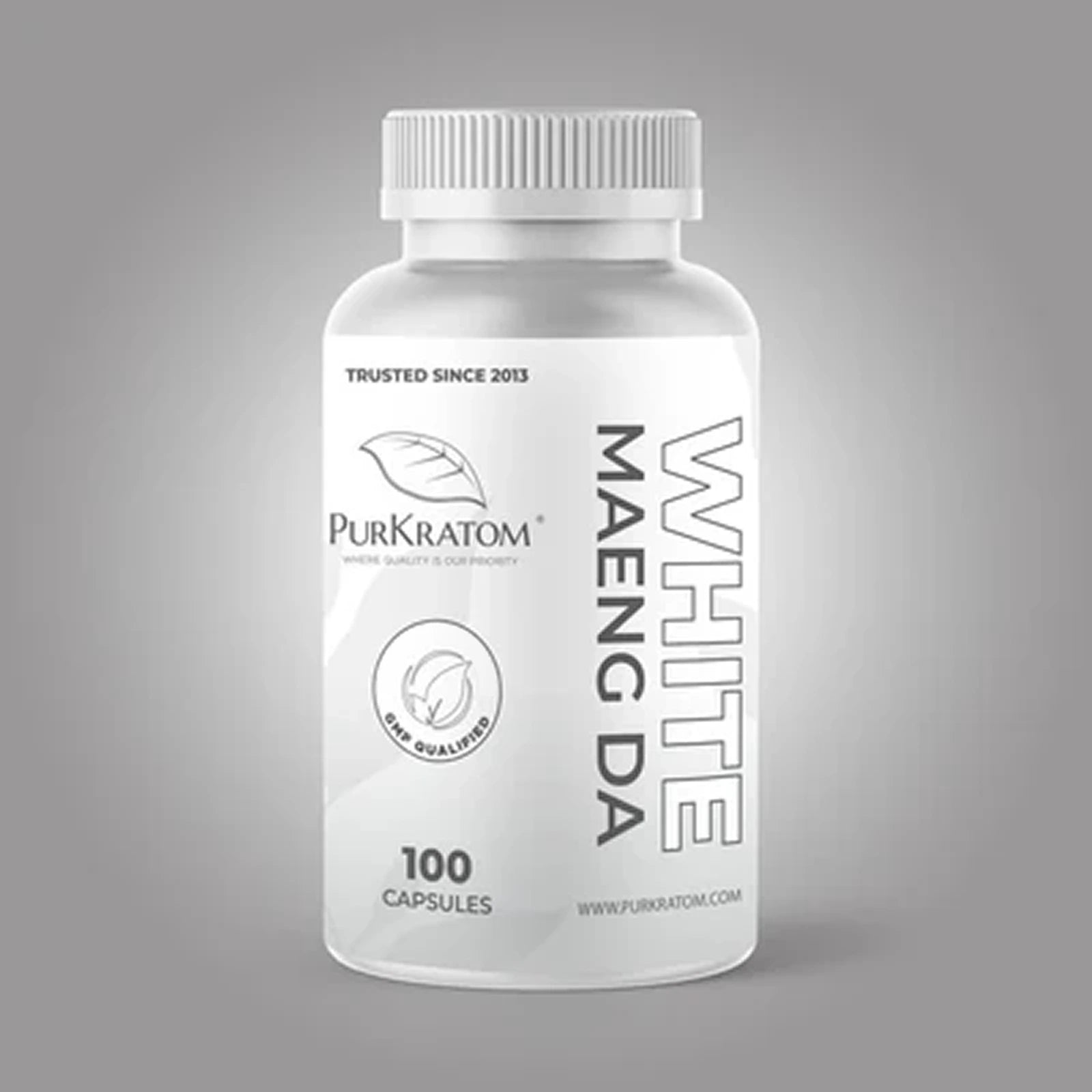
White Maeng Da Kratom Capsules
$26.99
Red Maeng Da Kratom Capsules
$26.99

White Maeng Da Kratom Powder
$31.99
Super Green Maeng Da Kratom Capsules
$26.99

Green Maeng Da Kratom Powder
$31.99