 Login
Login

If you've searched for white vein kratom, you've probably encountered descriptions that make the color system sound simple: white, green, or red.
The reality is more complicated.
White vein kratom refers to a category of Mitragyna speciosa products associated with the color of the leaf vein or the traditional way a particular leaf preparation has been classified. White-vein products are widely discussed alongside red- and green-vein kratom, but the color label should not be treated as a precise scientific measurement.
That's an important distinction for anyone trying to make an informed decision.
Kratom is a tropical tree native to Southeast Asia. Its leaves contain numerous alkaloids, with mitragynine being the most abundant alkaloid in many samples. Another well-known compound, 7-hydroxymitragynine (7-OH), occurs naturally in much smaller amounts in botanical kratom. These compounds interact with opioid receptors, which is one reason kratom's effects and safety profile continue to receive scientific and regulatory attention.
Research into kratom remains incomplete. The National Center for Complementary and Integrative Health (NCCIH) notes that much remains to be learned about kratom's short- and long-term effects, safety, and potential therapeutic uses.
This guide explains what white vein kratom means, how it compares with other kratom colors, why color alone cannot tell you everything about a product, what to know about alkaloids and testing, and which questions are worth asking before purchasing.
What Is White Vein Kratom?
White vein kratom is a term used to describe kratom associated with leaves having a pale or white-green central vein, as well as products traditionally categorized under the “white” kratom label.
Kratom itself is the common name for Mitragyna speciosa, a tree in the coffee family found in Thailand and neighboring Southeast Asian countries. Traditionally, people have chewed its leaves or prepared them as tea.
The “white,” “green,” and “red” terminology generally refers to vein color, although commercial products can use these terms more broadly than the botanical description suggests.
The European Union Drugs Agency, for example, notes that kratom leaves can have greenish-white or red veins and that the greenish-white type has traditionally been described as more potent. However, the same source emphasizes that kratom preparations contain multiple phytochemicals in varying ratios, making their pharmacological evaluation difficult.
That distinction is useful:
A white-vein label describes a category or characteristic of a kratom product; it does not provide a complete chemical profile.
What Is Mitragyna speciosa?
Mitragyna speciosa is a tropical evergreen tree belonging to the Rubiaceae, or coffee, family.
Its leaves contain numerous naturally occurring compounds called alkaloids. Mitragynine is generally the most prominent alkaloid, while 7-hydroxymitragynine is present naturally at much lower levels in ordinary botanical leaf.
Researchers are studying these compounds because they interact with biological systems, including opioid receptors.
However, laboratory findings should not automatically be translated into claims about what a consumer will experience. Human research is still developing.
Why Is It Called White Vein?
The name comes from the appearance of the leaf.
Kratom leaves can display different vein colors. Scientific and botanical literature has described red and white-green vein types, while the commercial market commonly uses the broader categories white, green, and red vein.
The term “white vein” can therefore be confusing because it may refer to:
- The visible vein color of a leaf
- A traditional kratom classification
- A named commercial variety
- A product marketed under a white-vein designation
These are related concepts, but they are not necessarily identical.
Does white vein refer to a specific kratom species?
No.
White vein kratom is not a separate species from red or green vein kratom.
The underlying plant is generally Mitragyna speciosa. The color designation is a way of categorizing particular leaves or products.
Does white vein identify a specific chemical profile?
Not by itself.
Research has found variation in kratom alkaloid profiles associated with factors such as geographic origin, maturity, and ecotype. One study examining multiple kratom strains found substantial variation in alkaloid composition among samples with different vein colors and origins.
That means a label such as “White Borneo” can communicate useful product information, but it should not be interpreted as a laboratory result.
White vs. Green vs. Red Vein Kratom
One of the most common questions is how white vein kratom compares with other color categories.
| Kratom category | Traditional identifying feature | What the label can tell you | What it cannot establish |
|---|---|---|---|
| White vein | Pale/white-green vein terminology | Product or leaf classification | Exact alkaloid content or potency |
| Green vein | Green vein terminology | Product or leaf classification | Exact chemical composition |
| Red vein | Red vein terminology | Product or leaf classification | Guaranteed effects or safety |
The most important point is that color categories are descriptive rather than complete chemical specifications.
White vs. Green Kratom
White and green kratom are frequently compared because both are commonly associated with greenish leaves and lighter-colored veins.
However, there is no universal scientific rule stating that every white-vein product has one fixed chemical profile and every green-vein product has another.
A research study examining different Mitragyna speciosa strains found that alkaloid proportions can vary with geographic origin, maturity, and ecotype.
Therefore, two products carrying different color labels may have overlapping chemical characteristics.
White vs. Red Kratom
Red vein kratom is generally associated with red-veined leaves, while white vein refers to pale or white-green veins.
Commercial descriptions often attach strong effect-based characteristics to these colors. Those descriptions may reflect consumer traditions and marketing conventions, but they should not be treated as established clinical facts.
The safest way to compare products is to look beyond color and consider:
- Botanical identity
- Product format
- Ingredient labeling
- Laboratory testing
- Alkaloid information, when available
- Batch information
- Manufacturer transparency
- Whether the product contains added or concentrated compounds
The key difference: White, green, and red are useful consumer categories, but they are not substitutes for analytical testing.
What Does Science Say About White Vein Kratom?
Scientific research supports the existence of different kratom leaf characteristics and substantial variation in alkaloid composition, but it does not provide a simple formula such as “white equals X effect.”
That's one of the most important lessons for consumers.
Researchers have examined kratom samples from different geographic areas and with different vein colors. Differences in alkaloid concentrations have been observed.
But several variables can affect a sample's chemistry.
Geographic origin
Kratom grows across parts of Southeast Asia, and environmental conditions differ between growing regions.
Plant maturity
The chemical composition of leaves can change as plants mature.
Cultivation conditions
Soil, climate, sunlight, water availability, and other growing conditions can influence plant chemistry.
Processing
Drying and other processing methods can affect the final characteristics of a botanical product.
Storage
Time, moisture, temperature, and packaging can influence product quality.
Product formulation
A plain botanical leaf powder is different from an extract or a product containing added isolated compounds.
These variables help explain why a color label cannot tell the whole story.
Understanding Kratom Alkaloids
Kratom contains numerous alkaloids, but two receive especially significant scientific and regulatory attention:
- Mitragynine
- 7-hydroxymitragynine (7-OH)
What Is Mitragynine?
Mitragynine is generally considered the principal alkaloid in kratom and is present in much larger quantities than 7-hydroxymitragynine in ordinary botanical leaf.
It interacts with opioid receptors, among other biological targets, and is one of the primary compounds researchers investigate when studying kratom pharmacology.
What Is 7-Hydroxymitragynine?
7-hydroxymitragynine is another naturally occurring kratom alkaloid.
An important distinction is necessary here.
Naturally occurring 7-OH in botanical kratom is not the same thing as concentrated 7-OH products.
The FDA has specifically warned about products containing added or enhanced 7-OH.
In July 2026, the DEA announced a temporary scheduling process targeting 7-OH above a specified threshold and certain related substances. The DEA explicitly stated that its action did not apply to botanical kratom products containing naturally occurring 7-OH below the specified threshold.
That distinction is increasingly important for anyone researching kratom products.
Does White Vein Mean Higher Potency?
No. A white-vein label alone does not establish that a kratom product is more potent than a red- or green-vein product.
Some traditional descriptions associate white-vein kratom with stronger or more stimulating characteristics, but these descriptions should not be confused with standardized laboratory measurements.
A product's actual chemical profile can depend on several factors, including:
- Plant genetics
- Geographic origin
- Leaf maturity
- Growing conditions
- Harvest timing
- Drying and processing
- Storage
- Product formulation
- Extraction or concentration
- Potential adulteration or added ingredients
Research comparing different kratom strains has demonstrated meaningful variation in alkaloid composition.
Why this matters for consumers
If you're comparing two white-vein products, the color designation alone provides limited information.
Instead, ask:
- Is the botanical identity clearly stated?
- Is the ingredient list clear?
- Is the product a plain leaf powder or an extract?
- Is batch-level laboratory information available?
- Does the manufacturer explain its quality-control approach?
- Are unusual added ingredients disclosed?
- Is there transparent information about the product?
Those questions generally provide a stronger basis for evaluating a product than the word “white” on a label.
White Vein Kratom Powder vs. Capsules
White vein kratom is commonly encountered in different formats.
White Vein Kratom Powder
Powder generally consists of processed kratom leaf material.
Potential advantages from a consumer-information perspective include:
- The product format is relatively straightforward.
- The ingredient may be easier to identify on a label.
- It can be compared directly with other botanical powders.
However, powder does not automatically mean higher quality.
White Vein Kratom Capsules
Capsules contain kratom material enclosed in a capsule shell.
Some consumers prefer capsules because they offer:
- A convenient format
- Less direct exposure to the taste of botanical powder
- Individual capsules that can be easier to handle
Again, the capsule format itself does not establish potency, purity, or safety.
Powder vs. Capsules: What Should You Compare?
| Factor | Powder | Capsules |
|---|---|---|
| Botanical material | Usually loose powder | Powder enclosed in capsules |
| Convenience | Depends on personal preference | Often convenient |
| Ingredient transparency | Check label | Check both capsule and kratom ingredients |
| Quality | Depends on sourcing and testing | Depends on sourcing and testing |
| Potency | Not determined by format | Not determined by format |
If you're deciding between formats, explore PurKratom's Kratom Powder and Capsules Comparison Page to understand the practical differences before choosing a product category.
How to Evaluate White Vein Kratom Quality
A responsible purchasing decision should start with product transparency, not simply a color label.
1. Look for Clear Product Identification
A reputable product page should make it reasonably clear what you're purchasing.
Look for information such as:
- Product name
- Botanical name where appropriate
- Product format
- Ingredient information
- Net quantity
- Batch information
- Manufacturer or seller information
2. Look for Laboratory Testing
Laboratory testing can provide information that a color designation cannot.
Depending on the testing program, analyses may examine characteristics such as:
- Alkaloid concentrations
- Microbial contamination
- Heavy metals
- Other contaminants
The FDA has documented contamination concerns involving some kratom products, including findings involving harmful bacteria and heavy metals.
That makes transparent quality-control information especially relevant.
3. Check for a Certificate of Analysis
A Certificate of Analysis (COA) is a laboratory document reporting analytical results for a particular sample or batch.
A COA can be useful when it is:
- Current
- Clearly associated with the product or batch
- Issued by an identifiable laboratory
- Detailed enough to understand what was tested
- Consistent with the product information
A COA should not be treated as a universal safety guarantee. It is one piece of evidence about a particular tested sample.
4. Be Cautious About “Enhanced” Products
A major distinction in today's kratom market is the difference between traditional botanical leaf and concentrated or enhanced products.
The FDA has specifically warned about concentrated 7-OH products, while the DEA's July 2026 action targets certain highly concentrated or synthetic 7-OH substances rather than ordinary botanical kratom containing naturally occurring 7-OH below the specified threshold.
If a product advertises unusually high 7-OH content, treat that as a separate category requiring additional scrutiny.
White Vein Kratom Safety Considerations
Understanding the potential risks is an essential part of understanding white vein kratom.
Kratom is psychoactive and biologically active. It is not simply an inert herbal powder.
NCCIH reports that people who use kratom have reported effects ranging from stimulant-like experiences to effects resembling opioid or sedative effects. Reported side effects include nausea, constipation, dizziness, and drowsiness, while more serious reported effects include seizures, high blood pressure, and liver problems.
Can Kratom Cause Dependence?
It can.
NCCIH states that regular kratom users may experience withdrawal symptoms after stopping and that kratom itself may have addictive potential.
This is one reason consumers should avoid assuming that a botanical label means a product is risk-free.
Can Kratom Interact With Other Substances?
Yes.
Kratom may interact with medications and other substances. NCCIH specifically notes that kratom may interact with many medications and recommends discussing supplement use with a healthcare provider or pharmacist.
Recent CDC surveillance makes the issue particularly important.
A 2026 CDC analysis of U.S. poison-center data found that multiple-substance kratom exposure reports were associated with higher rates of hospitalization and serious outcomes than single-substance reports. Many of the substances involved included alcohol, opioids, benzodiazepines, stimulants, and antidepressants.
In simple terms: Combining kratom with other psychoactive substances can create additional risks, and the available evidence does not support treating combinations as automatically safe.
What About Long-Term Use?
Long-term effects are not fully understood.
NCCIH notes that more research is needed regarding kratom's short- and long-term effects and safety.
This uncertainty is important. A responsible educational resource should distinguish between what researchers know and what remains unresolved.
How to Choose a Kratom Product Responsibly
If you've researched white vein kratom and are considering a purchase, use a quality-first checklist.
Step 1: Understand the Product
Identify whether you're looking at:
- Plain leaf powder
- Capsules
- Extract
- Enhanced product
- 7-OH product
Do not treat these categories as interchangeable.
Step 2: Read the Label
Look for clear information about:
- Ingredients
- Product identity
- Net contents
- Manufacturer or seller
- Batch information
- Relevant testing information
Step 3: Look for Testing Transparency
If laboratory testing is available, determine:
- What was tested
- Which batch was tested
- When it was tested
- Which laboratory performed the testing
- What the reported results actually mean
Step 4: Avoid Unsupported Health Claims
Be skeptical of products or websites claiming that kratom can:
- Cure diseases
- Treat serious medical conditions
- Replace prescribed medication
- Guarantee pain relief
- Guarantee anxiety relief
- Provide a medically proven outcome
The FDA has repeatedly taken action against companies marketing kratom or kratom-related products with unapproved medical claims.
Step 5: Check Local Rules
Kratom laws can differ by jurisdiction.
Never assume that because a product is available online, it is legal everywhere.
Step 6: Consider Your Individual Circumstances
Anyone taking medications or managing a medical condition should speak with a qualified healthcare professional before using kratom.
This is especially important because research into drug interactions remains incomplete.
Common Questions About White Vein Kratom
1. What is white vein kratom?
White vein kratom is a common category of kratom associated with leaves or preparations identified by a pale or white-green vein. It is one of the traditional color classifications used alongside green and red vein kratom.
2. Is white vein kratom a different plant?
No. White, green, and red vein kratom generally refer to different classifications of the same species, Mitragyna speciosa. The color designation does not create a separate botanical species.
3. Is white vein kratom stronger than red or green kratom?
There is no reliable scientific rule that white vein kratom is universally stronger. Alkaloid composition can vary with plant genetics, geographic origin, maturity, cultivation, processing, and other factors.
4. What alkaloids are found in white vein kratom?
White vein kratom contains multiple naturally occurring kratom alkaloids. Mitragynine is generally the predominant alkaloid, while 7-hydroxymitragynine occurs naturally in much smaller amounts in botanical leaf.
5. Is white vein kratom the same as 7-OH?
No. White vein describes a kratom category based on leaf or product classification. 7-hydroxymitragynine is a specific alkaloid. Concentrated 7-OH products are a distinct regulatory and safety concern from ordinary botanical kratom leaf.
6. Can white vein kratom interact with medication?
Yes. NCCIH notes that kratom may interact with many medications, including some available without a prescription. Anyone taking medication should discuss kratom use with a healthcare professional or pharmacist.
7. What is the difference between white vein kratom powder and capsules?
The primary difference is the format. Powder is loose processed botanical material, while capsules contain material inside a capsule shell. Neither format automatically establishes superior quality or potency.
8. Should I choose kratom based only on vein color?
No. Vein color is only one descriptive characteristic. Product identity, ingredient labeling, testing information, batch documentation, and whether the product contains extracts or concentrated compounds can provide more useful information.
White vein kratom is best understood as a traditional and commercial classification associated with pale or white-green kratom leaf veins. It is not a separate species, and the label does not provide a complete description of the product's chemistry.
The most important lesson is to look beyond color.
Kratom products can vary according to plant origin, maturity, growing conditions, processing, storage, formulation, and alkaloid composition. Scientific research has documented variation among kratom samples, while major public-health organizations continue to emphasize that important questions about kratom's effects and safety remain unresolved.
For consumers, that makes transparency and testing important considerations. Clear labeling, accessible product information, and credible laboratory documentation can provide more useful information than a color designation by itself.
It's also important to distinguish ordinary botanical kratom from concentrated or enhanced 7-OH products. Regulatory activity in 2026 has increasingly focused on concentrated and synthetic 7-OH-related substances, making careful product identification more important than ever.
If you're researching white vein kratom, the best next step is not simply choosing a color. First understand the terminology, compare product formats, review available quality information, and verify the rules that apply where you live.
Continue your research with PurKratom's educational resources, then compare relevant kratom formats and available products using the product information and testing documentation provided before making a purchasing decision.
Disclaimer: This content is for educational and informational purposes only and is not intended to provide medical advice, diagnose, treat, cure, or prevent any disease or health condition. Kratom research is still developing, and individual responses may vary. Consult a qualified healthcare professional before using kratom, especially if you take medications, have a medical condition, are pregnant or breastfeeding, or have concerns about potential interactions. Laws and regulations regarding kratom vary by location and may change, so verify current local requirements before purchasing or using kratom.
Based on your interest,
we recommend:
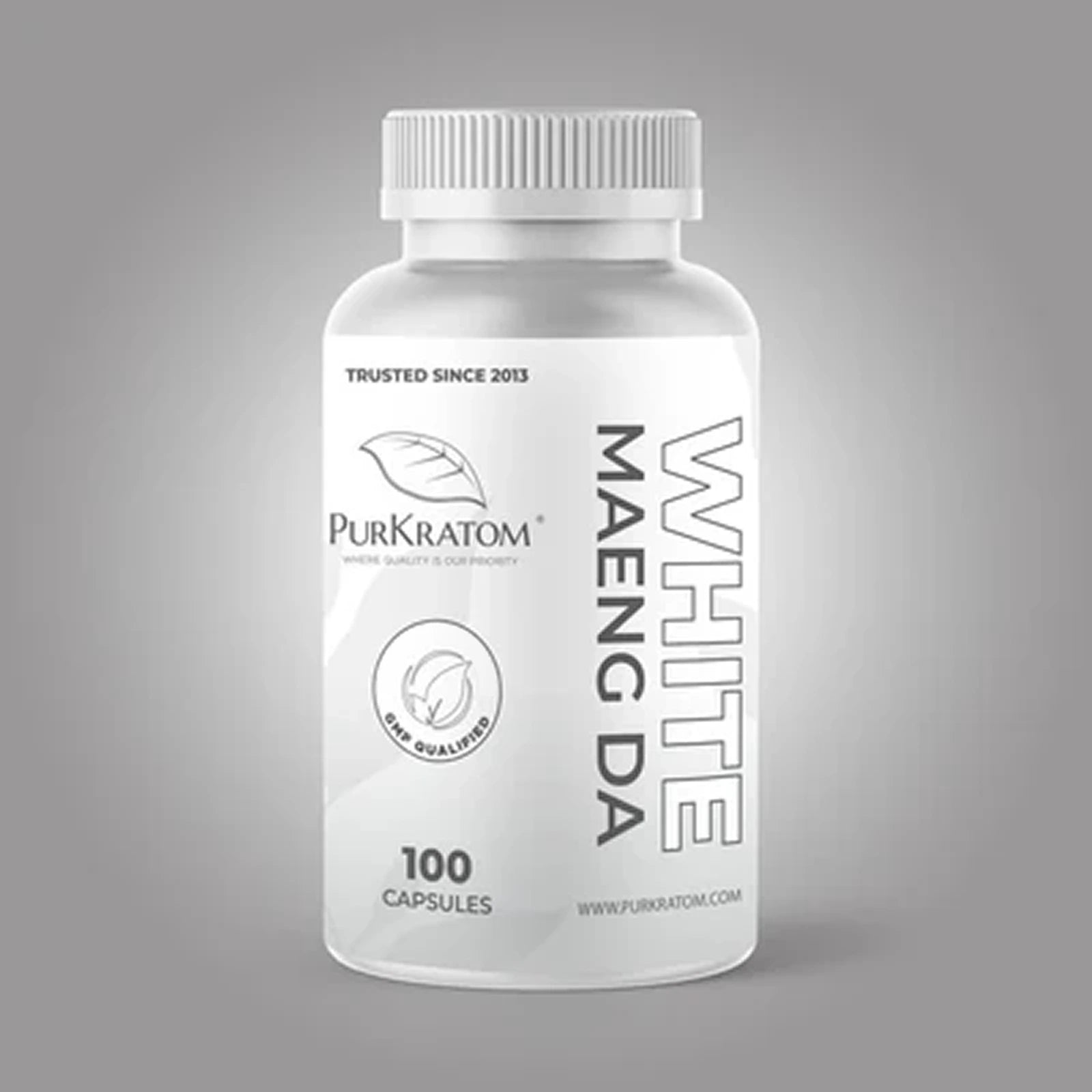
White Maeng Da Kratom Capsules
$26.99
Red Maeng Da Kratom Capsules
$26.99

White Maeng Da Kratom Powder
$31.99
Super Green Maeng Da Kratom Capsules
$26.99

Green Maeng Da Kratom Powder
$31.99