 Login


A useful kratom powder product page should do more than display a product photo and a purchase button. It should help adult consumers understand what the product is, which details have been verified, what documentation is available, and what they should review before making a purchasing decision.
For ecommerce businesses such as PurKratom, this means combining clear product descriptions, accurate specifications, transparent testing information, accessible customer guidance, and responsible marketing. A well-organized page also makes important information easier to find on mobile devices and gives search engines a clearer understanding of the product.
This guide explains what a kratom powder product page should include, how to present product information responsibly, and how to organize the page for usability and search visibility. It is intended for adults aged 21 and older, consumers evaluating product information, and ecommerce teams responsible for maintaining accurate listings.
What Is a Kratom Powder Product Page?
A kratom powder product page is an ecommerce page that identifies a specific kratom powder product and provides the information consumers need to evaluate its description, specifications, documentation, price, and purchasing conditions.
Unlike a general category page, which presents multiple products, an individual product page should focus on one product and any relevant purchasing variants.
For example, a product page might need to distinguish between different package weights, product names, botanical descriptions, or other verified attributes. The exact fields depend on the product being sold and the information the retailer can substantiate.
Why does a product page matter?
A product page connects several parts of the customer journey.
-
Product identification: What is being offered?
-
Product evaluation: What are its documented characteristics?
-
Transparency: What information and testing documentation can be reviewed?
-
Practical decision-making: What are the current price, available options, and applicable purchasing restrictions?
-
Search discovery: Can users and search systems understand the page's subject?
-
Customer support: Can visitors find answers without having to guess?
The most useful pages address these needs without overwhelming visitors with repetitive promotional language.
A product page should also distinguish verified facts from information that is unknown or unavailable. If a retailer cannot verify a product's origin, composition, testing history, or certification status, it should not imply that the information is established.
What Should a Kratom Powder Product Page Include?
A kratom powder product page should include an accurate title, clear product description, verified specifications, product images, current pricing, available testing documentation, relevant FAQs, purchasing information, and responsible disclosures.
The following table provides a practical starting point for building or reviewing a page.
|
Page element |
What to include |
Why it matters |
|---|---|---|
|
Product title |
Accurate name and product format |
Identifies the item |
|
Product images |
Current, representative product photography |
Helps users recognize the product |
|
Description |
Factual, product-specific information |
Explains what is being offered |
|
Specifications |
Verified weight, ingredients, and other relevant attributes |
Supports informed evaluation |
|
Price and options |
Current price, available variants, and applicable terms |
Clarifies purchasing conditions |
|
Testing information |
Relevant reports and COAs, when available |
Makes documented findings accessible |
|
Label information |
Accurate, readable product labeling and warnings |
Helps users understand the product |
|
FAQs |
Answers to common product and purchasing questions |
Reduces uncertainty |
|
Policies |
Applicable shipping, returns, and customer-service information |
Clarifies the next steps |
|
SEO elements |
Descriptive metadata, headings, and internal links |
Improves content organization and discoverability |
|
Legal disclosures |
Applicable age, product, and regulatory information |
Supports responsible publication |
Not every field belongs above the fold. The product name, main image, essential identifying information, and current price are generally the most useful starting points. Detailed testing documents, policies, and educational explanations can appear farther down the page or through clearly labeled links.
Essential information versus optional enhancements
A practical way to prioritize product-page work is to separate core requirements from additional features.
|
Priority |
Examples |
|---|---|
|
Essential |
Accurate product identity, verified specifications, truthful description, current price, relevant disclosures |
|
Important transparency features |
Accessible testing documents, clear label images, ingredient details, direct links to relevant policies |
|
Usability enhancements |
Image galleries, descriptive FAQs, accessible navigation, mobile-friendly layout |
|
Technical enhancements |
Appropriate structured data, image optimization, canonical URL review, crawlability checks |
The classification above is an editorial framework, not a statement that every item is legally required for every kratom product. Applicable obligations depend on the product, its claims, the sales jurisdiction, and the retailer's legal review.
For PurKratom readers who want to understand the product category before reviewing individual listings, the What Is Kratom? beginner's guide provides a relevant educational starting point.
Once visitors understand the information they should evaluate, those who are interested in browsing can explore the PurKratom kratom powder collection.
Collection availability, current product details, pricing, and purchasing eligibility should be checked on the live site before publication or promotion.
How to Write a Clear Kratom Powder Product Description
A good kratom powder product description tells readers what the product is and identifies its documented characteristics. It does not rely on vague superlatives or imply that every buyer will have the same experience.
The description should answer basic questions before introducing additional context.
1. Identify the product accurately
The opening sentence should state the product's actual name and format.
A useful description might follow this general pattern:
[Verified Product Name] is a kratom powder product identified by the manufacturer or supplier as [verified botanical or product designation]. Review the listed specifications, available product documentation, and applicable labeling before making a purchasing decision.
This is a template, not approved product copy. The bracketed information must be replaced with verified facts.
Avoid introducing unverified details about the product's geographic origin, processing method, alkaloid content, purity, or intended use.
2. Describe documented product characteristics
Depending on what can be verified, a description may cover:
-
Product format.
-
Botanical identification.
-
Net package weight.
-
Listed ingredients.
-
Product color or physical appearance, if accurately represented.
-
Package configuration.
-
Manufacturer or supplier information, where documented.
-
Relevant product-specific testing documentation.
-
Distinctions between this product and other formats.
A description should not list every possible attribute merely because competitors use it. Include information only when it applies to the actual item.
3. Avoid unsupported benefit language
Kratom is a health-adjacent and psychoactive botanical product. Product descriptions therefore require particular care with claims about effects, safety, and health outcomes.
Avoid claims that a product:
-
Treats pain, anxiety, depression, or another condition.
-
Helps manage withdrawal or replaces prescribed medication.
-
Guarantees energy, focus, relaxation, or a particular mood.
-
Is completely safe or free of adverse effects.
-
Is superior to other products without substantiated, legally appropriate evidence.
The Federal Trade Commission's Health Products Compliance Guidance explains that health-related marketing must be truthful and supported by appropriate evidence. Claims can also be implied by product names, imagery, testimonials, and the overall presentation, not just by explicit sentences.
4. Keep the language specific and readable
Consider these examples.
|
Less useful wording |
More informative approach |
|---|---|
|
"The ultimate powder experience" |
State the verified product name and format |
|
"Guaranteed premium quality" |
Identify documented specifications and available records |
|
"Completely pure and safe" |
Provide only verified composition or testing details, with their limitations |
|
"Works for everyone" |
Avoid universal effect claims |
|
"Lab tested for total safety" |
Identify the actual report, tested sample, analytes, and limitations where documented |
The improved versions do not need to sound clinical or impersonal. They simply prioritize useful information over claims that may mislead consumers.
5. Use a logical description structure
A product description can be organized into four short parts:
-
Identification: Product name and format.
-
Specifications: Verified weight, ingredients, and other relevant attributes.
-
Documentation: Links to applicable testing information and labeling.
-
Next steps: Relevant FAQs, policies, or educational resources.
This approach supports scanning on mobile devices and helps prevent essential facts from becoming buried in promotional copy.
Product Specifications, Ingredients, and Labeling
Specifications turn a general description into information that can be evaluated.
A kratom powder product page should distinguish between the information that is confirmed, the information that is available in supporting documents, and details that still require verification.
Which specifications should be displayed?
The appropriate fields depend on the actual product and applicable requirements.
|
Specification |
Editorial recommendation |
|---|---|
|
Product name |
Match the current product and packaging |
|
Product format |
Clearly identify it as powder where accurate |
|
Net weight |
Display the verified package quantity |
|
Botanical identity |
Use the documented identification |
|
Ingredients |
Reproduce the verified ingredient information accurately |
|
Product variants |
Explain available package options without confusing them with different formulations |
|
Lot or batch identifier |
Display or explain how it can be matched to relevant documentation, where applicable |
|
Manufacturer or supplier |
Identify only where the relationship and details are documented |
|
Storage information |
Use verified product-label instructions |
|
Warnings and restrictions |
Reproduce approved, applicable information accurately |
Do not assume that every product has multiple ingredients, multiple sizes, a published lot number, or an accessible COA. These are fields to verify, not facts to invent.
Why does botanical identification matter?
The scientific name Mitragyna speciosa is commonly used to identify the plant known as kratom. The name can help distinguish the botanical subject from a retailer's commercial product name. The National Institute on Drug Abuse provides general information about kratom as a psychoactive plant and its compounds.
Botanical identification alone does not establish a product's precise composition, cultivation location, processing history, or laboratory results.
If a retailer makes a claim about a particular source region, harvesting method, or manufacturing process, that claim should be supported by suitable documentation.
How should product variants be presented?
If a listing offers multiple verified package sizes or variants, the options should be easy to distinguish.
For example, the page may explain the net weight associated with each available selection and update the displayed price when a different option is chosen.
The product page should not suggest that a larger package has a different composition or concentration unless that distinction is documented. Nor should a size selection cause important warnings, product details, or relevant testing links to become misleading.
What should the page say about alkaloid content?
Kratom contains multiple alkaloids, including mitragynine and 7-hydroxymitragynine. These compounds are relevant to scientific research and product analysis.
However, a general explanation of kratom chemistry is not evidence of the alkaloid content of a specific product.
If a product page reports an alkaloid measurement, the editorial team should confirm:
-
Which product and sample were analyzed.
-
Whether the result applies to the specific batch or lot.
-
Which compound was measured.
-
The reported value and unit.
-
The laboratory report's date and identification details.
-
Whether the analytical method and reporting basis are clearly described in the source documentation.
A measurement should not be converted into a promise about a person's experience, product safety, or medical effect.
Label images and transcription
Clear photographs of the actual packaging can help consumers examine product information.
Where relevant, ensure that the page's text accurately reflects the label, including ingredient details, net weight, warnings, and applicable instructions.
Images should not be used to conceal missing information. If a label is difficult to read on mobile, a text-based presentation of the relevant verified information may improve accessibility.
Laboratory Testing and Certificates of Analysis
Laboratory documentation can help readers examine the findings reported for a particular sample. It is valuable only when the documentation is accessible, understandable, and accurately connected to the product being presented.
PurKratom provides a search page for laboratory results and Certificates of Analysis. That resource is a useful starting point for consumers seeking available documentation. Its existence alone does not establish that a particular product or batch has been tested or has passed any particular test.
What is a Certificate of Analysis?
A Certificate of Analysis, or COA, is a document reporting analytical results for a sample. Depending on the laboratory and the scope of the analysis, a COA may identify the sample, list the compounds or contaminants tested, and report measured results.
The exact contents vary. A COA should be interpreted according to the document itself rather than according to a retailer's general description of its testing program.
What should a product page disclose about testing?
When relevant documentation is available, the product page should make it easy to find and interpret.
Consider including the following information where it is documented:
-
A direct link to the relevant report.
-
Product or sample identification.
-
Batch or lot matching information, when applicable.
-
The laboratory name.
-
The report date.
-
The analytes or contaminants covered.
-
Reported results and units.
-
Any stated detection or quantification limits that are important to interpreting the findings.
-
The scope and limitations of the analysis.
These are recommended transparency practices, not a claim that every COA contains all these fields.
A report should not be described as current, comprehensive, independent, or batch-specific unless the documentation supports that description.
What is the difference between testing and a safety guarantee?
Testing provides information about the sample and the analyses performed. It does not establish that a product is completely safe.
For example, a report covering certain heavy metals does not automatically establish the absence of other contaminants or address every possible risk associated with a product.
The FDA has published information about heavy-metal analysis of kratom products and has raised concerns about lead and nickel in the products it examined. Those findings should not be attributed to a particular PurKratom product without product-specific evidence. They illustrate why testing claims must be precise rather than absolute.
A responsible product page should explain what its documentation covers and avoid broad assurances that go beyond the results.
Remove the placeholder only after verification. Do not publish a claim that testing has occurred merely because the brand has a general lab-results page.
Readers who want to understand product transparency can visit PurKratom's laboratory-results search page and review the documentation available for the relevant product.
Before linking a specific report from an individual product page, confirm that it corresponds to the product and sample in question.
Product Images and Visual Information
Images help visitors identify a product, inspect its packaging, and understand the page's structure. They should clarify the offering rather than create impressions that the text cannot substantiate.
Which images should a product page include?
Depending on the actual listing, useful images may include:
-
A clear primary image of the product.
-
A view of the package front.
-
Additional package angles.
-
Readable label details.
-
A photograph showing verified size or packaging differences, if useful.
-
A simple diagram explaining where consumers can find product specifications or documentation.
Use actual product photography or other visuals that accurately represent the item. Do not create a simulated COA, invent a laboratory report, or display a certification badge that has not been verified.
If a product's appearance, package design, or available options change, review the images to ensure that the page remains accurate.
How should product image alt text be written?
Alt text should describe the meaningful content of an image. It should not be a list of keywords or a place for unsupported product claims.
Examples:
|
Image |
Example alt text |
|---|---|
|
Front package image |
"Front view of the [verified product name] kratom powder package" |
|
Label close-up |
"Close-up of the kratom powder package label showing the listed product details" |
|
Packaging comparison |
"Comparison of the verified package sizes available for the kratom powder product" |
|
Documentation diagram |
"Diagram showing where product specifications and available laboratory documentation appear on a product page" |
These are templates. Replace bracketed text and remove any detail that does not accurately describe the final image.
If an image is purely decorative, the implementation should follow accessibility best practices rather than inserting repetitive SEO keywords.
Image placement and mobile usability
The primary product image and essential identifying details should be easy to find near the top of the page.
Additional images can appear in a gallery. Label photographs and explanatory diagrams may sit near the relevant product details, while laboratory documentation links should remain readable and accessible.
Avoid forcing users to zoom repeatedly to read important text. Image compression, appropriate dimensions, and responsive delivery can improve page usability without reducing the legibility of essential details.
Pricing, Availability, Shipping, and Policies
Purchasing information is an important part of a complete product page. Visitors should be able to identify the current price, available options, and relevant conditions without relying on outdated descriptions.
What pricing information should be shown?
Display the current verified price for the selected variant. If different sizes have different prices, make the relationship clear and ensure that the displayed amount updates correctly when a visitor changes options.
Other relevant details may include:
-
Currency.
-
Applicable taxes or additional charges, where required.
-
Clearly explained discounts, if currently available and accurately represented.
-
Any relevant purchase limitations.
-
Whether a listed variant is currently available.
Do not publish an invented price or a discount that cannot be verified. Avoid artificial urgency or unsupported scarcity claims.
How should product availability be handled?
Availability can change, so the product page should reflect the current state of the listing.
If a product is unavailable, the page should not display an active purchase option that suggests otherwise. If variants have different availability, the page should make those differences clear.
A category page's existence does not establish that every item in the collection is currently in stock.
What should a page say about shipping?
Shipping eligibility depends on current business policy and applicable legal restrictions.
PurKratom's Shipping Policy is the appropriate internal reference for checking current published shipping information. The live policy and the applicable jurisdictional requirements must be reviewed before making location-specific statements.
A product page should not promise delivery to a particular state, city, or country unless eligibility has been verified.
The age and regulatory disclosures must also be consistent with the actual sales policy and applicable law.
What about returns and customer service?
If the store has a current, applicable returns policy, link to it using descriptive text. If the policy is unavailable or its applicability is uncertain, verify the correct destination before publication.
A support link can help visitors resolve questions about product specifications, documentation, orders, and applicable policies.
Do not invent response times, return windows, refund conditions, or guarantees. These are business commitments that require current documentation.
Make important information easy to locate
A useful layout might place essential purchase details near the product title, followed by expanded sections for:
-
Product specifications.
-
Label and ingredient information.
-
Testing documentation.
-
Frequently asked questions.
-
Shipping and other policies.
-
Applicable warnings and disclosures.
This gives visitors access to important facts without forcing every detail into the opening screen.
Product Page SEO and Search Visibility
SEO helps organize the product page so that people and search systems can understand what the page covers. It cannot compensate for inaccurate specifications, missing evidence, or an unclear product description.
1. Create a descriptive SEO title
A product-page title should identify the actual item and distinguish it from other products.
For an individual listing, use the verified product name and relevant product format. Avoid repeating the same keywords several times or adding promotional superlatives that cannot be substantiated.
The title of this educational article is not a substitute for the SEO title of any individual product page.
2. Write a useful meta description
The meta description should summarize the page's actual contents. Depending on the listing, it might mention the product format, key specifications, and availability of relevant documentation when confirmed.
Avoid using the meta description to make unsupported effect claims or imply that a product has been tested when that fact has not been established.
Search engines may generate a different snippet based on the query and page content, so a carefully written meta description should not be treated as a guaranteed search-result display.
3. Use one clear primary heading
The main heading should identify the product. Supporting headings can organize the description, specifications, testing information, FAQs, and policies.
A logical heading hierarchy helps readers navigate long pages and gives content a clearer structure. Avoid using headings solely to repeat keyword variations.
4. Use natural keyword placement
Relevant phrases might include the product name, kratom powder, product format, package weight, and verified product attributes.
Use terminology where it helps explain the product. Avoid repeating "kratom powder product page" on a commercial listing when that phrase does not fit the shopper's actual question.
The primary keyword for this article is different from the keyword that should be targeted by an individual product listing. Product pages should focus on identifying the product itself, while this article targets the broader question of what a product page should contain.
5. Build relevant internal links
Internal links should help users reach the next useful destination.
Examples include:
-
A category page for browsing products.
-
A comparison article for understanding product formats.
-
An educational article explaining kratom terminology.
-
A lab-results page for reviewing available documentation.
-
A shipping policy for checking purchasing conditions.
For PurKratom, relevant resources include the kratom powder collection, the powder-versus-capsules educational article, and the complete comparison of powder, capsules, and extracts.
6. Optimize product images and page performance
Use descriptive filenames where practical, accurate alt text, appropriately sized images, and responsive image delivery.
Check the page on mobile devices for layout problems, difficult-to-read labels, slow-loading galleries, and inaccessible controls.
Performance improvements should be evaluated against the actual page rather than assumed from a checklist.
7. Check indexing and canonicalization
For ecommerce teams, technical review should confirm that the intended page can be crawled and indexed where appropriate.
Review:
-
The canonical URL.
-
Indexing directives.
-
Internal links to the preferred product URL.
-
Duplicate or near-duplicate variant pages.
-
Broken links and image errors.
-
Whether essential product information is available in the rendered page.
-
Whether variant selection changes the displayed details accurately.
These checks are especially useful on stores where product variants or repeated templates can create similar pages.
8. Treat structured data carefully
Google documents structured data options for product information, including product snippets and merchant listings. However, eligibility depends on Google's policies, the page content, and the specific structured-data requirements.
Kratom products require additional care because Google classifies certain regulated or prohibited product promotions as ineligible for some search features. Do not assume that a kratom listing qualifies for product rich results simply because it contains a price and product name.
Before implementing Product markup, the technical and compliance teams should review the current Google product structured-data documentation, applicable content policies, and any relevant merchant requirements.
Structured data must reflect visible, verified page content. Never invent review ratings, availability, prices, or product properties to populate markup.
9. Avoid keyword stuffing and duplicated descriptions
If many listings share a template, give each page accurate, product-specific information where it is available.
Do not manufacture differences merely to make pages look unique. If two products share attributes, state the verified facts consistently while preserving the details that distinguish the listings.
The goal is clarity and usefulness, not a different phrase for every sentence.
How to Use FAQs, Reviews, and Customer Support
FAQs and customer feedback can improve a product page when they provide relevant, accurate information. They should not be used to introduce unsupported product promises.
Which FAQs belong on a product page?
Useful questions often concern the product's identity, specifications, documentation, available variants, and purchasing policies.
For example:
-
What product format is this?
-
What net weight is listed?
-
Where can I find the ingredient information?
-
Is a product-specific COA available?
-
How can I check the current shipping policy?
-
What should I review before comparing this product with capsules or extracts?
Answers should be based on verified product information. If a question cannot be answered from the current records, investigate it rather than guessing.
How should customer reviews be presented?
Reviews can describe individual customers' opinions or experiences, but they do not establish scientific evidence, product safety, or guaranteed effectiveness.
The page should not turn a review into a brand-endorsed medical claim. For example, an anecdote about a health condition should not be presented as proof that the product treats that condition.
The FTC's guidance explains that endorsements and testimonials can convey claims for which the marketer remains responsible. A review does not remove the need to substantiate claims communicated by the overall page.
Only display genuine reviews collected and presented in accordance with applicable requirements. Do not fabricate testimonials, ratings, review counts, or customer experiences.
Make customer support useful
A well-placed support link should help visitors resolve legitimate questions about product details, documentation, orders, and policies.
Support content should match the questions the business is equipped to answer. Product questions should not be answered with medical advice, and staff should not be encouraged to promise effects or outcomes.
A clear support path can be useful even when the visitor decides not to purchase.
Responsible Kratom Marketing and Regulatory Considerations
Kratom product pages require more than ordinary copyediting because product descriptions can influence decisions about a psychoactive botanical product.
Accurate information should take priority over promotional language, and applicable legal requirements should be reviewed for the markets where the product is offered.
What does the FDA say about kratom?
The FDA's information about kratom explains the agency's concerns about kratom, including potential serious adverse events, and states that kratom is not lawfully marketed in the United States as a drug product, dietary supplement, or conventional food ingredient under the agency's stated positions.
Product-page copy should not describe kratom as FDA-approved or imply that the FDA has approved a product for a medical use.
Because regulatory requirements can change and may differ by jurisdiction, the business should obtain current legal review before publishing product claims or offering a product in a particular location.
How should health and safety information be handled?
Do not claim that a kratom product diagnoses, treats, cures, mitigates, or prevents disease. Avoid unsupported statements about safety, effectiveness, medication interactions, or guaranteed outcomes.
Kratom has been associated with risks that include dependence, withdrawal, and adverse events. The FDA also discusses reports involving contamination in some kratom products. These are public-health concerns, not evidence that a particular product has a specific defect.
Where safety information is relevant, use authoritative sources, state what is known, acknowledge limitations, and avoid converting general research into a claim about a particular listing.
Product pages should not provide dosing schedules or instructions for treating a condition. People seeking personal medical guidance should consult a qualified healthcare professional.
What should a retailer say about AKA GMP?
The American Kratom Association's GMP Standards Program should not be confused with FDA approval or an endorsement of a particular product by the AKA.
Any claim that a business or facility holds a current qualification or certification must be supported by documentation identifying the certificate holder, issuing body, dates, and activities covered.
If these facts have not been verified, do not use the phrase "cGMP-certified distribution facility" or imply that the business holds a current qualification.
How should legal and age disclosures be handled?
PurKratom's supplied website disclaimer specifies a minimum purchase age of 21. The published product page should be consistent with the actual company policy and the applicable legal requirements.
The team should verify:
-
Current age-verification requirements.
-
Product-specific warnings.
-
Applicable state and local restrictions.
-
Shipping eligibility.
-
Any required label or consumer disclosures.
-
Whether California Proposition 65 warnings apply to the specific featured product.
A Proposition 65 warning should not be added automatically to every kratom product page. Product-specific applicability should be reviewed, and any required warning should be approved and placed according to the applicable requirements.
Frequently Asked Questions (FAQs)
1. What should a kratom powder product page include?
It should include an accurate product name, a clear description, verified specifications, representative images, current pricing and availability, relevant labeling, available testing documentation, FAQs, purchasing policies, and appropriate disclosures.
2. Why is a detailed kratom powder product description important?
A detailed description helps readers understand what the product is and which characteristics have been verified. It also reduces ambiguity about the format, package details, and available documentation without relying on unsupported benefit claims.
3. Should every kratom powder product page include a Certificate of Analysis?
A page should link to a product-specific COA when applicable documentation is available and has been verified. It should not claim that a report exists or applies to a particular batch without confirming the document and its sample identification.
4. Does laboratory testing prove that kratom powder is safe?
No. Laboratory results describe the sample and the analyses performed. A report covering certain compounds or contaminants does not establish that every possible risk has been assessed or that a product is completely safe.
5. What product specifications should be displayed?
Relevant specifications may include the product name, format, net weight, verified ingredients, botanical identification, package options, and available documentation. The actual fields should reflect the product and applicable requirements.
6. How should kratom powder be compared with capsules or extracts?
Compare documented product formats, ingredient information, package specifications, labeling, available testing records, and relevant purchasing details. Do not assume that one format is safer or more effective than another without adequate, applicable evidence. PurKratom's powder, capsules, and extracts comparison guide provides a related educational resource.
7. What SEO elements belong on a kratom powder product page?
Useful elements include a descriptive product title, one clear main heading, a relevant meta description, organized headings, accurate image alt text, helpful internal links, and technically sound page implementation. Keyword use should remain natural and reflect the actual product.
8. Should product pages display customer reviews?
Genuine reviews may help readers understand individual customer opinions, but they must not be presented as scientific evidence, proof of safety, or a guarantee of effectiveness. Health-related claims conveyed by testimonials require particular care.
Building a More Informative Product Page
A useful kratom powder product page combines accurate identification, readable descriptions, verified specifications, accessible documentation, clear purchasing information, and responsible disclosures. Each element should help readers understand what is being offered without overstating what is known about the product.
For PurKratom, the most important first step is to verify the underlying product facts before improving the wording or adding SEO elements. A well-written page cannot compensate for a missing COA, outdated product specification, unsupported sourcing statement, or incorrect regulatory claim.
The next step is to review the live product listing against the checklist in this guide. Confirm its specifications, current images, pricing, documentation, internal links, and disclosures. Then address any gaps that could leave readers uncertain or create an inaccurate impression.
Ready to learn more? Visit PurKratom to explore the company’s products and resources, or use the PurKratom Lab Results Search to review available product testing information.
Disclaimer: This content is for educational and informational purposes only and is not intended to provide medical advice, diagnose, treat, cure, or prevent any disease or health condition. Kratom research is still developing, and individual responses may vary. Consult a qualified healthcare professional before using kratom, especially if you take medications, have a medical condition, are pregnant or breastfeeding, or have concerns about potential interactions. Laws and regulations regarding kratom vary by location and may change, so verify current local requirements before purchasing or using kratom.
Based on your interest,
we recommend:
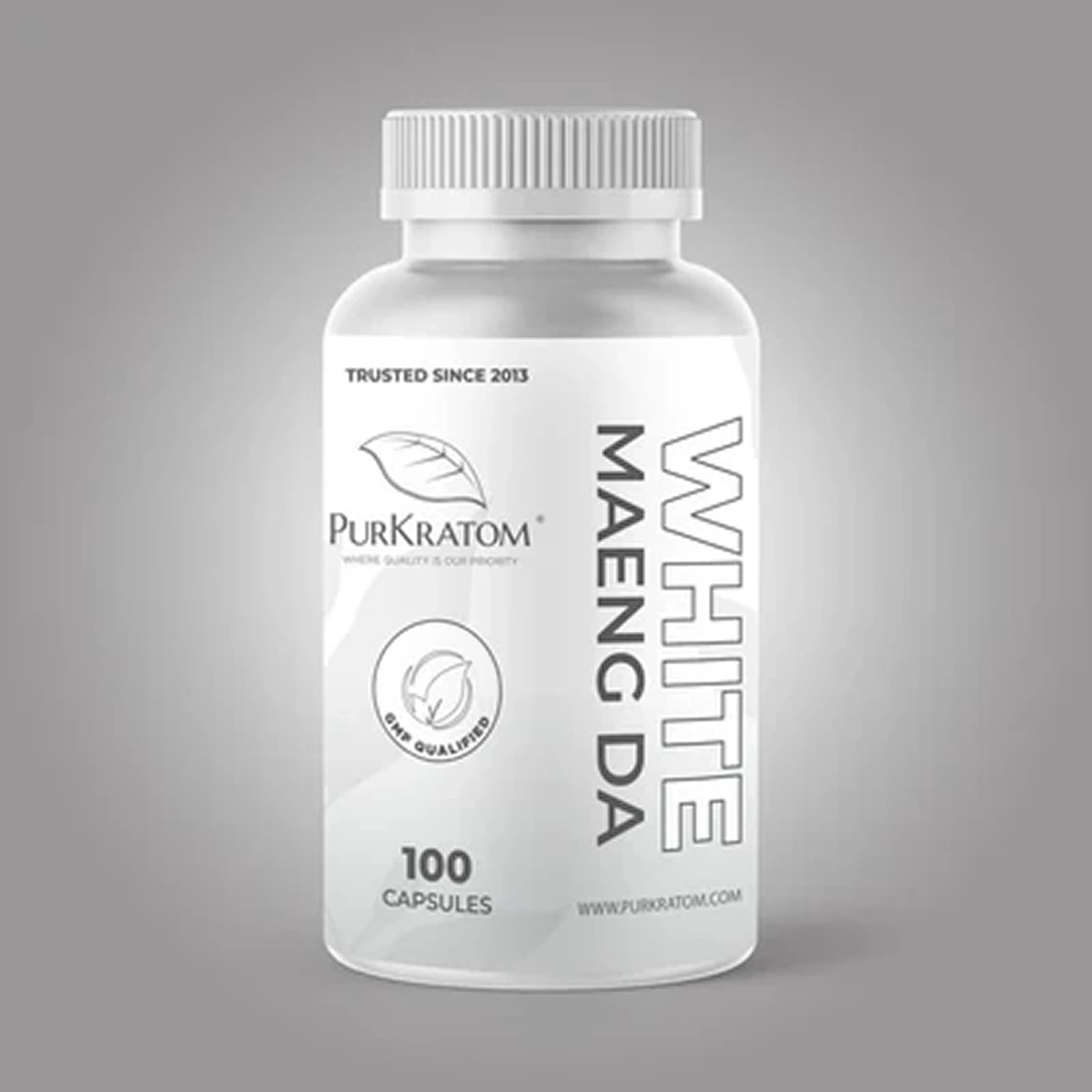
White Maeng Da Kratom Capsules
$26.99
Red Maeng Da Kratom Capsules
$26.99

White Maeng Da Kratom Powder
$31.99
Super Green Maeng Da Kratom Capsules
$26.99

Green Maeng Da Kratom Powder
$31.99