 Login
Login

Kratom strains are commonly grouped by red, green, and white vein colors. These labels traditionally refer to the color of the leaf vein, but commercial “strain” names are not standardized scientific categories. Research suggests that alkaloid composition can vary with genetics, geography, harvest timing, and processing, so color alone cannot reliably predict a specific effect.
If you search for kratom strains, you will quickly encounter three familiar categories: red kratom, green kratom, and white kratom.
These colors are often presented as if they represent three completely different types of kratom with predictable characteristics. Red is commonly described as more relaxing, green as balanced, and white as more stimulating. But there is an important distinction between what consumers commonly call a “strain” and what scientific research can actually establish.
Kratom is the common name for Mitragyna speciosa, a tree in the coffee family native to Southeast Asia. Its leaves contain numerous alkaloids, with mitragynine being one of the most abundant and extensively studied.
The most useful way to understand red, green, and white kratom is therefore not to treat the colors as guaranteed effect categories. Instead, think of them as commercial and botanical classifications that can provide a starting point for comparison, while recognizing that the chemistry of individual products can vary.
This guide explains what each color means, how the three categories are commonly described, what research says about those differences, why alkaloid testing matters, and what consumers should look for when comparing products.
For readers evaluating products, PurKratom also provides dedicated kratom category information and product collections that can be explored after understanding the fundamentals.
What Are Kratom Strains?
Kratom strains are names used to categorize different kratom products, most commonly according to leaf-vein color, geographic name, or a combination of commercial naming conventions.
The three most recognizable categories are:
- Red vein kratom
- Green vein kratom
- White vein kratom
You may also encounter names such as Red Bali, Green Malay, White Sumatra, Red Maeng Da, Green Maeng Da, and White Maeng Da.
The name can communicate several things at once. It may refer to the color associated with the leaf, a geographic designation, a cultivar or local variety, or simply a product name used in the kratom marketplace.
That is one reason it can be difficult for consumers to compare products.
A “Green Malay” product from one supplier is not automatically chemically identical to another product carrying the same name.
Are red, green, and white kratom different plants?
Usually, no.
Red, green, and white kratom are generally understood as categories within the same species, Mitragyna speciosa. The categories are associated with differences in leaf appearance, particularly vein coloration, and with commercial processing and naming practices.
Research indicates that kratom chemistry can vary substantially based on botanical and environmental factors. One study examining hundreds of Thai kratom samples found variation in alkaloid levels associated with collection period and geography, while the relationship between vein color and alkaloid production was not always straightforward.
This matters because the label “red,” “green,” or “white” should not be treated as a laboratory measurement.
Why Are Kratom Strains Called Red, Green, and White?
The names originate largely from the appearance of kratom leaves, especially the veins.
Before processing, a kratom leaf can display different vein colors. Commercial products may then be labeled according to those categories.
However, the finished powder can look quite different from the original leaf.
Recent research found that post-harvest processing can significantly affect kratom powder color. Drying temperature and withering duration influenced the final appearance of the powder, while powder color did not necessarily correspond directly to its alkaloid composition.
In simple terms: the color printed on a product label or visible in a powder is not a substitute for chemical analysis.
That does not mean the color classifications are meaningless. They remain widely used by consumers and vendors and can be useful for organizing products. The important point is to understand their limitations.
Red Kratom Explained
Red kratom, also called red vein kratom, is traditionally associated with kratom leaves displaying reddish or red-colored veins.
In the commercial marketplace, red kratom is frequently described using terms such as calming, relaxing, or soothing. These descriptions are common in consumer and vendor discussions, but they should be understood as reported or marketed characteristics rather than guaranteed physiological effects.
PurKratom currently categorizes products such as Red Bali, Red Maeng Da, and Red Vein Borneo within its red kratom offerings.
What is red vein kratom?
Red vein kratom refers to kratom associated with red-colored leaf veins.
The term is primarily a classification used in the kratom marketplace. It does not mean that every red product has the same alkaloid profile or produces the same experience.
What is red kratom commonly associated with?
Consumer descriptions commonly associate red kratom with:
- Relaxation
- A calmer-feeling experience
- Evening use
- A less stimulating profile
However, these descriptions should not be interpreted as medical claims.
Scientific evidence does not establish that every red kratom product reliably produces a particular effect. A study examining self-reported differences between red, green, and white commercial kratom products found that users reported differences in subjective experiences, but laboratory analysis did not find significant cross-strain differences in the measured alkaloids. The researchers therefore cautioned against assuming that color alone explains perceived differences.
Examples of red kratom names
Depending on the supplier, red products may include names such as:
- Red Bali
- Red Maeng Da
- Red Borneo
- Red Thai
- Red Malay
The exact naming system can vary between vendors.
Important: A geographic name such as “Bali” or “Borneo” should not automatically be interpreted as proof that the product was grown in that specific location. Consumers should examine the supplier's sourcing information rather than relying solely on the product name.
Who might research red kratom?
Someone searching for red kratom may be:
- Comparing kratom colors for the first time
- Looking for a product commonly described as less stimulating
- Comparing red varieties such as Bali and Maeng Da
- Evaluating powder versus capsules
- Researching alkaloid information
- Looking for product-quality documentation
The best next step is not simply choosing the color based on a promised outcome. It is comparing product information, testing, format, labeling, and applicable safety information.
If you are specifically comparing red, green, and white products, explore PurKratom's kratom categories to see how its current product range is organized by color and format.
Green Kratom Explained
Green kratom, or green vein kratom, is associated with leaves displaying green-colored veins.
Green kratom is frequently marketed as a middle-ground category between red and white kratom. Consumer descriptions often mention a combination of alertness and relaxation.
Again, these are marketplace descriptions rather than established guarantees.
What is green vein kratom?
Green vein kratom is a classification associated with green-veined leaves and products marketed under the green category.
PurKratom currently offers green kratom products including Green Maeng Da, Super Green Maeng Da, and Premium Green Malay.
What is green kratom commonly associated with?
Green kratom is commonly described by consumers as:
- Balanced
- Moderately stimulating
- Clear-headed
- Suitable for daytime use
- Less strongly associated with either extreme relaxation or stimulation
Those descriptions can help explain why green kratom is popular, but they should not be presented as predictable pharmacological effects.
Why is green kratom often called “balanced”?
The “balanced” description comes largely from consumer and commercial conventions that place green between red and white in the commonly used kratom color spectrum.
But this should not be confused with a scientific rule.
A 2026 study found substantial chemical variation among kratom samples based on botanical variation, geographic origin, and other factors. It also found differences in mitragynine and 7-hydroxymitragynine levels between some sample groups.
This reinforces a key point:
Two products with the same color label may not have identical chemistry.
Examples of green kratom
Common names include:
- Green Maeng Da
- Green Malay
- Green Borneo
- Green Thai
- Green Indo
The specific products available depend on the supplier.
For example, PurKratom's current green collection includes several green products and provides individual product listings within the collection.
White Kratom Explained
White kratom, or white vein kratom, is associated with leaves displaying lighter or whitish veins.
Commercial descriptions commonly associate white kratom with stimulation, energy, alertness, or focus. These descriptions are widely used in the marketplace but should not be treated as guaranteed outcomes.
What is white vein kratom?
White vein kratom is a category associated with white or light-colored leaf veins.
Examples commonly found in the marketplace include:
- White Maeng Da
- White Sumatra
- White Borneo
- White Thai
PurKratom's current product categories include White Maeng Da and White Sumatra products.
What is white kratom commonly associated with?
White kratom is often described by consumers as:
- Energizing
- Uplifting
- More stimulating
- Associated with daytime use
- Supportive of alertness or focus in user reports
These descriptions should remain clearly separated from scientific conclusions.
Research into kratom is still developing, and there is not enough high-quality human evidence to establish reliable effects for specific color categories. NCCIH notes that much remains to be learned about kratom's effects, safety, and potential uses.
Does white kratom contain more alkaloids?
Not necessarily.
This is one of the most important misconceptions to avoid.
Some products marketed as white kratom may test differently from some red or green products, but color by itself does not establish a particular alkaloid concentration.
In one study of commercially sold red, green, and white products, researchers found no significant cross-strain differences in several measured alkaloids.
Other research has found differences between particular botanical samples, demonstrating that kratom chemistry can vary.
The appropriate conclusion is not that color never matters. Rather, color alone is insufficient to tell you everything about a product's chemistry.
Red vs. Green vs. White Kratom
The easiest way to understand the three major categories is to compare their traditional classifications and commonly reported descriptions while keeping the evidence limitations in view.
| Category | Traditional classification | Common marketplace description | What science says |
|---|---|---|---|
| Red kratom | Red-colored leaf veins | Often described as relaxing or calming | Color alone does not establish a predictable effect or alkaloid profile |
| Green kratom | Green-colored leaf veins | Often described as balanced or moderately stimulating | Chemical composition varies between samples |
| White kratom | White or light-colored leaf veins | Often described as stimulating or energizing | Color alone cannot reliably predict chemistry or individual response |
Which kratom color is strongest?
There is no scientifically reliable rule that says red, green, or white kratom is always the “strongest.”
Strength can depend on factors including:
- Alkaloid concentration
- Plant genetics
- Geography
- Harvest conditions
- Plant maturity
- Processing
- Product formulation
- Extraction
- Batch variation
A product's color is therefore not a reliable strength measurement.
Which kratom color lasts the longest?
There is no dependable scientific rule that allows consumers to predict duration solely from red, green, or white labeling.
Claims about duration are often based on individual experiences or marketing descriptions rather than standardized clinical evidence.
Is green kratom a mix of red and white?
Not necessarily.
Green kratom is generally its own commercial category associated with green-veined leaves. The common idea that green is simply “half red and half white” is an oversimplification.
A green product is not automatically a physical mixture of red and white leaves.
Do Kratom Colors Actually Mean Different Effects?
They may correspond with differences that consumers perceive, but current evidence does not support treating red, green, and white labels as reliable predictors of a specific effect.
This distinction is central to understanding kratom.
A 2023 study examined self-reported experiences among hundreds of kratom users who used products sold as red, green, and white strains. Participants reported differences that broadly matched common marketing descriptions. However, laboratory analysis of the products did not reveal significant differences in several measured alkaloids between the color categories. The authors suggested that marketing narratives and expectations could contribute to perceived differences.
That finding does not prove that all kratom colors are identical.
Instead, it shows why consumer descriptions, product labels, botanical characteristics, and chemical composition should not automatically be treated as interchangeable concepts.
Why can people report different experiences?
Individual experiences can be influenced by many variables, including:
- Product chemistry
- Individual physiology
- Previous exposure
- Product amount
- Other substances
- Expectations
- Context
- Product formulation
- Batch variation
The science of kratom is still developing, and high-quality human research remains limited. NCCIH specifically notes that relatively little research in people has evaluated kratom's health effects.
For consumers, this means it is better to approach strain descriptions as informational categories rather than guarantees.
The Role of Alkaloids in Kratom
To understand why kratom colors can be difficult to compare scientifically, it helps to understand alkaloids.
Alkaloids are naturally occurring chemical compounds found in many plants. Kratom contains numerous alkaloids, with mitragynine receiving substantial research attention.
What is mitragynine?
Mitragynine is one of the principal alkaloids found in kratom.
Scientific research has examined its pharmacology and interactions with biological systems. NCCIH notes that mitragynine and 7-hydroxymitragynine interact with opioid receptors, while mitragynine also interacts with other receptor systems.
That does not mean that consumers should interpret a product's mitragynine percentage as a guarantee of a particular experience or medical effect.
What is 7-hydroxymitragynine?
7-hydroxymitragynine, or 7-OH, is another kratom alkaloid found naturally in trace amounts.
It is important to distinguish naturally occurring trace 7-OH in kratom leaf from products that contain concentrated or enhanced 7-OH.
The FDA's recent warnings specifically focus on concentrated 7-OH products and enhanced formulations, which the agency considers a significant public-health concern.
Consumers should therefore be cautious about products marketed as enhanced, concentrated, or containing added 7-OH.
Why do alkaloids matter when comparing strains?
Because the chemistry of kratom is more complicated than its color labels suggest.
Research has identified variation in alkaloid levels according to factors including:
- Genetics
- Geographic origin
- Season
- Harvest timing
- Plant part
- Processing
- Extraction technique
A recent study specifically found significant compositional differences associated with botanical variation, geographical origin, and extraction techniques.
How to Compare Kratom Products Responsibly
If you are comparing red, green, and white kratom products, consider the following factors before focusing on color.
1. Identify the product format
Determine whether you are looking at:
- Powder
- Capsules
- Extract
- Shot
- Gummies
- Blend
Different formats may contain different concentrations or formulations.
PurKratom currently offers multiple product formats, including powder, capsules, gummies, and shots.
2. Read the label carefully
Look for:
- Product name
- Net contents
- Ingredient information
- Serving information where provided
- Batch or lot information
- Manufacturer or supplier information
- Relevant testing information
A clear label makes it easier to understand what you are actually considering.
3. Look for testing information
Laboratory testing can provide information that a color label cannot.
Depending on the supplier and product, testing may address:
- Alkaloid content
- Microbial contamination
- Heavy metals
- Other contaminants
- Product identity
Do not assume that the phrase “lab tested” means the same thing everywhere. If testing is important to your decision, look for specific information about what was tested and whether documentation is available.
For readers evaluating products based on transparency rather than color alone, the logical next step is to review PurKratom's available kratom products and category pages and examine the product information provided for individual offerings.
4. Consider the batch
A product's batch or lot number can help connect the item in your possession with relevant testing or quality-control information.
This is especially useful when evaluating consistency over time.
5. Distinguish leaf products from extracts
Do not compare a traditional powdered leaf product with a concentrated extract as though they are interchangeable.
Concentration can materially change the amount of active compounds present.
6. Avoid relying on “strongest” claims
Words such as “strongest,” “ultra,” or “enhanced” should encourage closer examination, not automatic trust.
In particular, be cautious with products containing concentrated or added 7-OH. The FDA has specifically warned consumers about concentrated 7-OH products.
7. Check applicable laws
Kratom regulations differ across jurisdictions.
Do not assume that because a product is available online it is legal to possess or purchase everywhere.
Consumers should independently verify the laws that apply where they live.
Kratom Powder vs. Capsules
Once someone understands the color categories, the next question is often about product format.
Kratom powder
Powder is dried kratom leaf material that has been ground into a fine form.
It may appeal to consumers who prefer flexibility in how they use a product or who want to compare different powder varieties.
PurKratom's current kratom powder collection includes red, green, white, yellow, and blended categories.
Kratom capsules
Capsules contain kratom material inside a capsule format.
They can be convenient for consumers who prefer a pre-measured format and do not want to handle loose powder.
PurKratom currently offers kratom capsules across several color categories.
Which format is better?
There is no universal answer.
The more useful comparison is:
| Consideration | Powder | Capsules |
| Convenience | Requires preparation | Convenient and portable |
| Handling | Loose powder | Encapsulated |
| Flexibility | Greater flexibility in format | More standardized per capsule |
| Taste | May be noticeable | Generally less direct taste exposure |
| Product comparison | Easy to compare powder products | Easy to compare capsule products |
The format should be considered separately from the red, green, or white classification.
Common Questions About Kratom
1. What are the three main kratom strains?
The three most commonly discussed kratom categories are red, green, and white. These labels are associated with leaf-vein color and are widely used in the commercial kratom marketplace. They are not standardized scientific classifications that guarantee a particular effect.
2. What is the difference between red, green, and white kratom?
Red, green, and white kratom are commonly distinguished by the color associated with the leaf vein. Red is often marketed as relaxing, green as balanced, and white as stimulating. However, research indicates that color alone does not reliably predict alkaloid composition or individual effects.
3. Is red kratom more relaxing than white kratom?
Red kratom is commonly described as more relaxing, while white kratom is commonly described as more stimulating. These descriptions reflect consumer reports and marketplace conventions rather than guaranteed effects. Scientific research has not established a simple color-to-effect rule.
4. Is green kratom a combination of red and white kratom?
Not necessarily. Green kratom is generally treated as its own category associated with green-veined leaves. The idea that green is automatically a physical mixture of red and white kratom is an oversimplification.
5. Does kratom color determine alkaloid content?
No. Color alone does not reliably determine alkaloid content. Research has found substantial variation related to genetics, geography, season, harvest conditions, plant parts, and processing.
6. Which kratom strain is strongest?
There is no scientifically reliable way to identify the “strongest” kratom solely by red, green, or white labeling. Actual chemical composition can vary between products and batches. Product-specific laboratory information is more informative than color alone.
7. What is mitragynine?
Mitragynine is one of the principal alkaloids naturally found in kratom. It is one of the main compounds studied in kratom research and interacts with several biological systems, including opioid receptors.
8. Is 7-OH the same as kratom?
No. 7-OH is one compound naturally present in trace amounts in kratom leaf. Concentrated or enhanced 7-OH products are distinct from ordinary kratom leaf products and have been the subject of significant FDA concern.
Understanding Kratom Strains Beyond the Color
The easiest way to remember the difference between red, green, and white kratom is that these categories are primarily associated with kratom leaf-vein color and long-standing commercial naming conventions.
Red kratom is commonly marketed as calming or relaxing. Green kratom is often positioned as a balanced category. White kratom is frequently described as stimulating or energizing.
But those descriptions should be treated as general marketplace conventions, not guarantees.
The science tells a more complicated story.
Kratom chemistry can vary because of genetics, geography, season, harvest conditions, processing, plant part, and extraction. Research has also found instances where differently colored commercial products did not show significant differences in measured alkaloids.
That means the most informed approach is to use color as one piece of information rather than the entire decision-making process.
When comparing products, pay attention to the product format, labeling, sourcing information, batch details, laboratory testing, and available documentation. Be especially careful to distinguish ordinary kratom leaf from concentrated or enhanced 7-OH products, which are subject to specific FDA warnings and regulatory actions.
For consumers who want to continue their research, the next logical step is to compare the available red, green, and white kratom products by format and product information, rather than choosing solely on the basis of a color label.
Explore PurKratom's kratom categories to compare current red, green, white, and other kratom product options. For readers who want to understand format differences first, review the kratom powder collection and kratom capsule collection, then evaluate the product information available for individual products before making a purchasing decision.
Disclaimer: This content is for educational and informational purposes only and is not intended to provide medical advice, diagnose, treat, cure, or prevent any disease or health condition. Kratom research is still developing, and individual responses may vary. Consult a qualified healthcare professional before using kratom, especially if you take medications, have a medical condition, are pregnant or breastfeeding, or have concerns about potential interactions. Laws and regulations regarding kratom vary by location and may change, so verify current local requirements before purchasing or using kratom.
Based on your interest,
we recommend:
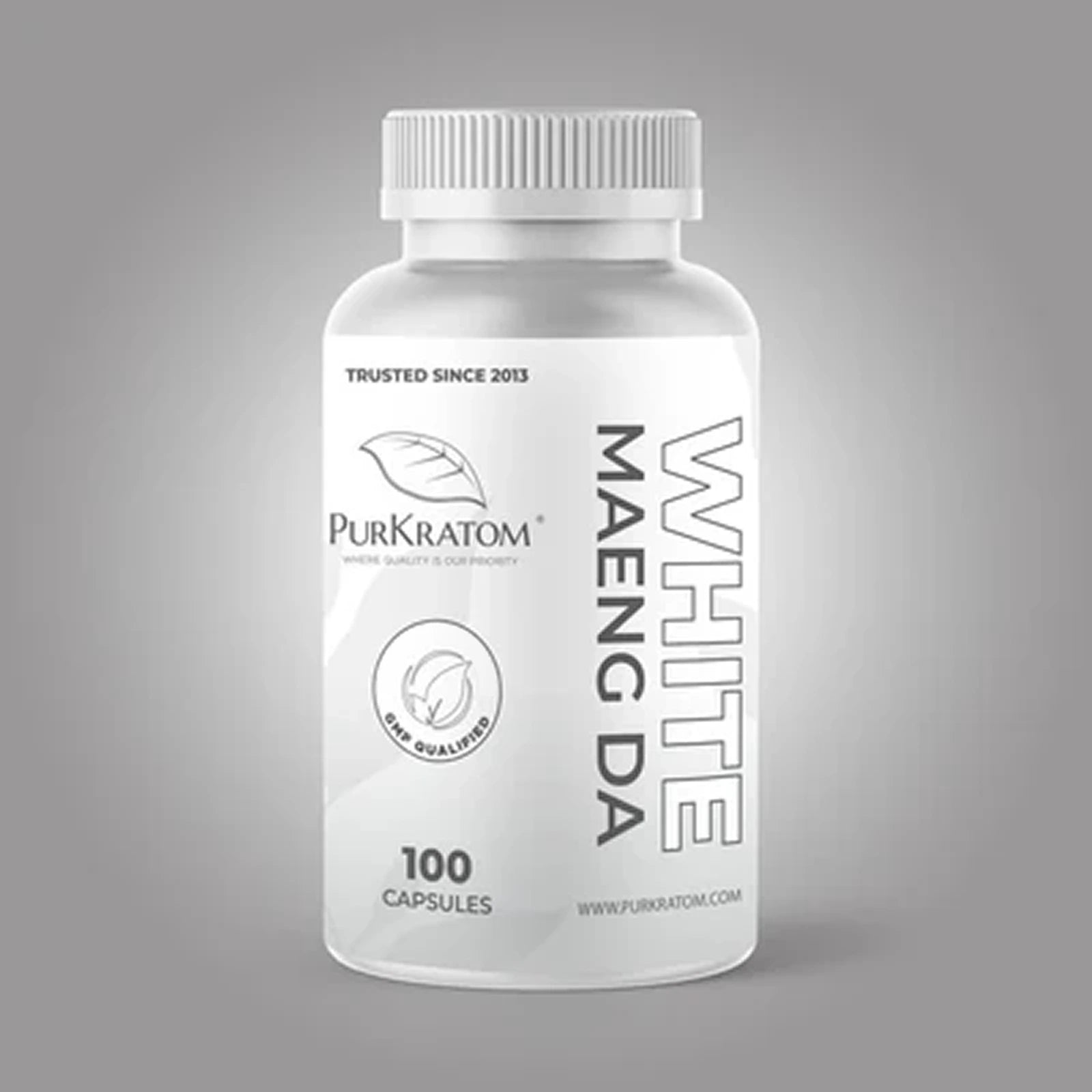
White Maeng Da Kratom Capsules
$26.99
Red Maeng Da Kratom Capsules
$26.99

White Maeng Da Kratom Powder
$31.99
Super Green Maeng Da Kratom Capsules
$26.99

Green Maeng Da Kratom Powder
$31.99