 Login
Login

Kratom storage may seem simple, but the conditions surrounding a product after purchase can affect how well it maintains its original physical characteristics over time.
If you keep kratom powder, capsules, or another kratom product at home, the basic goal is straightforward: limit exposure to moisture, excessive heat, direct light, and unnecessary air while keeping the product clean and securely closed.
That does not mean storage can guarantee a product's safety, potency, or effectiveness. Storage is only one part of product quality. The quality of the original product, packaging, manufacturing practices, testing, labeling, and handling before it reaches the consumer all matter as well.
This guide explains how kratom should be stored, why environmental conditions matter, how different product formats may require different considerations, what signs may indicate that a product should no longer be used, and how storage fits into the larger picture of responsible kratom purchasing.
For consumers evaluating quality, it is also important to look beyond a storage container. Product transparency, laboratory testing, clear labeling, and reliable sourcing are separate considerations that should be evaluated before purchase.
What Does Proper Kratom Storage Mean?
Proper kratom storage means protecting the product from unnecessary exposure to moisture, heat, light, air, and contamination while following the manufacturer's instructions.
For most dry kratom products, a practical storage environment is one that is:
- Cool rather than excessively hot
- Dry rather than humid
- Dark rather than exposed to direct sunlight
- Clean rather than exposed to food debris or contaminants
- Securely sealed rather than left open
- Stable rather than repeatedly exposed to major temperature changes
The goal is not to create a perfect laboratory environment in your home. Instead, it is to avoid conditions that can unnecessarily degrade the product or change its physical characteristics.
Kratom comes from Mitragyna speciosa, a plant native to Southeast Asia. Its leaves contain numerous alkaloids, including mitragynine and smaller quantities of 7-hydroxymitragynine. Scientific research has examined how environmental and chemical conditions can influence the stability of kratom alkaloids.
One study examining several Mitragyna alkaloids found that their chemical stability varied according to temperature and pH, with greater degradation observed under certain elevated-temperature and chemical conditions.
That research does not establish a universal household expiration timeline for kratom. It does, however, reinforce why avoiding unnecessary heat and unfavorable environmental conditions is a sensible part of product handling.
Why Does Kratom Storage Matter?
Kratom storage matters because the product you purchase does not exist in isolation from its environment.
A dry botanical product can be exposed to environmental conditions every time its container is opened, transported, stored, or handled. While normal household use does not automatically cause a product to deteriorate, poor storage can create unnecessary challenges.
Moisture
Moisture is one of the biggest concerns for dry powders.
Kratom powder is finely ground plant material. Introducing water or sustained humidity can change the texture and physical condition of the powder. More importantly, moisture can create an environment where unwanted microbial growth becomes more likely.
That is why a dry storage location is preferable to a humid one.
Heat
Excessive heat is another reason to pay attention to storage location.
Research on kratom alkaloids has shown that stability can vary with temperature. In one study, several Mitragyna alkaloids showed greater degradation at higher temperatures, particularly under certain experimental conditions.
This does not mean that a kratom product instantly becomes unusable when exposed to a warm room. It means that unnecessarily high temperatures are not an ideal long-term storage environment.
Light
Light exposure is another factor worth minimizing.
Some chemical compounds can be affected by light, particularly under prolonged or intense exposure. Research on mitragynine has investigated degradation under different conditions, including photolytic exposure.
For everyday storage, the practical takeaway is simple: there is little reason to leave kratom sitting in direct sunlight when a dark cabinet or drawer is available.
Air Exposure
Repeated exposure to air is another reason to close packaging after use.
Opening a container is unavoidable when using a product. The goal is simply to avoid leaving it open longer than necessary.
A properly closed container can also help prevent accidental exposure to dust, kitchen particles, spills, and other environmental contaminants.
What Environmental Factors Affect Stored Kratom?
Four factors are particularly useful to remember:
| Factor | Why It Matters | Practical Approach |
|---|---|---|
| Moisture | Can affect dry powder and create conditions favorable to microbial growth | Store in a dry environment |
| Heat | Higher temperatures can influence chemical stability | Avoid hot areas |
| Light | Prolonged exposure may contribute to chemical changes | Use a dark storage location |
| Air and contaminants | Repeated exposure can introduce environmental contaminants | Keep the container tightly closed |
A fifth factor is temperature stability.
A product stored in a location that repeatedly becomes very hot and then cools may experience more environmental stress than one kept in a relatively stable indoor environment.
For most consumers, this means avoiding places such as:
- Directly beside a sunny window
- Inside a hot vehicle
- Near a stove or oven
- Near a heating appliance
- In a steamy bathroom
- In an outdoor storage area
- In locations exposed to repeated condensation
How Should Kratom Powder Be Stored?
Kratom powder benefits from simple, consistent storage practices.
1. Keep the powder dry
Avoid introducing water, wet utensils, or damp hands into the container.
If you use a measuring spoon, scoop, or other utensil, make sure it is completely dry before it contacts the powder.
2. Close the package after use
Do not leave the bag or container open while doing other tasks.
Close it promptly after removing the amount you need.
3. Keep it away from direct sunlight
A drawer, cupboard, or other dark storage area can be preferable to an exposed countertop.
4. Avoid excessive heat
Do not intentionally store dry kratom in a hot location simply because it is convenient.
5. Minimize unnecessary transfers
If the original packaging is appropriately sealed and provides useful labeling information, there may be little reason to move the product into another container.
Original packaging can also contain information such as:
- Product name
- Lot or batch information
- Manufacturer information
- Storage instructions
- Date information
- Other labeling details
Keeping that information available can be useful if you later have questions about the product.
6. Keep the storage area clean
A clean cabinet is preferable to an area where the container may come into contact with food, liquids, cleaning products, or other contaminants.
How Should Kratom Capsules Be Stored?
Kratom capsules are often easier to handle because the powder is contained inside individual capsules. However, capsules still need appropriate storage.
The same basic principles apply:
- Keep them dry.
- Avoid excessive heat.
- Avoid direct sunlight.
- Keep the bottle or package closed.
- Follow the product label.
- Avoid humid areas.
- Keep the packaging and lot information.
A capsule container should not be treated as automatically moisture-proof simply because it has a lid. If the manufacturer provides specific storage instructions, those instructions should take priority.
Humidity can be especially relevant in environments where indoor air becomes warm and damp. A bathroom cabinet, for example, may be convenient but is not necessarily an ideal location for a dry botanical product because of repeated exposure to steam.
A dry bedroom cabinet or another stable indoor storage area may be more practical.
How Should Kratom Extracts Be Stored?
Kratom extracts require closer attention to their specific packaging and labeling because an extract may differ substantially from ordinary dried leaf powder.
Do not assume that storage guidance for powder automatically applies to every extract.
Instead:
- Read the product label.
- Follow the manufacturer's storage instructions.
- Keep the original packaging when practical.
- Check whether the product has specific temperature or handling requirements.
- Keep the container closed when not in use.
- Do not transfer an extract into an unlabeled container.
This last point is especially important.
An unlabeled container can make it difficult to identify the product, its contents, lot information, or the manufacturer's instructions later.
Current regulatory attention has also highlighted the importance of distinguishing ordinary kratom products from products marketed with enhanced or concentrated 7-hydroxymitragynine content. The FDA has specifically warned consumers about products containing added or enhanced 7-OH and has stated that such products raise serious safety concerns.
That is another reason to pay attention to product labeling rather than assuming that every product marketed under the word "kratom" has the same composition.
Where Is the Best Place to Store Kratom?
The best location is generally a cool, dry, dark, clean, and stable indoor area.
A closed cabinet or drawer is often practical.
Good storage locations
Consider:
- A bedroom cabinet
- A dry pantry area away from cooking heat
- A closed drawer
- A dedicated storage cabinet
Locations to avoid
Avoid storing kratom:
- In direct sunlight
- In a hot car
- Near a stove
- Near an oven
- Near a radiator or heater
- In a humid bathroom
- Near a sink where splashing is likely
- In an outdoor shed exposed to temperature extremes
The ideal location does not need to be complicated.
Think cool, dry, dark, and closed.
Should Kratom Be Refrigerated or Frozen?
Not necessarily.
For ordinary household storage, refrigeration or freezing should not be assumed to be better than keeping a product in an appropriate room-temperature environment.
The more important principle is to follow the product's specific storage instructions.
There is also an important distinction between laboratory stability research and consumer storage.
Researchers may store purified compounds, analytical standards, biological samples, or specialized preparations at controlled temperatures for experimental purposes. For example, studies have examined the stability of mitragynine and 7-hydroxymitragynine under refrigerated or frozen laboratory conditions.
That does not automatically mean a consumer should refrigerate or freeze ordinary kratom powder.
Repeated temperature changes can also create practical problems. A cold container brought into a warmer, humid environment may experience condensation. Moisture is generally something dry powder should be protected from.
Unless the product manufacturer specifically recommends refrigeration or another controlled storage condition, a stable, dry indoor environment is usually the simpler approach.
How Long Does Kratom Stay Fresh?
There is no single universal household freshness period that applies to every kratom product.
Shelf life can depend on factors such as:
- Raw material quality
- Processing
- Packaging
- Moisture exposure
- Temperature
- Light exposure
- Storage conditions
- Product format
- Manufacturing practices
- Date of production or packaging
For that reason, consumers should not treat a generic number of months or years as a guaranteed freshness period.
The manufacturer's expiration or best-by information, when provided, should be considered alongside the condition of the product.
Research also shows that kratom's alkaloid composition can vary because of factors occurring before the consumer even receives the product. Recent research has examined how genotype, season, withering, and drying conditions can influence alkaloid composition in kratom.
This reinforces an important point:
Home storage is only one part of product quality.
A consumer cannot compensate for poor agricultural handling, inadequate manufacturing, contamination, or inaccurate labeling simply by using a better storage container.
What Are Signs of Poorly Stored Kratom?
There is no reliable visual checklist that can prove a kratom product is safe.
However, obvious changes in physical condition can be reasons to stop and investigate before using the product.
Potential warning signs include:
- Unexpected moisture
- Persistent clumping associated with dampness
- Visible mold
- Unusual contamination
- Damaged or compromised packaging
- Unexpected liquid exposure
- A broken seal
- Missing or unreadable labeling
- Unexplained changes in the product's physical condition
What about color changes?
Color alone is not a reliable way to determine product quality.
Kratom naturally occurs in different colors and product presentations, and processing conditions can influence appearance. Research into postharvest processing has demonstrated that drying conditions can affect the appearance and chemical profile of kratom material.
Therefore, consumers should not assume that every color variation means spoilage, nor should they assume that a normal-looking product is automatically safe.
What about unusual odor?
An unusual smell can be a reason to stop and contact the manufacturer or seller for guidance, particularly if it is accompanied by visible moisture, damaged packaging, or other unexpected changes.
When a product appears compromised, guessing is not a good quality-control method.
Can Proper Storage Prevent Contamination?
No. Proper storage cannot guarantee that a product is free from contamination.
This distinction is important.
Storage can reduce unnecessary environmental exposure after purchase, but contamination can occur at earlier stages of production, processing, packaging, transportation, or handling.
The FDA has previously warned about kratom products associated with Salmonella contamination, and the CDC investigated a multistate outbreak linked to kratom products in 2018.
The CDC's investigation found contaminated kratom products across multiple sources and emphasized that kratom could be contaminated with Salmonella.
This history demonstrates why responsible consumers should consider product testing and manufacturing quality in addition to home storage.
A clean cabinet cannot turn a contaminated product into a safe one.
Likewise, an airtight container cannot correct a manufacturing problem that existed before the product arrived at your home.
Storage Is Only One Part of Product Quality
Every stage can matter.
1. Sourcing
Where and how plant material is sourced can influence the starting material.
2. Processing
Drying, grinding, and other processing steps can affect the finished material.
3. Manufacturing
Manufacturing controls help determine how consistently a product is processed and packaged.
4. Testing
Laboratory testing can provide information about the tested sample and may help identify certain contaminants or characterize compounds.
5. Packaging
Appropriate packaging can help protect the product during transportation and storage.
6. Transportation
Heat, moisture, and handling conditions during shipping may influence the product before it reaches the consumer.
7. Home Storage
The consumer then has a role in protecting the product from unnecessary environmental exposure.
This broader view is useful because it prevents consumers from placing too much emphasis on a single factor.
Why Product Testing and Transparency Matter
If product quality is a priority, look beyond the appearance of a package.
Responsible purchasing may include reviewing whether a company provides meaningful information about:
- Laboratory testing
- Product identity
- Lot or batch information
- Ingredient information
- Certificates of Analysis when available
- Quality-control practices
- Product labeling
- Customer-support information
A Certificate of Analysis (COA) can be useful when it is authentic, current, associated with the relevant product or batch, and issued by a credible laboratory. However, consumers should not assume that the presence of a document automatically proves that every product from a company is safe or that a document applies to a different batch.
Transparency works best when consumers can connect testing information to the actual product they are evaluating.
A Simple Kratom Storage Routine
If you want an easy routine, use this checklist.
Step 1: Check the packaging
When the product arrives, inspect the packaging and labeling.
Look for:
- Product identification
- Lot or batch information
- Storage instructions
- Date information
- Signs of damage
Step 2: Choose the right location
Select a location that is:
Cool + Dry + Dark + Clean
Step 3: Keep the product sealed
Open the container only when necessary and close it securely afterward.
Step 4: Use dry utensils
If you are handling powder, ensure any scoop or measuring utensil is dry and clean.
Step 5: Avoid heat and humidity
Do not store the product near heat-producing appliances or in humid areas.
Step 6: Keep original information
Do not discard the packaging or product information prematurely.
Step 7: Monitor the product
If you notice unexpected moisture, contamination, damaged packaging, or other unusual changes, do not simply assume that the product is fine.
Step 8: Contact the seller when necessary
If you have questions about storage requirements, product condition, expiration information, or testing documentation, ask the manufacturer or seller.
Common Kratom Storage Mistakes
Even simple storage practices can go wrong.
Mistake 1: Leaving the package open
An open container provides unnecessary exposure to the surrounding environment.
Better approach: Close it immediately after use.
Mistake 2: Storing kratom in the bathroom
Bathrooms can experience repeated humidity and steam.
Better approach: Choose a dry indoor cabinet instead.
Mistake 3: Keeping kratom in a hot car
Vehicle interiors can become much hotter than normal indoor environments.
Better approach: Do not treat your car as a long-term storage location.
Mistake 4: Storing it beside the stove
Cooking areas can expose products to heat, steam, and accidental spills.
Better approach: Use a cabinet away from cooking appliances.
Mistake 5: Transferring everything into unlabeled containers
This can cause confusion about product identity and lot information.
Better approach: Keep original packaging whenever practical.
Mistake 6: Assuming airtight means permanent
A sealed container can help reduce environmental exposure, but it does not make a product immune to degradation or contamination.
Better approach: Combine appropriate packaging with appropriate environmental conditions.
Mistake 7: Treating appearance as proof of safety
A product can look normal and still require evaluation based on its source, testing, labeling, and manufacturing history.
What Should You Look for Before Buying Kratom?
Storage starts after purchase, but product quality begins much earlier.
Before purchasing, consider whether the seller provides enough information for you to make an informed decision.
Useful questions include:
Is the product clearly labeled?
You should be able to identify what you are purchasing.
Is there meaningful testing information?
Look for transparent information about laboratory testing where available.
Can testing information be connected to the product?
A generic laboratory document may not tell you much about a particular batch.
Does the company provide product information?
Clear product descriptions and accessible support resources can make it easier to understand what you are buying.
Are claims presented responsibly?
Be cautious of companies making dramatic medical promises or guaranteed outcomes.
The FDA continues to emphasize that kratom has not been approved as a drug for treating medical conditions and has raised concerns about safety and products marketed with unsupported therapeutic claims.
Responsible purchasing therefore means evaluating evidence and transparency rather than relying solely on promotional language.
Comparing Kratom Product Formats
Storage considerations can also vary by format.
| Product Format | Main Storage Considerations |
|---|---|
| Kratom Powder | Protect from moisture, heat, light, and unnecessary air exposure |
| Kratom Capsules | Keep dry, sealed, and away from heat and humidity |
| Kratom Extracts | Follow product-specific storage instructions carefully |
| Other Formulations | Follow the manufacturer's label and handling requirements |
The important point is not that one format is universally "better."
Different formats have different packaging, handling, and labeling characteristics.
If you are deciding between formats, understanding those differences may be more useful than choosing based on convenience alone.
Compare kratom powder and capsule formats to better understand their different handling and storage considerations.
Frequently Asked Questions (FAQs)
1. How should kratom be stored?
Kratom should generally be stored in a cool, dry, dark, clean location with the container securely closed. Protect it from moisture, excessive heat, direct sunlight, and unnecessary air exposure. Always follow any specific storage instructions provided by the manufacturer.
2. Can heat affect kratom?
Heat can affect the chemical stability of kratom alkaloids under certain conditions. Research has shown that temperature influences the stability of several Mitragyna alkaloids. Avoid unnecessarily hot storage environments.
3. Can humidity affect kratom powder?
Yes. Humidity can affect the physical condition of a dry powder and may create conditions favorable to unwanted microbial growth. Keeping powder sealed and dry is therefore an important storage practice.
4. Is an airtight container necessary for kratom?
A securely closed container can help reduce exposure to air, moisture, dust, and other environmental contaminants. However, the original packaging may already be designed for the product, so transferring it is not always necessary.
5. How long does kratom stay fresh?
There is no universal freshness period that applies to every kratom product. Shelf life can depend on the product, packaging, processing, storage conditions, and manufacturer information. Follow the product's stated date and storage instructions.
6. Can proper storage make contaminated kratom safe?
No. Proper storage cannot remove contamination that was already present in a product. Consumers should consider sourcing, manufacturing, laboratory testing, packaging, and product transparency in addition to home storage.
7. Should kratom stay in its original packaging?
When practical, yes. Original packaging may preserve important product information such as the product name, lot information, storage instructions, and other labeling details. If you transfer a product, make sure its identity and relevant information are not lost.
8. What should I do if my kratom looks unusual?
Do not assume that an unusual appearance proves the product is safe or unsafe. If you see unexpected moisture, visible contamination, damaged packaging, or another concerning change, stop and contact the manufacturer or seller for guidance.
So, how should kratom be stored?
The practical answer is simple: keep it cool, dry, dark, clean, and securely sealed, while following the specific storage instructions provided with the product.
For powder, capsules, and other dry formats, minimizing exposure to moisture, excessive heat, direct sunlight, and unnecessary air exposure can help maintain the product's physical condition. Research also shows that kratom alkaloid stability can vary under different environmental and chemical conditions, which supports taking reasonable care with storage.
But storage is only one part of the larger quality picture.
A carefully stored product is not automatically a high-quality product. Consumers should also consider sourcing, manufacturing, packaging, laboratory testing, labeling, product transparency, and the availability of relevant quality information.
Historical public-health investigations have also demonstrated why contamination and manufacturing quality deserve attention. The CDC documented a multistate Salmonella outbreak associated with kratom products, while the FDA has continued to issue warnings concerning contaminated or otherwise problematic kratom products.
For that reason, responsible kratom purchasing should begin with informed evaluation rather than storage alone.
If you are researching PurKratom products, a logical next step is to review the company's available product information and quality documentation before deciding which product or format is appropriate for your needs.
Explore PurKratom’s relevant kratom collection and review the available product, testing, and quality information before choosing the product format that best fits your research needs.
Disclaimer: This content is for educational and informational purposes only and is not intended to provide medical advice, diagnose, treat, cure, or prevent any disease or health condition. Kratom research is still developing, and individual responses may vary. Consult a qualified healthcare professional before using kratom, especially if you take medications, have a medical condition, are pregnant or breastfeeding, or have concerns about potential interactions. Laws and regulations regarding kratom vary by location and may change, so verify current local requirements before purchasing or using kratom.
Based on your interest,
we recommend:
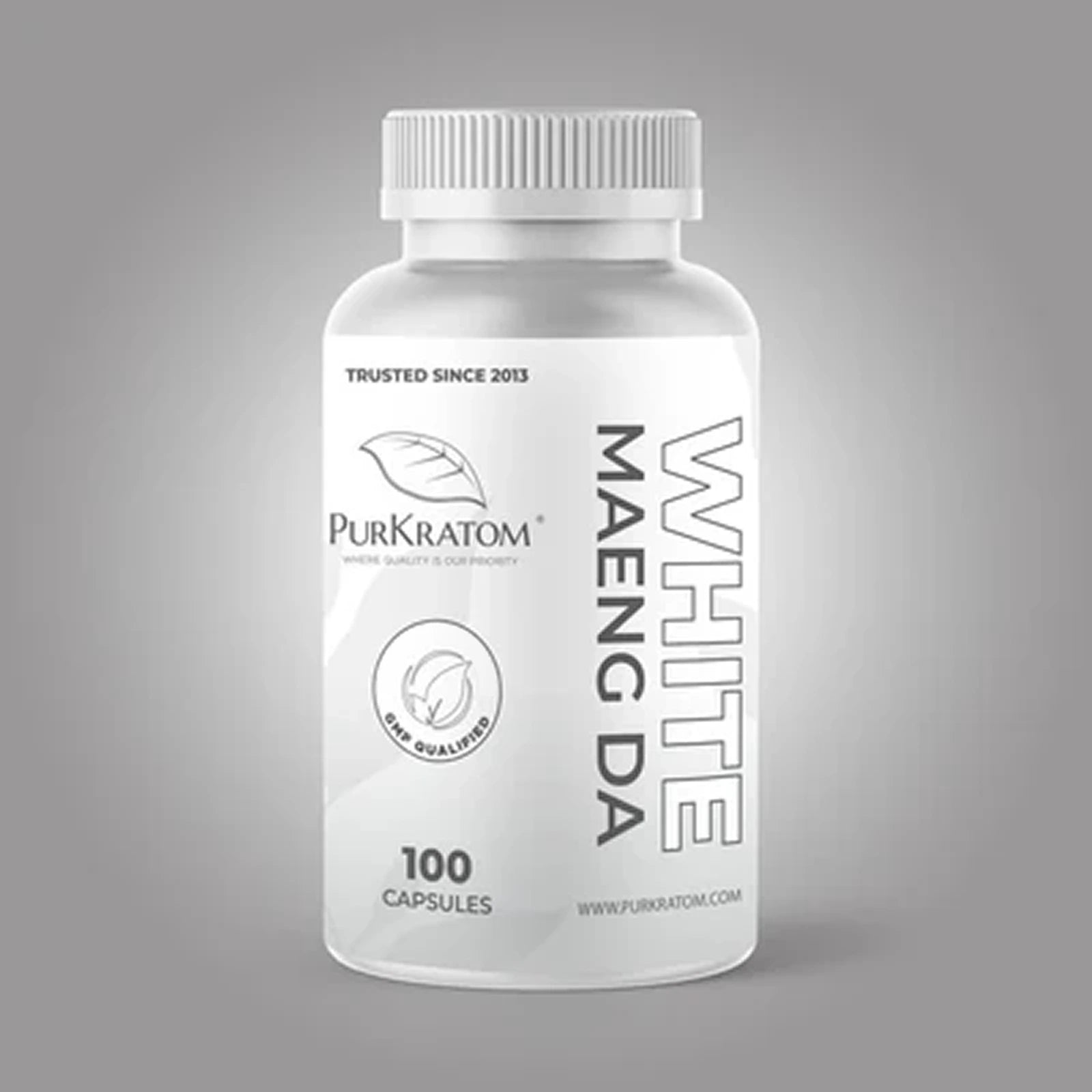
White Maeng Da Kratom Capsules
$26.99
Red Maeng Da Kratom Capsules
$26.99

White Maeng Da Kratom Powder
$31.99
Super Green Maeng Da Kratom Capsules
$26.99

Green Maeng Da Kratom Powder
$31.99