 Login


Buying kratom capsules involves more than comparing bottle sizes or counting capsules. Understanding the label, package weight, ingredient information, lot identification, and available laboratory documentation can help you make a more informed purchasing decision.
This kratom capsules guide explains how to interpret these details, what questions to ask when product information is incomplete, and how to distinguish a package's identifying information from evidence about its contents.
A capsule count tells you how many capsules a package claims to contain. It does not, by itself, establish the amount of material in each capsule, the concentration of particular alkaloids, or the results of laboratory testing. A lot number identifies a production or packaging lot only within the relevant recordkeeping system. To evaluate a product more fully, consider the label, product specifications, and any available documentation together.
For readers researching PurKratom products, the PurKratom kratom capsules collection is a relevant starting point. Review the current information provided for each product rather than assuming that every capsule product has identical specifications or documentation.
What Are Kratom Capsules?
Kratom capsules are a product format associated with kratom, a plant scientifically known as Mitragyna speciosa. Depending on the product, capsules may contain powdered kratom leaf, an extract, or another formulation described by the manufacturer.
The capsule is the outer shell that holds the material. It is important to distinguish this physical format from the contents inside it.
Two products can both be labeled as kratom capsules while differing in their ingredients, stated weight, formulation, and available documentation. The word capsules alone does not establish that the products contain the same material or have the same chemical composition.
The National Institute on Drug Abuse (NIDA) explains that kratom products vary and that researchers are still studying their effects and health risks. Product format and composition are therefore relevant considerations when interpreting product information.
For additional background, read PurKratom's educational resource, What Is Kratom? A Complete Beginner's Guide to Mitragyna speciosa.
What information matters most when examining capsules?
Start with five basic questions:
-
What does the product label say the capsules contain?
-
How many capsules are stated to be in the package?
-
Is the weight clearly identified?
-
Is there a lot or batch identifier?
-
Is product-specific laboratory documentation available?
These questions provide a starting point for evaluating transparency. They do not establish that a product is safe, effective, accurately formulated, or legally available in every location.
Why does product format matter?
Kratom products can differ substantially in formulation. Powdered leaf, capsules containing powdered leaf, and concentrated extracts are not interchangeable descriptions.
A capsule containing ordinary plant material should not automatically be treated as equivalent to a capsule containing an extract. Similarly, the presence of an alkaloid name on a label does not establish a particular concentration unless the relevant information supports that conclusion.
When a product's formulation is unclear, look for additional specifications or ask the seller for clarification.
What Does the Capsule Count Mean?
The capsule count is the stated number of individual capsules included in a package. It helps identify package size, but it does not independently describe the contents or chemical composition of each capsule.
For example, a hypothetical package labeled as containing 60 capsules indicates a stated count of 60 individual capsules. It does not automatically mean that every capsule contains a specified amount of kratom, that all the material is powdered leaf, or that a particular amount of an alkaloid is present.
The distinction is simple: count tells you how many units are included; weight and composition describe different aspects of those units.
How should you compare different capsule counts?
When comparing packages, check the following details together:
|
Label detail |
What it tells you |
What it does not establish |
|---|---|---|
|
Capsule count |
The stated number of capsules |
The weight or composition of each capsule |
|
Net weight |
The stated net mass of the product, subject to the label's definition |
The amount of a specific alkaloid |
|
Ingredients |
The ingredients declared on the label |
Independent confirmation that the contents match the declaration |
|
Product name |
The name used to identify the product |
A verified chemical profile |
|
Lot or batch number |
An identifier that may connect the product to records |
Laboratory results unless matching documentation is available |
|
COA or laboratory report |
Findings for the sample described in the report |
A guarantee about every capsule or every possible contaminant |
These distinctions help prevent a common comparison mistake: assuming that two packages are equivalent simply because they contain the same number of capsules.
Does a higher capsule count mean better value?
Not necessarily.
A larger count means more capsules are stated to be in the package, but it does not tell you whether the contents, formulation, or documentation are comparable to those of another product.
A meaningful comparison considers several factors:
-
Stated capsule count.
-
Clearly defined net weight.
-
Declared ingredients and formulation.
-
Availability and relevance of laboratory documentation.
-
Product-specific information and warnings.
-
Price and applicable delivery restrictions, where verified.
If two packages use different formulations or disclose different levels of detail, the capsule count alone cannot establish which offers better value.
Compare like with like. Before drawing conclusions from package size, make sure you understand what each product claims to contain and whether the specifications are presented on a comparable basis.
How Do Capsule Count, Net Weight, and Contents Differ?
Capsule count, net weight, and the amount of material in an individual capsule are related concepts, but they are not interchangeable.
What is net weight?
Net weight generally refers to the mass of the product without its external packaging. However, the exact meaning of a weight statement depends on what the label specifies and how the product is presented.
For capsules, it is particularly important to determine whether a stated weight refers to the capsule contents, the filled capsules, or another defined quantity.
The weight of a bottle or other external container should not be confused with the net weight of its contents.
What if the label is unclear?
Do not guess.
Look for a detailed product specification, a clearly defined weight statement, or an explanation from the seller. If the information remains ambiguous, treat that ambiguity as an unresolved question rather than filling the gap with an assumption.
For PurKratom products, review the current product descriptions and the kratom capsules collection. Product-specific weights and other specifications should be verified against the live listing before publication or purchase.
How Do You Read a Kratom Capsule Label?
A kratom capsule label should be read as a collection of separate information fields, not as a single claim about the product.
The most useful fields generally include the product identity, capsule count, weight statement, ingredient declaration, lot identification, and any available testing references or warnings.
The information actually present will depend on the product and packaging. Do not assume that every package includes every field or that a label meets all applicable legal requirements simply because it looks complete.
1. Product name and identity
Start with the product's full name.
Look for wording that clarifies whether the contents are described as powdered kratom leaf, an extract, or another formulation. A product name may also include a color designation or a strain-style name.
These names can help distinguish products in a catalog, but they do not independently verify botanical identity, chemical composition, or alkaloid concentration.
If the name is vague, look for additional ingredient and specification information.
2. Capsule count
Check the number of capsules stated on the package.
Confirm that you are comparing the count rather than confusing it with a serving quantity, total weight, or another package measurement. If the listing and physical packaging provide different counts, seek clarification before drawing conclusions.
A product page should be checked for its current specifications rather than relying solely on an old description, photograph, or third-party listing.
3. Net weight or other weight statements
Read the wording around the number, not just the number itself.
Determine whether the label identifies net weight, capsule contents weight, or another quantity. Do not assume that the gross weight of a filled capsule is identical to the mass of its contents.
If the label gives only a count and does not explain weight, the individual capsule contents cannot be established from the count alone.
4. Ingredient information
Review the ingredient declaration and any description of the formulation.
Questions worth considering include:
-
Does the label identify the material as powdered leaf or extract?
-
Are additional ingredients declared?
-
Is the capsule shell identified where applicable?
-
Is the wording specific enough to distinguish the product from other formulations?
-
Does the product description provide information that is missing from the packaging?
A clear ingredient declaration is useful, but the declaration itself is not independent proof of the product's composition.
5. Lot or batch identifier
Look for a number or code associated with the production or packaging lot.
The location can vary by manufacturer and packaging design. It may appear on a label, the container, a printed code, or another part of the packaging.
If the identifier is missing, unreadable, or inconsistent with available documentation, ask the seller whether the product can be linked to a specific lot record.
6. Manufacturer or distributor information
Where provided, identify the responsible company and the role it claims to perform.
A brand name, manufacturer name, and distributor name may refer to different entities. Understanding the distinction can help you determine whom to contact for product specifications or testing documentation.
Do not assume that a company manufactured a product merely because its logo appears on the packaging.
For PurKratom-specific information, consult the about PurKratom page and verify the current company details before relying on them for publication.
7. Warnings and applicable restrictions
Read the complete label, including warnings and relevant legal information.
Kratom is associated with health risks, including adverse reactions, dependence, withdrawal, and potential interactions with other substances. The FDA advises consumers about serious concerns associated with kratom products. Laboratory documentation does not remove these concerns.
Check current federal, state, and local requirements relevant to the product and delivery location. Do not infer that a product is legally available simply because it appears on a website.
Explore the relevant documentation: PurKratom provides a search page for laboratory results and Certificates of Analysis. Review the available records and confirm that any report you find applies to the product you are evaluating.
What Are Kratom Lot Numbers and Batch Details?
A lot number or batch number is an identifier used to distinguish a particular group of products within a manufacturer's or distributor's recordkeeping system.
The terms lot and batch are often used similarly in product identification, but their exact meaning depends on the company's documented processes. A number on a package is useful only to the extent that relevant records connect it to the product.
Why do lot numbers matter?
Lot identification can help connect a packaged product with records about its production, packaging, testing, or distribution, where those records exist.
For consumers, this matters because a report associated with one lot should not automatically be treated as a report for every product sold under the same name.
A product's formulation or specifications may change over time. Packaging can also be updated. The same product name therefore does not, by itself, establish that two packages have identical documentation.
Where can you find a lot number?
There is no single location that applies to every kratom capsule product.
Depending on the packaging, a code may appear on:
-
A bottle label.
-
The bottom or side of a container.
-
A printed or stamped code.
-
An outer package.
-
Product documentation supplied by the seller.
These are possible locations, not a claim about the packaging of any particular PurKratom product.
If you cannot identify a lot number, contact the seller and ask whether the product has a traceable lot identifier and how that identifier relates to any available laboratory report.
What is the difference between a lot number, SKU, and UPC?
These identifiers serve different purposes.
|
Identifier |
Typical purpose |
What it does not automatically prove |
|---|---|---|
|
Lot or batch number |
Distinguishes a production or packaging group in relevant records |
That a particular laboratory test was performed |
|
SKU |
Helps a seller or retailer identify a catalog item |
That two packages belong to the same production lot |
|
UPC or other retail barcode |
Helps identify a retail product for scanning and inventory |
That the product has been independently tested |
|
Product name |
Identifies the product as presented to customers |
That all versions have identical specifications |
|
COA reference |
Identifies or points to a laboratory report, where applicable |
That the report matches the package unless the relationship is established |
A SKU may remain the same across multiple production lots. Likewise, a retail barcode is not a replacement for a lot identifier.
This is why a consumer should not rely on a barcode or product name alone when trying to match a package to a particular laboratory report.
How can you match a lot number to a laboratory report?
Start by locating the lot identifier on the package or in the seller's records.
Next, examine the report for a sample identifier, product name, lot number, sample receipt date, testing date, or other details that establish which material was tested.
Then compare the identifiers.
If the report does not show the same lot number, the connection may require additional documentation. A different identifier is not necessarily proof that the report is invalid, because laboratories and companies may use separate internal reference numbers. However, the relationship must be established rather than assumed.
If the connection cannot be verified, describe the report as available documentation of uncertain applicability, not as confirmed testing of the specific package.
What if the lot number is missing?
A missing or unreadable lot number limits your ability to connect the package with lot-specific records.
Ask the seller whether a lot identifier exists and whether the product can be traced to relevant documentation. If the seller cannot explain the connection, do not assume that a report for another lot applies.
Important distinction: Traceability is a recordkeeping capability. It is not, by itself, proof of quality, composition, regulatory compliance, or safety.
What Is a Kratom Certificate of Analysis?
A Certificate of Analysis, commonly called a COA, is a document reporting analytical findings for a particular sample or material. It may include the substances tested, methods used, measured results, reporting limits, and laboratory identification.
The exact contents vary by report. A COA should be evaluated according to what it actually documents, not simply because it carries a formal title.
For kratom capsules, laboratory documentation can help answer specific questions about a tested sample. It cannot automatically establish every characteristic of a finished product or guarantee that every capsule in a package has the same composition.
What information should a COA contain?
Depending on the test and laboratory, useful information may include:
-
Product or sample identification: A description of the material submitted for testing.
-
Sample or lot identifier: Information that helps connect the sample to a particular product or lot.
-
Laboratory identity: The name of the laboratory responsible for the reported analysis.
-
Testing dates: Relevant dates for sample receipt, analysis, or report issuance.
-
Analytical methods: Information about the procedures used to examine the sample.
-
Test results: The measured findings for the compounds or contaminants included in the analysis.
-
Units and reporting limits: Information needed to interpret the reported values.
-
Qualifications or limitations: Notes about the sample, method, or results that affect interpretation.
Not every report includes every field. The important question is whether the available information is sufficient to understand the reported findings and their relevance to the product.
Does every kratom product have a COA?
No universal assumption should be made that every kratom product has an available COA.
Documentation availability depends on the company, product, sample, and testing arrangements. If a seller provides a search tool for laboratory reports, the tool should be checked for the particular product rather than treated as proof that a report exists for every item.
PurKratom's laboratory results search page is the appropriate starting point for checking available PurKratom documentation.
Before publication, the editorial team should verify which capsule products have reports available, whether those reports are current, and whether the relevant product and lot identifiers match.
What does a COA actually establish?
A COA establishes what the report documents about the sample tested, subject to the methods, limitations, and results described in the document.
For example, a report that measures a particular alkaloid can provide information about that compound in the submitted sample. It does not automatically establish the concentration of every other alkaloid, identify every possible contaminant, or confirm the composition of every capsule in the package.
Likewise, a report covering certain heavy metals does not automatically provide results for microbiological contaminants or unrelated chemical substances.
The scope of the report determines what conclusions can reasonably be drawn.
Can a COA prove that kratom capsules are safe?
No. A COA is not a blanket guarantee of safety.
A report may address selected chemical or microbiological characteristics, but no single document should be assumed to cover every potential hazard, every manufacturing consideration, or every individual consumer's circumstances.
The FDA has published information about heavy metals found in tested kratom products and has also warned about kratom products contaminated with Salmonella. These findings illustrate why testing scope matters and why laboratory reports should not be interpreted as universal safety guarantees.
For a broader overview, consult the FDA's information on kratom and its associated risks.
How Can You Evaluate Kratom Laboratory Reports?
Evaluating a laboratory report involves more than looking for a pass statement or a list of numbers. Readers need to understand the sample identity, test scope, reported results, and limitations.
1. Confirm the product identity
Begin with the product name and any available lot or sample identifier.
Ask whether the report identifies the same formulation as the package. A report for powdered leaf should not automatically be treated as a report for a concentrated extract, and a report for one product should not automatically be applied to another product with a similar name.
If the relationship between the report and package is unclear, request supporting information.
2. Check the lot or sample reference
Look for the lot number or other identifier that links the report to the submitted sample.
The package and report may use different codes, but the company or laboratory should be able to explain how they relate if a direct match is not visible.
Without that connection, the relevance of the report to the specific package remains uncertain.
3. Read the test scope
Identify exactly what the laboratory analyzed.
Depending on the report, this could include selected alkaloids, heavy metals, microbiological indicators, or other specified characteristics. These are distinct testing categories.
A report that examines one category does not establish the results for another category that was not included.
For example, a report measuring mitragynine does not, by that fact alone, establish the absence of microbiological contaminants.
4. Understand the reported units
Laboratory reports may express concentrations in different units, such as milligrams per gram, micrograms per gram, or other measurement formats.
Before comparing two values, confirm that they refer to the same analyte, use compatible units, and represent comparable sample types.
A numerical comparison can be misleading when the units, methods, or sample matrices differ.
If you are unsure how to interpret a result, consult the laboratory or a qualified analytical professional rather than guessing.
5. Look for methods and limitations
Analytical methods have different capabilities. Their detection limits, quantification limits, sample preparation, and other characteristics can affect how results should be interpreted.
A statement that a compound was not detected does not necessarily mean its absolute absence. It may mean that the compound was not detected above the method's reporting or detection threshold.
Similarly, a result within a specified range only has meaning in relation to the applicable method, criterion, and sample.
6. Check laboratory information
Review the laboratory's identity and the details provided about its work.
Where relevant, verify whether the laboratory holds an applicable accreditation for the methods or testing scope in question. Accreditation, where established, should not be assumed to cover every method a laboratory performs.
Do not claim that a report was produced by an accredited laboratory unless the relevant information supports that statement.
7. Avoid interpreting a single result too broadly
A report is evidence about a defined sample and set of tests, not a substitute for a complete evaluation of the product.
It is reasonable to ask what was tested, when it was tested, and how the sample relates to the product being considered. It is not reasonable to infer that a product is entirely free of risk simply because a report contains favorable results.
A practical COA review table
|
Question |
Why it matters |
|---|---|
|
Is the product identified? |
Establishes what the report claims to cover. |
|
Is the sample or lot traceable? |
Helps connect results to the package under review. |
|
Are the testing dates available? |
Provides context about when the sample was analyzed. |
|
Are the methods identified? |
Helps explain how results were obtained. |
|
Are the units clear? |
Makes numerical interpretation possible. |
|
Are reporting limits shown or explained? |
Helps clarify what a nondetection means. |
|
Is the test scope appropriate to the question? |
Prevents conclusions beyond the tests performed. |
|
Are qualifications or limitations disclosed? |
Helps avoid overstating what the results establish. |
This framework is useful for consumer education, editorial review, and product documentation checks. It should not be presented as a substitute for a laboratory's technical interpretation or a formal regulatory assessment.
How does PurKratom's lab results page fit into the process?
PurKratom provides a search page for laboratory results and Certificates of Analysis.
Readers can use the page to look for relevant documentation. However, the existence of the search page does not establish that a report is available for every capsule product or that any particular batch has passed a specific test.
For an accurate product-specific statement, verify the actual report, its scope, its date, and its relationship to the product or lot being discussed.
A useful next step: If you are researching a particular capsule product, identify the product first, then check whether a matching laboratory report is available. If the relationship is unclear, seek clarification instead of assuming the report applies.
How Do Capsules Compare With Powder and Extracts?
Capsules, powder, and extracts are different product formats. Understanding their distinctions helps consumers interpret product descriptions and compare the information provided for each format.
The relevant comparison is not simply which format has the largest count or smallest package. It is what each product contains, how it is described, and what documentation is available.
|
Product format |
General description |
Information worth checking |
|---|---|---|
|
Kratom capsules |
Material enclosed in capsule shells |
Count, contents weight, formulation, ingredients, lot details, available testing |
|
Kratom powder |
Loose material sold in powder form |
Net weight, product identity, ingredient description, lot identification, available testing |
|
Kratom extracts |
Products made using an extraction process and described as extracts |
Extract identity, concentration claims, ingredient details, relevant analytical documentation |
|
Other kratom-derived formats |
Products presented in forms such as shots or gummies |
Full ingredient information, formulation details, declared amounts, testing scope, applicable restrictions |
These are general descriptions. They do not establish the specifications of any particular product or imply that all products within a category have the same composition.
Are capsules and powder the same?
Not necessarily.
Capsules may contain powdered kratom leaf, but the capsule shell adds an outer format. The amount of material, ingredients, and other specifications depend on the individual product.
Loose powder and capsule products may therefore differ in their packaging, stated weights, ingredient declarations, and available product information.
For a more detailed format comparison, see PurKratom's Kratom Powder vs. Capsules: What's the Difference?.
Are capsules and extracts interchangeable?
No. The terms describe different aspects of a product.
Capsule describes a delivery format, while extract describes material produced through an extraction process. A capsule can contain an extract, so these categories are not necessarily mutually exclusive.
The word capsule alone does not establish whether the contents are powdered leaf or an extract.
When comparing products, look for a specific description of the contents rather than relying on the format name.
For additional context, read Kratom Extracts Explained: What Consumers Should Know.
What should you compare across formats?
Use a consistent set of questions:
-
What material or formulation does the product claim to contain?
-
What quantity is stated, and how is it measured?
-
Are the ingredients described clearly?
-
Is the product linked to an identifiable lot?
-
Is relevant laboratory documentation available?
-
Can the report be connected to the product under review?
-
Are the warnings and applicable restrictions clear?
These questions provide a common framework without implying that different formats have identical chemical properties or risks.
For a broader comparison, visit PurKratom's Kratom Powder vs. Capsules vs. Extracts guide.
What Should You Check Before Buying Kratom Capsules?
A thoughtful purchasing review starts with the information available, identifies gaps, and avoids treating marketing language as independent evidence.
The following checklist can help organize that process.
Review the product description
Read the current product page and check whether its description is consistent with the packaging information.
Look for the product's stated identity, formulation, count, weight, ingredients, and any other published specifications.
Do not assume that a specification shown in an old photograph, review, or third-party listing remains current.
Compare like-for-like information
When evaluating multiple packages, use comparable measurements and descriptions.
For example, a count comparison is useful for identifying package size, but it cannot establish equal contents weight. Similarly, a price comparison may be misleading if the products have different formulations or the quantity is described differently.
Make sure you understand what each figure represents before drawing a conclusion.
Look for relevant documentation
If a COA or laboratory report is available, check whether it identifies the relevant sample and covers the characteristics you want to understand.
If documentation is missing, outdated, or difficult to match to the product, treat that as an unanswered question. Do not assume that every product has been tested simply because the brand offers a laboratory-results search page.
Consider the limits of product labels
Labels are useful sources of declared information. They are not, on their own, independent confirmation of composition or a guarantee of safety.
A clear label, traceable lot number, and relevant test report can each provide different kinds of information. None should be treated as a substitute for the others.
Review warnings and regulatory restrictions
Kratom's legal status and restrictions can differ between jurisdictions and can change over time.
The FDA has stated that kratom has not been approved for medical use and has raised concerns about serious adverse events and certain products marketed unlawfully. Readers should consult current official information and applicable laws rather than relying on a seller's availability statement as a legal determination.
Before considering an order, check PurKratom's Shipping Policy and independently verify the current requirements that apply to the delivery location. The existence of a shipping policy does not establish that every destination is eligible.
Avoid relying on unsupported claims
Be cautious about broad statements such as:
-
“Completely safe.”
-
“Guaranteed pure.”
-
“Proven effective.”
-
“Tested for everything.”
-
“Identical to every other product of this type.”
Such claims require specific evidence and careful interpretation. A product label, customer review, or selected laboratory result does not automatically substantiate them.
Kratom also carries documented health concerns. Consumers should not interpret transparent labeling as evidence that these risks are absent.
Frequently Asked Questions (FAQs)
1. What does the number on a kratom capsule package mean?
The number may refer to the stated capsule count, a weight measurement, or another product identifier. Check the wording beside the number to determine what it represents. A capsule count does not establish the amount or composition of material inside each capsule.
2. How can I find the lot number on kratom capsules?
Look for a printed, stamped, or labeled identifier on the container or packaging. The location varies by product. If you cannot find one, ask the seller whether the product has a traceable lot identifier and whether it can be linked to relevant laboratory documentation.
3. Is a lot number the same as a product SKU?
No. A lot number typically identifies a particular production or packaging group, while a stock-keeping unit (SKU) identifies a catalog item for inventory purposes. The same SKU may be used across multiple lots.
4. Does every kratom capsule product have a Certificate of Analysis?
Not necessarily. The availability of laboratory documentation depends on the product and the company's testing and recordkeeping practices. If a report is available, verify its sample identification, scope, and relationship to the product being considered.
5. Does a COA prove that kratom capsules are safe?
No. A Certificate of Analysis documents results for specified tests on a particular sample. It does not automatically cover every possible contaminant, guarantee the composition of every capsule, or eliminate kratom's documented health risks.
6. Can two kratom capsule products with the same count have different contents?
Yes. Matching capsule counts establish only the stated number of capsules. Products may differ in declared ingredients, formulation, weight, and chemical composition. Compare the complete product specifications rather than count alone.
7. Does a kratom capsule label tell me the exact amount of mitragynine?
Not necessarily. A label may or may not provide an explicit amount of mitragynine. A capsule count or total weight does not reveal the concentration of this alkaloid. Any specific concentration claim should be supported by appropriate product documentation or relevant laboratory analysis.
8. Are kratom capsules different from kratom extracts?
Capsules describe a physical format, while extracts describe material produced through an extraction process. Capsules may contain powdered leaf or an extract, depending on the product. Check the formulation details to understand what is declared.
Understanding kratom capsule counts, product labels, lot numbers, and Certificates of Analysis (COAs) can help you make more informed purchasing decisions. Clear labeling and accessible lab reports are valuable signs of product transparency, but they are only part of evaluating a product. Take time to review available documentation, check that batch details match, and understand what laboratory results can and cannot tell you.
At PurKratom, we believe informed customers start with clear product information. Explore our kratom capsule selection and review the available product details to learn more about the products you are considering before making a purchase.
Ready to learn more? Visit PurKratom to explore the company’s products and resources, or use the PurKratom Lab Results Search to review available product testing information.
Disclaimer: This content is for educational and informational purposes only and is not intended to provide medical advice, diagnose, treat, cure, or prevent any disease or health condition. Kratom research is still developing, and individual responses may vary. Consult a qualified healthcare professional before using kratom, especially if you take medications, have a medical condition, are pregnant or breastfeeding, or have concerns about potential interactions. Laws and regulations regarding kratom vary by location and may change, so verify current local requirements before purchasing or using kratom.

Based on your interest,
we recommend:
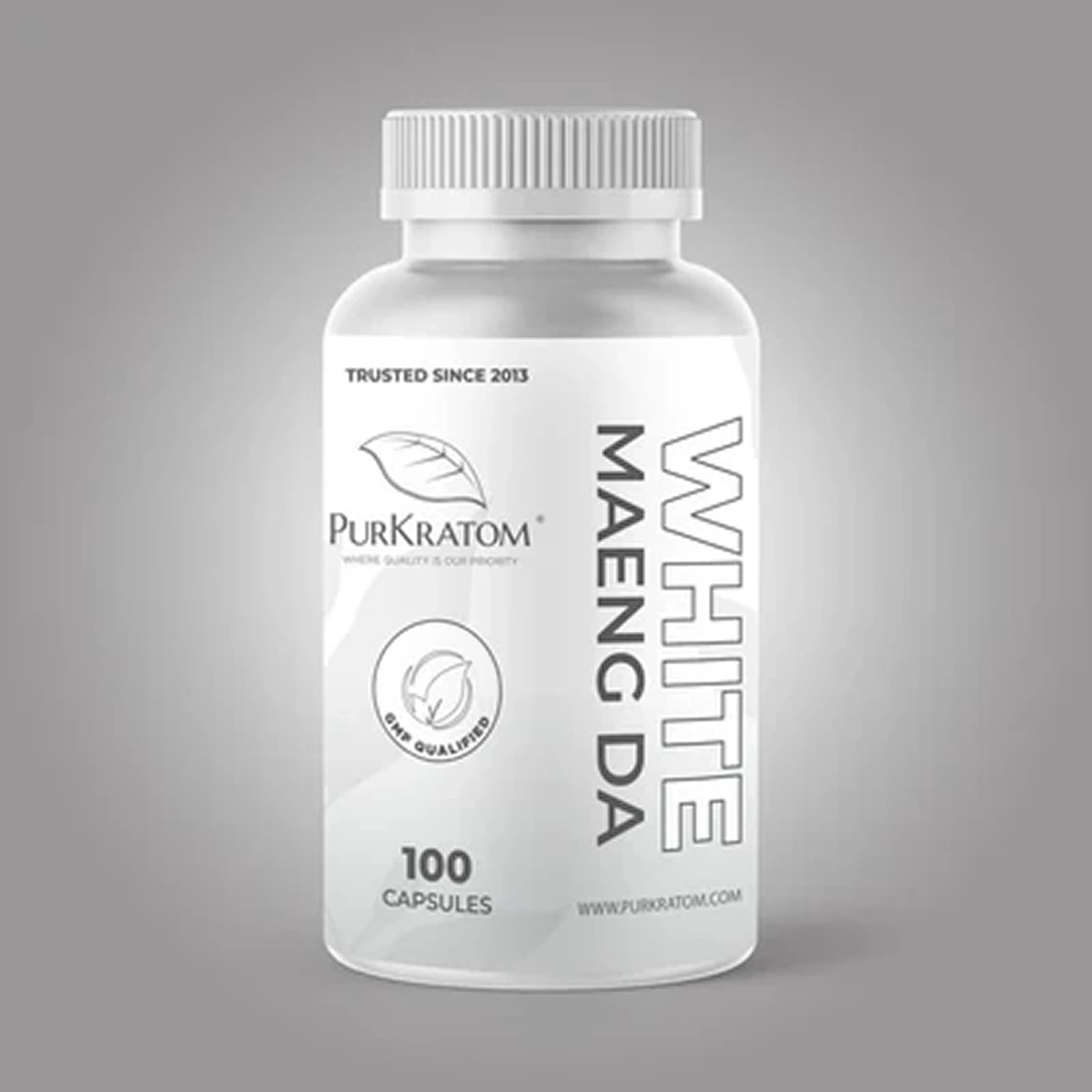
White Maeng Da Kratom Capsules
$26.99
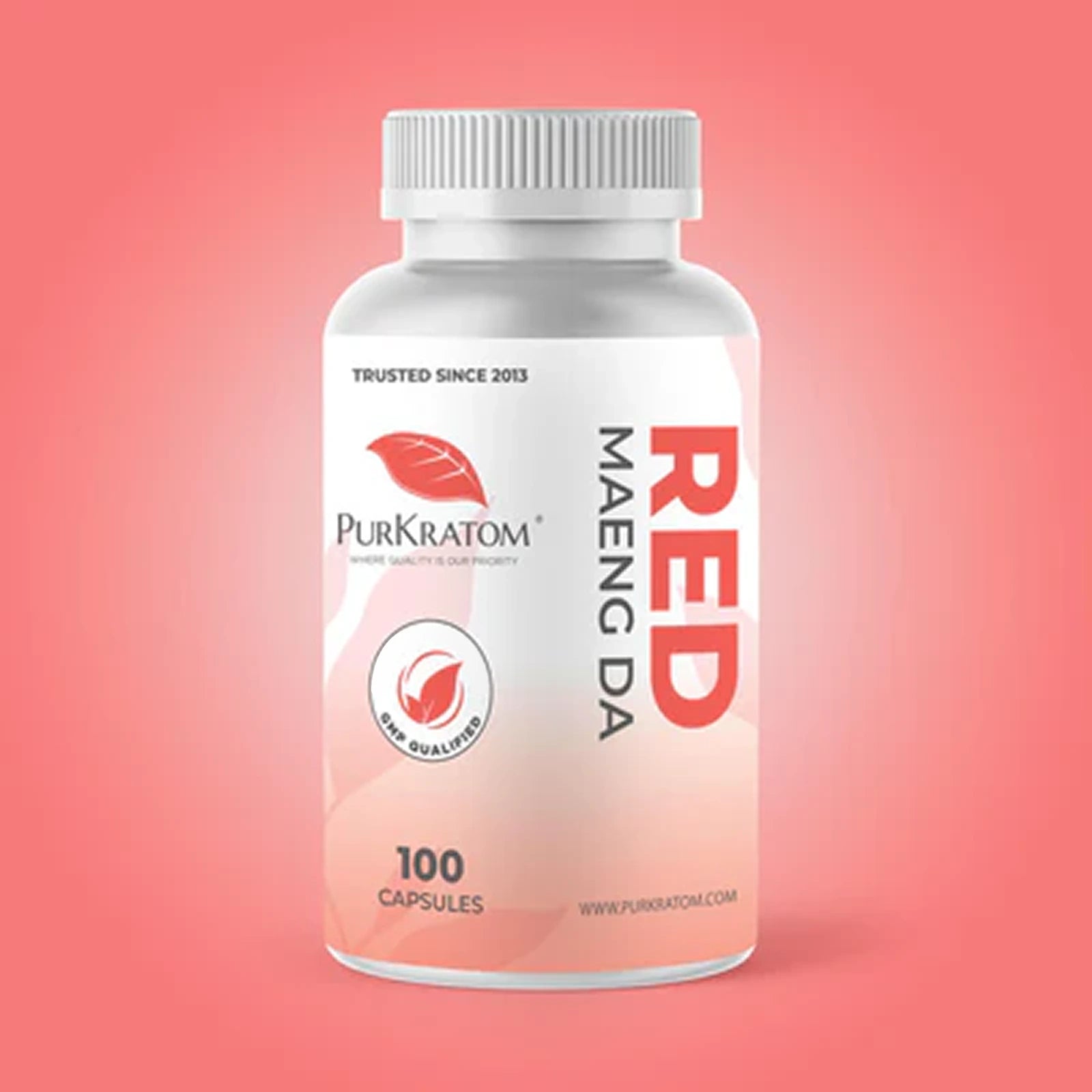
Red Maeng Da Kratom Capsules
$26.99

White Maeng Da Kratom Powder
$31.99
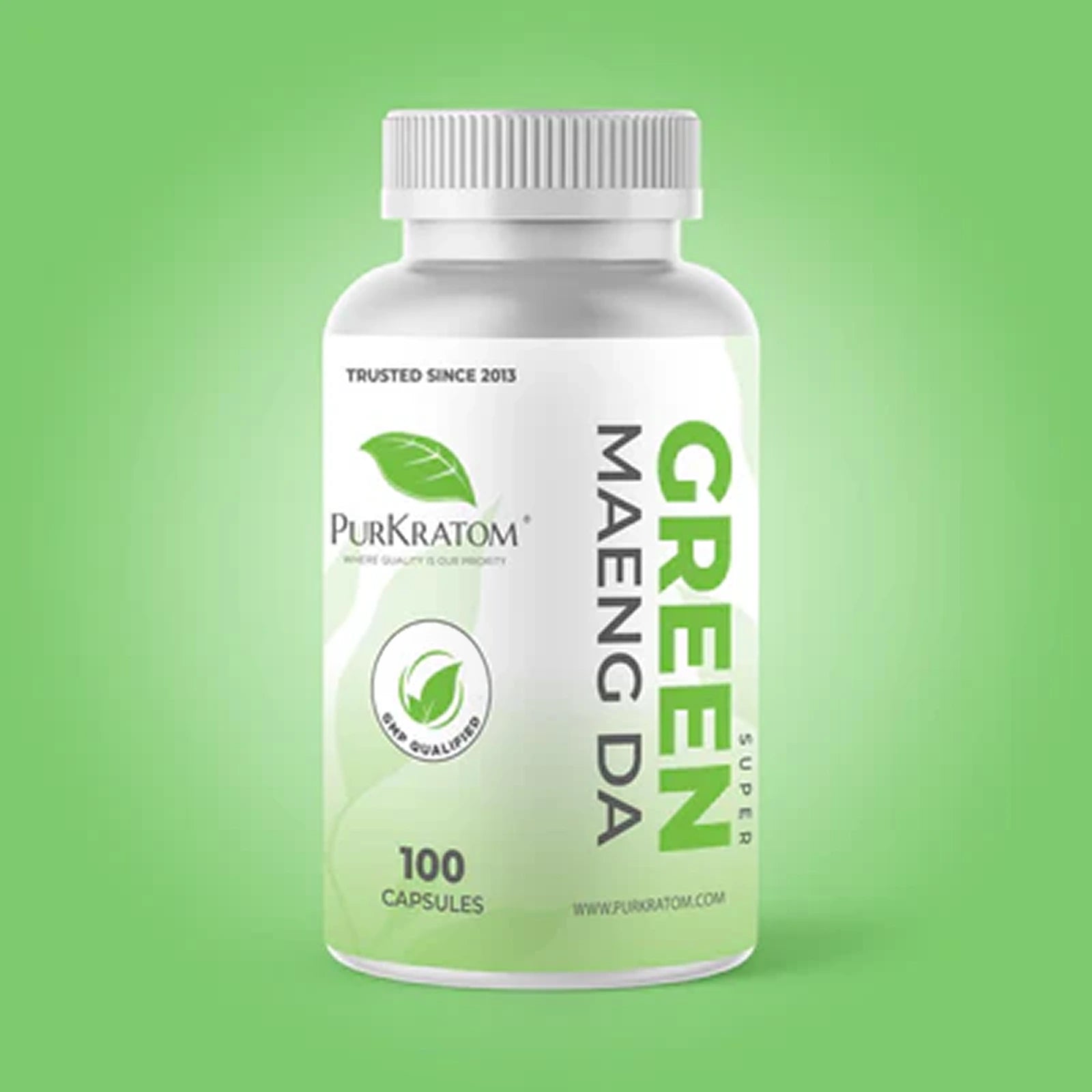
Super Green Maeng Da Kratom Capsules
$26.99

Green Maeng Da Kratom Powder
$31.99